


PTSD


What is PTSD?
Post-traumatic stress disorder (PTSD) is a mental health and behavioral disorder that develops in some people after they see or experience a traumatic event. The event may be dangerous, shocking or scary.
Historically, PTSD has been known by many names. Those living in the wake of World War I called it “shell shock,” and World War II veterans were said to suffer from “combat fatigue.” PTSD does not, however, only happen to military veterans. It can occur in people of any age, ethnicity, nationality or culture.
Fear is a natural response in a traumatic situation, as it triggers many necessary processes in the brain and body to help it defend itself from harm. It’s common for people to experience a range of emotions in the initial aftermath of trauma. However, most people recover from these initial symptoms naturally.
Those who continue to experience these effects, such as feeling stressed or frightened even when not in danger, may be diagnosed with PTSD.
PTSD Causes & Risk Factors
While PTSD can affect anyone, some groups see higher rates of symptoms than others. For example, PTSD is more than twice as likely to be found in women than men. One explanation for this is the fact that women are more likely to be victims of domestic violence, abuse, and rape.
According to the National Center for PTSD, about 7 or 8 out of every 100 people will experience PTSD at some point in their lives. Since each person’s life has formed them with unique capabilities of managing stress, fear, and threats, it's impossible to predict whether a person will develop PTSD. Even experiencing trauma does not make PTSD inevitable.
Additionally, a person’s support system in the form of friend and family relationships, and any professional care they receive following trauma, can have a significant impact in how they handle processing the experience. Those with healthy relationships and community support are likely to experience either significantly less severe PTSD symptoms, or none at all.
Factors that cause some to be more likely to develop PTSD include:
- Having a history of mental health problems
- Being exposed to life-threatening situations repeatedly
- A history of drug or alcohol abuse
While age doesn’t factor into one’s ability to develop PTSD, People who experienced abuse at an early age are also at higher risk for developing PTSD.

Trauma & PTSD Recovery in Arizona
At Sequoia Behavioral Health, we deliver the highest level of trauma care for our clients at our residential and outpatient facilities. Our intensive and personalized approach can help you heal from trauma and find peace.

Signs & Symptoms of PTSD
A mental illness-specializing doctor, such as a psychiatrist or psychologist, might diagnose a person with PTSD if they exhibit all of the following for at least one month:
- At least one re-experiencing symptom (such as flashbacks or frightening dreams or thoughts)
- At least one avoidance symptom (such as staying away from places, events, or objects that are reminders of the traumatic experience)
- At least two arousal and reactivity symptoms (such as angry outbursts, sleeping difficulty, being easily startled, or feeling “on edge”)
- At least two cognition and mood symptoms (such as memory trouble related to the event or experience, negative self-concept, guilt, blame, or loss of interest in once-enjoyed activities)
There is no defining timeline for when PTSD symptoms can develop—or how long they’ll last. Some people experience PTSD symptoms for a relatively short period of time, while others deal with the effects for years. The second type is known as chronic PTSD.
Other common symptoms might include:
- Paranoia
- Intrusive thoughts
- Trouble concentrating
- Insomnia
- “Jumpiness”
- Hypervigilance
- Anxiety
It’s common for symptoms to first appear within three months of a traumatic experience, however, some symptoms don’t show until years later.
PTSD in Children
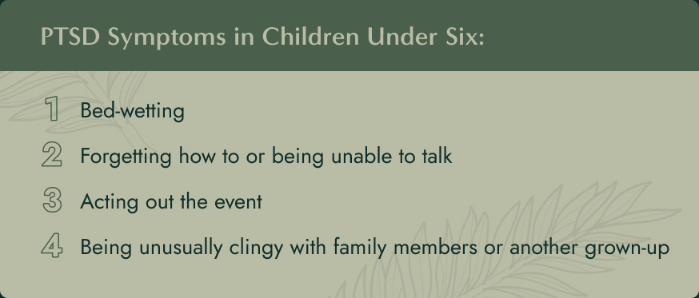
PTSD symptoms in young children can look different than in adults. For example children under six might show signs such as:
- Bed-wetting
- Forgetting how to or being unable to talk
- Acting out the event
- Being unusually clingy with family members or a another grown-up
Older children and teens tend to display symptoms that mirror those in adults. Some common PTSD symptoms in this age group include:
- Developing disruptive, disrespectful, or destructive behaviors
- Expressing feelings of guilt for not preventing the event
- Thoughts of revenge
The treatment options for children are similar to adults with the exception that, because their brains are still in development, medication-based treatments are generally avoided except for in severe cases.
PTSD Treatments & Therapies
Some people are able to naturally settle back into regular rhythms of life after trauma with little daily disruption. For others, however, chronic mental and/or physical side effects interfere with their ability to function normally.
Those in the second group should seek help in navigating how to manage PTSD symptoms. The most common approach is a combination of medication and psychotherapy.
Medication
To date, no single medication has been found to treat all symptoms of PTSD. When looking into options for dealing with PTSD symptoms, be sure to research potential prescription side effects. You should also make your doctor aware of the presence of any additional mental health struggles, such as depression or anxiety, so they can anticipate how the prescription might affect these.
Antidepressants, such as serotonin reuptake inhibitors (SSRIs), are often the first line of treatment prescribed to help reduce symptoms of PTSD. While these aren’t the only types of medications available for treating PTSD symptoms, they are some of the most researched and documented. Ask your doctor for more information about all medication options available.
Most medications help with some symptoms of PTSD, but cannot heal the psychological effects of trauma. This is why many people combine medicated assistance with psychotherapy.
Psychological
Psychotherapy, sometimes referred to as “talk therapy,” involves processing traumatic experiences by talking about them. This might be 1-on-1 with a counselor, or in a group setting with a trauma therapist present.
Some types of psychotherapy have been found to be more effective for PTSD than others. Most of these are conducted in a 1-on-1 setting, with a specializing therapy practitioner:
- CBT: this type of therapy is often chosen first in treating children. It specifically targets symptoms like negative thinking and self-blame that may come with having PTSD.
- Somatic Experiencing: specifically designed to treat trauma, this therapy guides an individual through healing trauma by refocusing physical reactions to remembered trauma.
- Prolonged exposure therapy (PET): PET is a type of psychotherapy where the client faces whatever they find traumatizing in order to learn to cope effectively. This goes beyond just reliving the event, as the counselor walks them through memories and “triggers” safely so they learn to gain control over their fear.
A person who seeks out support from friends and family, or finds a trauma-focused support group following the event, is less likely to develop severe PTSD symptoms.

Related Blogs

Can PTSD Be Cured?
PTSD isn’t curable. However, PTSD can be treated with different therapies and medications to alleviate or even eliminate the symptoms.

Signs of Unresolved Childhood Trauma
Unresolved childhood trauma manifests in many different ways. Discover the physical, behavioral, and psychological signs of unresolved trauma.

What are the Signs of Repressed Trauma?
Repressed trauma can have lingering effects on your physical and mental health. Discover the signs of repressed trauma and how it can be treated.
Finding Help for PTSD Today
Here at Sequoia, we understand that trauma is an underlying factor in many mental and behavioral health disorders. We also know that if it is not recognized and resolved, treating its symptoms will not make a lasting difference.
That is why your treatment is personalized through-and-through. In combination with traditional talk therapy, our therapists administer a number of evidence-based interventions. One of our clinically-trained therapists will work directly with you on a daily basis to develop the right treatment protocol for you. The entire Sequoia support staff are Certified Trauma Support Specialists through the Arizona Trauma Institute.
Reach out to us, and discover how our trauma-based treatment approach can help you find healing from symptoms of PTSD today.
Learn More

EMDR
EMDR helps people relive and correctly process traumatic memories. Reach out to Sequoia Behavioral Health today to start your healing journey.

Forward-Facing Trauma Therapy
Rather than approaching trauma with the intention of "fixing" it, forward facing trauma therapy teaches clients intention of reacting differently to it.

Support Groups
There are support groups across the country that meet to talk, process, and live out their mental health recovery journey, as well as other issues.
Whether you’re experiencing addiction, a mental health crisis, or a dual diagnosis, Sequoia is here to provide holistic treatment options for all kinds of mental health struggles.