



Does Exercise Help With Addiction Recovery?
In short, exercise can absolutely help with addiction recovery. Physical activities can improve mental health symptoms associated with addiction, help with cravings, be a healthy distraction, and create a sense of community among people with shared interests.
Many people pick up a sport during mental health and addiction recovery just to have a hobby that brings them joy. They may have been athletes in the past, or they’re looking for community.
No matter why someone decides to work out during addiction recovery, it’s proven to be helpful in that journey.
Why Does Exercise Help With Addiction Recovery?
You’ve probably heard people who work out regularly gush about how they feel happier after the gym or how healthy their bodies feel. Some people say that it clears their minds, or that’s how they sort through difficult problems in their heads.
It’s for these exact same reasons that exercise helps people with addiction recovery. There are proven benefits of working out that make it a great supplemental activity for those on a sobriety journey.
We Treat Addiction At Its Root
By addressing the core mental health issues associated with substance abuse, we can treat each client more effectively for long-term sobriety. Learn more about the addictions we treat and how we do it.

Exercise Improves Anxiety and Depression Symptoms
You’ve probably heard that exercise boosts your mood because of the endorphins it releases, but did you know that exercise is proven to relieve symptoms of anxiety and depressive disorders?
Endorphins are a “feel-good” neurochemical that makes you feel happy and relaxed. When your brain is flooded with endorphins, you don’t feel the symptoms of anxiety and depression as intensely.
But it goes even deeper than that. Regular exercise increases the release of neurotrophic factors. These are proteins that build nerve connections and help nerve cells grow. Improving these connections in the brain can improve overall brain function, lessening the symptoms of anxiety and depression.

Exercise Can Reduce the Intensity of Cravings
After you achieve independence from an addiction, you can still crave it from time to time. Exercise can help curb these cravings in a few ways.
As mentioned above, exercise can reduce mental health symptoms that can trigger cravings. When you’re feeling healthy, you’re less likely to self-medicate.
It also creates a distraction in a healthy way. Exercise gives you something to occupy your mind that’s healthy and productive.
Group Activities Can Create a Support System
All kinds of sports tend to have a large community of people who enjoy them. Whether it’s a team sport like soccer or an individual one like cycling, you’re going to find people who want to bond over their love of that sport.
While you’re doing something that can benefit your personal mental and physical health, you can create bonds and grow your support system.
These relationships you foster during working out don’t have to actively be a part of your recovery journey, but it’s always beneficial to have friends that you can let loose with and just enjoy yourself. However, you may find that these teammates can become extremely close, and they may become a part of your support system during addiction recovery.
Can Exercise Help with Alcohol Withdrawal?
Besides improving overall physical health, exercise can help with alcohol withdrawal in many of the same ways that it helps with long-term alcohol recovery:
- Gives you healthy coping mechanisms
- Curbs cravings
- Provides space to build a support system
- Improves mental health symptoms
Alcohol withdrawal can require medical detox at first if the symptoms are severe. However, many people can feel symptoms for weeks after they stop drinking. In those cases, exercise can keep them motivated to continue their sobriety journey.
How to Supplement Addiction Recovery With Physical Activity
Exercise is a great thing to add to your mental health wellness regimen. Just remember that not everything works the same for everyone, especially when it comes to addiction recovery. Here are a few ways to add exercise to your recovery journey
Find What Works Best For Your Mind and Body
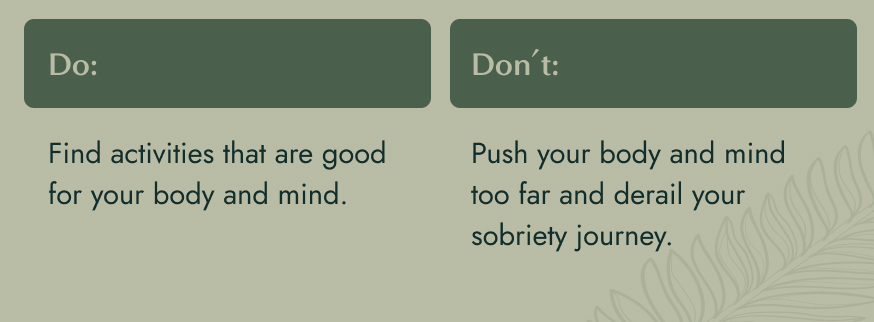
Not everyone is going to enjoy every sport. And that’s ok. Make sure to listen to your body and do activities that work best for you and your recovery. Whether you like hiking or triathlons, soccer or powerlifting, or even just walking, whatever exercise you choose should fit into your mental health treatment schedule, be healthy for your body, and be something that you like doing.
Don’t Overdo It
It is possible to take your new exercise hobby too far. For some, it looks like damaging their mental health by over-committing to a sport through overscheduling. For others, they hurt themselves physically by pushing their bodies too far, too fast.
On the other hand, it’s possible to push your mental health too far. It’s not unheard of for someone to trade out one addiction for another. They still self-medicate with another substance or behavior. Some people get addicted to exercising, which is physically and mentally harmful.
Use the Resources Available to You
You don't have to run out and buy top-of-the-line eqiupment as soon as you start working out. Use the bike that is already in your garage, walk around the park in your neighborhood, or sign up at the modest gym down the street. If you live near hiking trails, start exploring those. If you can't afford a yoga studio membership, look up flows to do on Youtube. There are so many ways to incorporate exercise into your daily routine. Use what you have to find out what works for you.
Related Blogs

What is Addiction Substitution ?
Addiction substitution occurs when one addiction is replaced by another. Discover why it happens and how to replace addiction with healthy habits.

What is Somatic Yoga?
Somatic yoga helps release trauma stored in the body. Learn why yoga is such a powerful tool to heal trauma

The Connection Between Nature and Mental Health
Spending time in nature is incredibly beneficial for our mental health. Learn why the great outdoors is good for your wellbeing and how Sequoia Behavioral Health uses recreational therapy in our treatment program.
How Sequoia Uses Exercise to Aid in Addiction and Mental Health Treatment
Holistic mental health treatment means caring for your body, your brain, and your psychological state. When you enter into either our residential or outpatient program, you’ll be able to explore different ways to incorporate exercise into your recovery:
- Recreational therapy in the Superstition Mountains
- Somatic Yoga
- A membership for alumni to Mountainside Fitness
- A membership to Spiritually Fit Yoga for outpatient clients and alumni.
Every aspect of your treatment at Sequoia will be personalized for your goals, needs, and wants. After a get-to-know-you consultation, we’ll talk to you about the best next steps. And when you’re done with treatment with us, we’ll create a robust continuing care plan for lasting sobriety and wellness. Call us today.
Learn More

Recreational Therapy
Sequoia Behavioral Health offers Recreational Therapy which uses games, movement, art, nature, and other positive activities to aid the recovery process.

Experiential Therapy
Experiential therapy provides healing by engaging the mind and body through different physical experiences, including painting, writing, acting, and more.

Somatic-Based Therapy
Somatic-based therapy is a holistic, body-focused treatment modality that helps resolve both physical and psychological trauma symptoms.
Your journey at Sequoia starts with a simple admissions process where we learn more about you, your concerns, and your goals. Learn more about what to expect on your path to mental wellness.