


When it comes to treatment, there’s no one-size-fits-all approach. Each person’s treatment plan should be unique to them and their goals, whether they need support through mental health struggles, addiction recovery, or everyday life challenges.
One of the most important considerations when developing a treatment plan is determining the appropriate level of care that someone needs. Inpatient and residential treatment offer the highest levels of care, but they’re not always necessary to accomplish your treatment goals.
Speaking with a mental health professional is the best way to determine which level of care is right for you. With that said, this guide can help you understand when inpatient or residential treatment is often necessary and what you can typically expect at this level of care.
Do I Need Inpatient Treatment?
Inpatient treatment provides intensive care to the people who need it most. It offers a safe, structured environment where someone can take a step back from their daily life to receive constant monitoring and care.
Some of the reasons why people need inpatient treatment include:
- Risk of self-harm or suicidal thoughts
- Severe psychiatric symptoms
- Impaired daily functioning
- Substance withdrawal
- Need for close supervision
People may also need inpatient treatment if their symptoms haven't improved with outpatient treatment. When symptoms are too severe or persistent, many mental health professionals will recommend inpatient treatment where someone can solely focus on recovery.

Types of Inpatient Treatment
There are many types of inpatient treatment, and each one is designed to address specific needs and support specific people. Here are some of the most common types of inpatient treatment:
- Psychiatric Hospital Inpatient Units – Short-term care for crisis stabilization and acute psychiatric symptoms
- Psychiatric Residential Treatment Facilities (PRTFs) – Intensive, structured treatment for children and adolescents
- Residential Substance Use Treatment (Rehab) – Live-in programs focused on addiction treatment and recovery
- Long-Term Psychiatric Care Facilities – Extended residential care for severe or chronic mental illness
Residential treatment is another type of inpatient treatment that provides consistent care in a structured environment. However, while most inpatient treatments focus on either immediate symptom relief or lifelong care, residential treatment focuses on helping people live a sustainable life outside of treatment.
Residential Treatment at Sequoia
Our intimate residential facility creates an ideal environment for rest and recovery. Learn more about the residential treatment program here at Sequoia.

What to Expect in Residential Treatment
Since residential treatment works a bit differently from other forms of inpatient treatment, it’s helpful to understand the unique structure, daily routines, and types of support it provides.

Long-Term Care
Unlike other forms of inpatient treatment, where people stay for several days or a couple weeks, most residential treatments encourage clients to stay for several weeks to a couple months. The duration of someone’s care depends on the severity of their symptoms and the amount of needed support.
This longer-term care can be beneficial for several reasons. Not only do clients have the opportunity to address their immediate symptoms, but they can also receive the care they need for long-term symptom relief. It’s beneficial for treatment staff too, as it gives them more time to monitor their clients’ progress and adjust their treatment plan as needed.
Personalized Therapy
After someone arrives at a residential treatment facility, they’ll meet with advisers and therapists to develop a personalized plan for therapy. Each plan is unique, but they all typically consist of different individual therapies, group therapies, and recreational therapy.
As clients progress through a residential program, they’ll routinely check in with treatment staff members. These mental health professionals help clients determine if their treatment plan needs to be adjusted, and they’ll also help them prepare an aftercare treatment plan for when they leave the residential program.
Daily Skill-Building
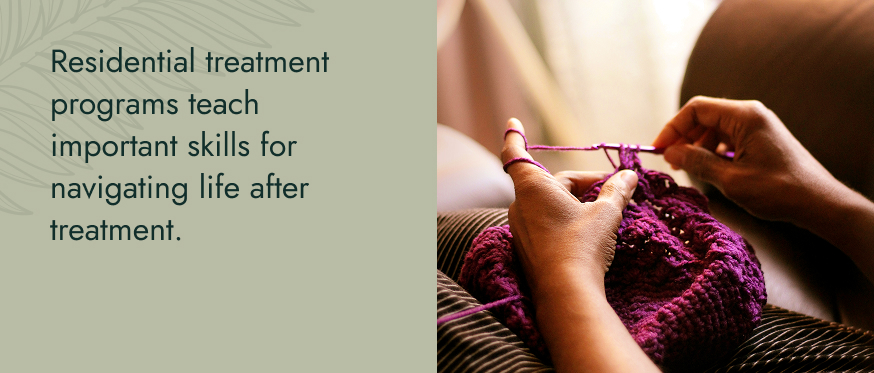
In addition to personalized therapy, many residential treatment programs prepare their clients with strategies for navigating life after treatment. This often includes teaching them positive coping strategies, important life skills, and how to apply what they’ve learned to daily life.
While these skills are sometimes taught in formal sessions, they can also be taught through engaging activities. Activities like art projects, outdoor excursions, and role-playing exercises can help someone build and practice the skills they need in real time, rather than simply learning about them and having to practice them on their own.
Comfortable Environment
Inpatient treatment can seem intimidating, especially when someone’s treatment plan encourages them to stay for many weeks. Residential treatment facilities help ease this anxiety by creating an environment that is warm and supportive instead of cold and clinical.
Most residential facilities are designed to be a client's home away from home. They’re usually relaxing, comfortable settings where someone can practice healthy routines and focus on rest and recovery. Some facilities are even located in scenic locations or offer calming activities like guided yoga and meditation to further promote relaxation during treatment.
Related Blogs

5 Benefits of Residential Treatment
Residential treatment isn’t a last ditch effort for mental health and addiction treatment. It’s an opportunity to focus on yourself while receiving the mental health care you need.

What to Know About Setting Goals for Treatment
Treatment goals reflect what you want out of therapy. Discover goals to work on in therapy, why treatment goals are important, and how to set them.

Relationships and Addiction Treatment Part 1: Rebuilding Relationships In Recovery
Repairing relationships during treatment involves a lot of introspection and family therapy. Learn more about the first steps in rebuilding important bonds while you’re still in treatment.
Should I Go to a Residential Treatment Facility?
Residential treatment may be a good fit if you need more support than outpatient care can provide. It’s often recommended for people who benefit from a structured environment, consistent therapy, and time to build skills that support long-term recovery.
If you or a loved one is considering residential treatment, reach out today to connect with a mental health professional at Sequoia. One of our compassionate team members can help you explore your options and determine which treatment plan is the right fit.
Learn More

Individual Therapy
Private treatment with our team in Arizona: Somatic experiencing, neurofeedback, EMDR, psychoeducation, and more.

Group Therapy
In group therapy, individuals can learn, grow together, and experience meaningful support through psychoeducation, recreation, and community development.

Recreational Therapy
Sequoia Behavioral Health offers Recreational Therapy which uses games, movement, art, nature, and other positive activities to aid the recovery process.
Whether you’re experiencing addiction, a mental health crisis, or a dual diagnosis, Sequoia offers several levels of care to support you and your treatment goals.