


Conflict Resolution


Conflict shows up in every human relationship. It doesn’t matter how close you are, how long you’ve known each other, or how “healthy” the relationship feels; when two people with different experiences, needs, and perspectives interact, disagreements are inevitable.
What matters more than conflict happening is conflict being resolved. Healthy conflict resolutions will strengthen relationships, decrease resentment, and lead to a less stressful life.
What is Conflict Resolution?
Conflict resolution is the process of addressing conflict in a constructive, respectful, and solutions-focused way. Rather than avoiding issues, building resentment, or trying to “win”, conflict resolution focuses on understanding, communicating, and compromising.
Resolving conflict doesn’t mean everyone agrees. It’s more focused on ensuring that everyone feels heard, respected, and is open to working together toward a solution. This is sometimes a compromise, other times an apology, and a dedication to not do something again.

Why is It Important?
Conflict will always exist in your life. No relationship or job will ever be conflict free. This makes conflict resolution a practical tool for every sphere of life.
Studies have shown that there is a connection between unresolved conflict and anxiety, chronic stress, and depression. Ignoring conflict doesn’t make it go away. In fact, unresolved conflict grows; small annoyances become world-ending events, and unspoken needs turn into emotional distance, or worse.
Strong conflict resolution skills are desirable for living a stress-free life, not a conflict-free life.
Conflict resolution skills are markers of:
- Better mental health
- Lower stress levels
- Healthier relationships
- Better emotional regulation
- Improved workplace satisfactions
While in recovery, conflict resolution can reduce relapse triggers, improve group dynamics, and help you rebuild strained relationships.
Mental Health Treatment in Mesa, Arizona
Sequoia Behavioral Health is a holistic treatment program that treats symptoms while addressing the root problem. While in our care, you’ll learn new coping skills as well as conflict resolution techniques to help you live a healthier life.

What Causes Conflict?
Before starting to resolve a conflict, it might be important to understand how it develops.
- Personality differences: You have a coworker who always seems to make jokes, and it’s annoying to you.
- Difference in Expectations: You may have expected them to do something, but now they’ve let you down.
- Lack of communication: You were planning on taking the car after work, but your partner hasn’t come home yet.
Each of these reasons for conflict may result in a different approach.
- Differences in Personality: You may not always get along perfectly, but you can find common ground and understanding.
- Difference in Expectations: Unmet expectations are disappointing, but through conflict resolution, you can build more accurate expectations.
- Lack of Communication: Open dialogue about communication will help everyone involved understand the importance of communication.
Types of Conflict
Conflict can happen in any sphere of life. Understanding the context in which the conflict happens can shed light on how to approach the situation.
Work Conflict
Workplace conflict involves coworkers, supervisors, and team dynamics. Common workplace conflicts can stem from:
- Unclear roles
- Workload imbalance
- Ineffective communication
- Personality issues
These conflicts can be resolved through conversations, but if persistent or extreme, they should be dealt with through Human Resources (HR).
HR departments are dedicated to providing workers with the resources they need to be effective workers. They can document any grievances, act as a mediator, and ensure that no retaliation takes place.
Conflicts with Friends
Even the best friendships go through the occasional bout or rough patch.
Conflicts within friendships often involve:
- Boundaries
- Time
- Loyalty
- Misunderstandings
Friendships are emotionally meaningful, so these conflicts are often deeply personal. Honesty and respect are key to repairing a friendship.
Conflicts With Family
Family conflicts often come with history. It’s rarely a one-time thing, but instead a long-term conflict with a complex history and emotional ties. Some families have built communication practices through hard work, but many families don’t experience healthy communication.
Conflict resolution between family members often requires mediation from a professional, a trusted family member, or a friend.
Conflicts with Partners
Romantic relationships require closeness, intimacy, and trust. That being said, romantic relationships are a perfect place for conflict to brew.
How you and your partner deal with conflict is more important than avoiding conflict. It’s going to happen, so work on developing communication that is respectful, helpful, and healthy.
Conflict Resolution Skills
Some people are naturals at conflict resolution. They are comfortable with the uncomfortable. However, most people feel anxious about conflict resolution.
Luckily, conflict resolution is a skill that can be learned. Use these practices to improve your conflict resolution skills over time.
Active Listening
Active listening means being fully focused on what the speaker has to say. That includes:
- Eye contact
- Observing non-verbal cues
- Not interrupting
- Reflecting what you heard
- Asking clarifying questions
- Confirming your understanding
Active listening is a tool that benefits everyone involved. It helps you understand and lets the speaker know that they are being heard and understood.
Empathy
Empathy is the ability to understand and acknowledge someone else’s feelings, even if you don’t agree. It means recognizing their pain and struggle.
Empathy can go hand in hand with active listening. If you’re actively listening to their issues, you’re more likely to understand why they feel the way they do. However, that also needs to be communicated to them. While in a conflict, try to use statements like “I can see why that upset you” or “that sounds frustrating”.
Empathy is a way to lower tensions, build connections, and help everyone find solutions.
Understand Yourself
Self-awareness plays a major role in conflict resolution. Sometimes you may feel angry, resentful, or sad without fully knowing why. This makes it hard to communicate what you need and can complicate conflict resolution efforts.
When you’re in touch with your feelings, you’ll be better equipped to express yourself clearly and calmly. This gives everyone involved a clearer picture of what the conflict is about and what kinds of solutions should be considered.
Mindfulness practices can help you notice your emotional reactions without immediately acting on them. Journaling and other evidence-focused tools increase emotional awareness. Writing about experiences can help clarify how you feel, making it easier to communicate.
Assertive Communication
Assertiveness is the middle ground between aggression and passivity. It means expressing your feelings and needs calmly, clearly, and respectfully.
This skill will be harder for some to develop, and it requires you to speak your mind and not let other people talk over you.
Some examples of assertive communication include:
- “I feel overwhelmed when plans change at the last minute.”
- “I need more notice before committing.”
- “When you use that language, it makes me mad.”
Related Blogs
.jpg)
Active Listening: Why It Matters, and How to Master It
Active listening is an important skill for making other people feel heard, understood, and safe, learn the techniques here.

Practicing Positive Self-Talk
Self-talk plays a large role in our mental wellbeing. Discover what positive self-talk is, and why it’s important for your mental health.
Conflict Resolution Strategies
These conflict resolution techniques can help you when conflict arises.
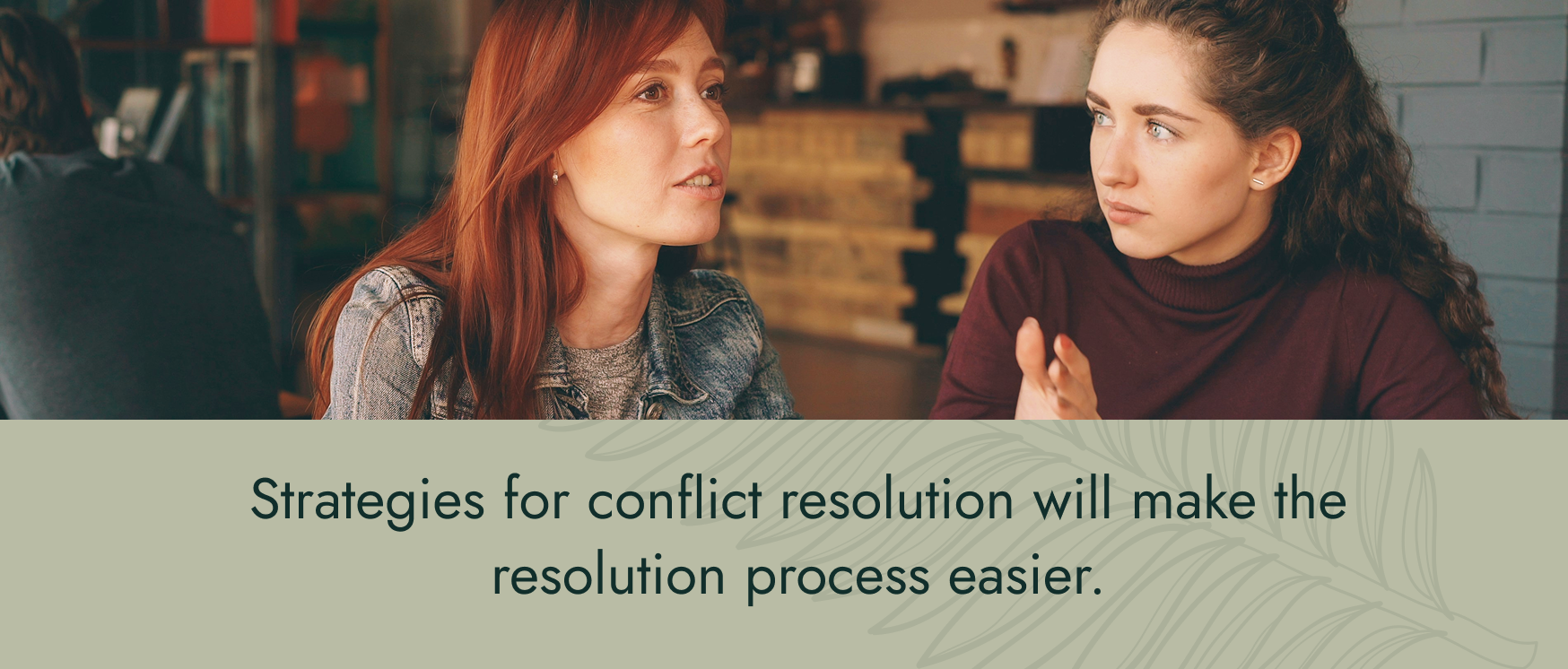
Decide How You’ll Approach the Conflict
Not every issue requires confrontation. Ask yourself:
- Is this a pattern or a one-time issue?
- Is it affecting my well-being?
- Am I willing to let it go?
Some conflicts can be resolved internally by processing your feelings and moving on. However, most cannot.
You have a lot of ways you can approach conflict resolutions, including:
- Talking 1-1
- Talking over the phone
- Waiting before bringing it up
- Scheduling time to talk about it
- Finding a mediator
- Bringing in other friends and family members
The approach that you take will inform the rest of the conflict resolution process. For example, if a simple phone call clears everything up, then you won’t need a third-party mediator. If the person is clearly in the wrong and doesn’t want to change, then you may need to bring other friends or family members into the conversation.
Have A Third-Party Present
A neutral third party can help keep the conversation productive. This is especially helpful when emotions run high.
- At work: HR or supervisor
- In families: A licensed family therapist
- In relationships: A counselor or mediator
If it’s not possible to find professional help, you can employ the help of a trusted loved one whom everyone agrees upon. However, if you do go this route, it’s important to set up healthy boundaries.
Helpful ground rules include:
- One person speaks at a time
- Take breaks if emotions escalate
- Agree to revisit the conversation if needed
These are the same ground rules that a professional would set up. They help keep the conversation productive and safe.
Don’t Use Ultimatums Or Threats
Ultimatums make people feel trapped or out of control. This often increases defensiveness, emotional responses, and escalates rather than resolves.
Remember that conflict resolution is not about asserting your control over someone. It’s about finding a solution of common ground.
Throw Out The Teams Mentality
Us vs them is typically not the way to find a resolution to conflict.
When you create teams, you end up making the gap between each other more difficult to traverse. You’re no longer trying to find a solution to the issue; you’re trying to win.
Consider everyone involved as being on the same team.
Be Open to Compromise
Compromise doesn’t mean your feelings aren’t valid. It means finding a middle ground that respects everyone’s needs.
However, compromise should never come at the cost of your physical, emotional, or mental safety. Healthy compromises are always respectful.
Preparing ahead of the conversation can help. Consider your needs and your wants. If you’re expecting a specific solution, consider getting rid of those expectations.
Listen To Everyone
Feeling heard is a powerful human need. When everyone has a chance to speak openly, emotions are more manageable, resentment decreases, and it’s much easier to find a solution.
Do what you can to make sure everyone feels safe and comfortable to talk openly, without judgment.
Look For Solutions
Conflict resolution is about moving forward. Solutions may include:
- A sincere apology
- A compromise
- Clarifying a misunderstanding
- Setting new boundaries
- Respectfully agreeing to disagree.
Not every resolution will feel perfect. You may walk away slightly disappointed. Sometimes the goal is to reduce tension, increase understanding, and get a working relationship.
You may not be best friends, but at least you can be in the same room as each other.
Identify When It’s Not Working
Ongoing conflict can take a toll on your mental health. Chronic stress from unresolved issues can affect mood, sleep, and overall well-being.
If repeated efforts don’t lead to improvement, it may be time to create distance or cut ties. While this is a difficult decision, it may be the healthiest choice.
Ending a conflict-ridden relationship can reduce stress and help you live a healthier life.
When to Seek Professional Support for Conflict
You should seek immediate help if you’re experiencing conflict involving abuse of yourself or someone else, illegal activity, or persistent conflicts in the workplace.
If a conflict feels overwhelming, repetitive, or emotionally unsafe, professional help can make a meaningful difference. Therapists, counselors, and treatment professionals are trained to help people build communication skills, set boundaries, and navigate difficult relationships.
For individuals in mental health or addiction recovery, learning these skills in a supportive environment can be a powerful tool for healing. Conflict doesn’t have to derail progress; it can be an opportunity to grow.
Addiction and Mental Health Recovery in Mesa, Arizona
At Sequoia Behavioral Health, we provide treatment plans that meet the individualized needs of every person. That treatment plan includes:
- Medication management
- Skill development
- Group therapy
- Individual therapy
- Recreational therapy
We provide clients with the aftercare they need to ensure that they are equipped to meet life's challenges healthily and mindfully.
Learn More

Family Therapy
Family therapy can greatly improve a person's success in treatment. During these sessions, the family works together to resolve conflicts and build support.

Recreational Therapy
Sequoia Behavioral Health offers Recreational Therapy which uses games, movement, art, nature, and other positive activities to aid the recovery process.

Cognitive Behavioral Therapy
Thoughts control behaviors more than you might think. Cognitive Behavioral Therapy connects emotions and behaviors to help manage negative behaviors.
Evidence-Based Treatment
Addiction and mental health treatment isn’t a guessing game. We use proven techniques to provide holistic healing.