


Burnout


Burnout often doesn’t announce itself with a dramatic crash. It builds quietly. Long weeks, constant stress, and the slow erosion of energy and motivation grow over time until it has to be dealt with.
If you’re wondering whether or not what you’re experiencing is burnout, you’re not alone. Burnout affects professionals, caregivers, students, and anyone navigating ongoing pressure.
This page explores the signs of burnout, what it feels like, how it can affect just about everyone, and how to recover from burnout while still working.
What Is Burnout?
Burnout is a state of emotional, physical, and mental exhaustion caused by prolonged stress. It’s often related to work, caregiving, or chronic life demands. It can develop when responsibilities consistently outweigh the resources you have to cope, whether that’s time, support, or rest.
While burnout is most commonly discussed in workplace settings, it isn’t limited to jobs. Parents, caregivers, students, and people navigating long-term stressors can all experience burnout.
Burnout is not a personal failure or a sign of weakness. It’s a human response to sustained strain without adequate recovery.
Holistic Mental Health Treatment
Sequoia Behavioral Health creates individualized treatment plans for those experiencing crisis and addiction. Burnout can be a catalyst for these issues. Reach out to find if Sequoia Behavioral Health is the right option for you.

What Does Burnout Feel Like?
Most people have their own experiences with burnout. The reason behind the burnout, the sensations, and the experience is deeply personal, but many people experience similar feelings.
Common experiences include:
- Constant exhaustion, even after rest
- Feeling overwhelmed or emotionally numb
- Loss of motivation or purpose
- Irritability or increased sensitivity
- Difficulty concentrating or making decisions
- A sense of detachment from work, relationships, or daily life
- Physical symptoms like headaches, sleep problems, or muscle tension
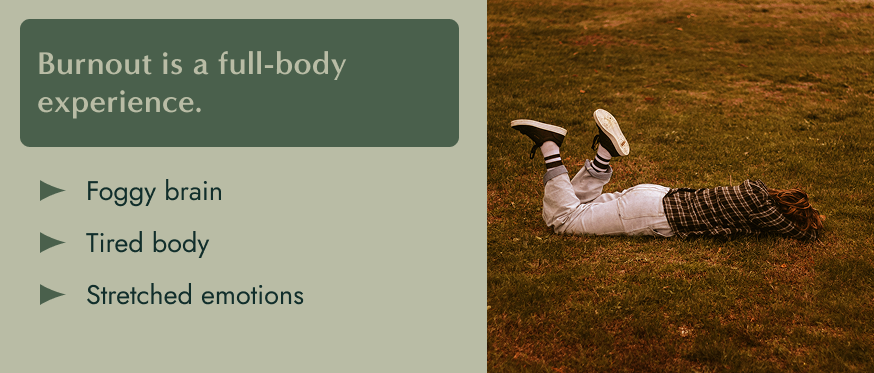
You might feel like you’re “going through the motions” or struggling to care about things that once mattered to you. Some people describe burnout as feeling stuck, depleted, or like they have nothing left to give.
Signs of Burnout
Recognizing the signs of burnout early can help you take action before it worsens. Burnout can impact many areas of life, including your emotions, physical health, and daily behaviors.
If several of the following signs feel familiar and persistent, it may be worth taking a closer look at your stress levels.
Emotional Signs of Burnout
- Feeling emotionally drained or depleted
- Increased cynicism or negativity
- Loss of satisfaction or fulfillment
- Anxiety or low mood
- Feeling helpless or trapped
Physical Signs of Burnout
- Chronic fatigue
- Frequent illness
- Sleep disturbances
- Headaches or body aches
- Changes in appetite
Behavioral Signs of Burnout
- Withdrawal from responsibilities or social activities
- Reduced productivity
- Difficulty focusing
- Increased use of substances or unhealthy coping strategies
- Procrastination or avoidance
The 5 Stages of Burnout
Burnout doesn't happen overnight. It is a slow, creeping process. Psychologists often categorize it into five stages. Identifying where you are in this cycle is the first step toward reversing it.
1. The Honeymoon Phase
When you start a new job or task, you have high energy and satisfaction. You are optimistic and willing to go above and beyond. However, you may start neglecting your own needs to maintain this pace.
2. The Onset of Stress
Some days are harder than others, and you may start to notice your optimism waning over time. Eventually, you’ll experience these common stress symptoms:
- Irritability
- Anxiety
- Difficulty focusing
- Grinding your teeth at night
3. Chronic Stress
When left unaddressed, stress becomes a daily condition. You feel pressured from the moment you wake up. You might even start withdrawing socially, procrastinating on deadlines, or feeling resentful. Physical illness may also become more frequent.
4. Burnout
This stage represents a breaking point, where symptoms become more intense and disruptive. You may develop a deeply pessimistic outlook on life or work, feel emotionally numb or empty, and experience a strong urge to withdraw from everyday responsibilities. Physical symptoms, such as chronic headaches or ongoing digestive issues, are also common.
5. Habitual Burnout
Burnout becomes embedded in your life. It is no longer just a phase; it is your baseline. This can lead to significant ongoing mental and physical problems, including depression and chronic fatigue.
Stress vs. Burnout: Knowing the Difference
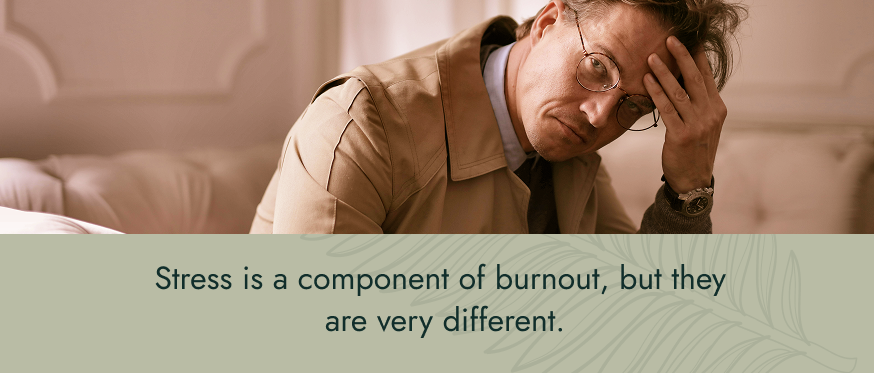
It is crucial to understand that burnout and stress are not the same thing. Stress is often the precursor, but it manifests differently.
Stress is characterized by:
- Over-engagement: You are trying very hard to fix everything.
- Hyperactive emotions: You feel anxious, urgent, or irritable.
- Physical toll: It primarily damages your physical energy.
- Hope: You usually believe that if you can just get everything under control, you will feel better.
Burnout is characterized by:
- Disengagement: You have mentally checked out.
- Blunted emotions: You feel flat, numb, or depressed.
- Emotional toll: It primarily damages your motivation and spirit.
- Hopelessness: You don't see a way out, even if the workload decreases.
If stress is drowning in responsibilities, burnout is being all dried up and having nothing left to give.
Am I Burnt Out?
If you’re asking yourself this question, it’s worth paying attention.
You may be experiencing burnout if:
- You feel exhausted most days
- Your work or responsibilities feel meaningless or draining
- You’re more irritable or detached than usual
- Rest doesn’t seem to help
- You feel stuck in a cycle of stress and fatigue
Burnout exists on a spectrum. Some people notice early warning signs, while others reach a point where daily functioning feels difficult. Either way, acknowledging what you’re experiencing is an important first step.
A mental health professional can help you sort through what you’re feeling and determine whether burnout, anxiety, depression, or another stress-related concern may be contributing.
How to Recover From Burnout While Still Working
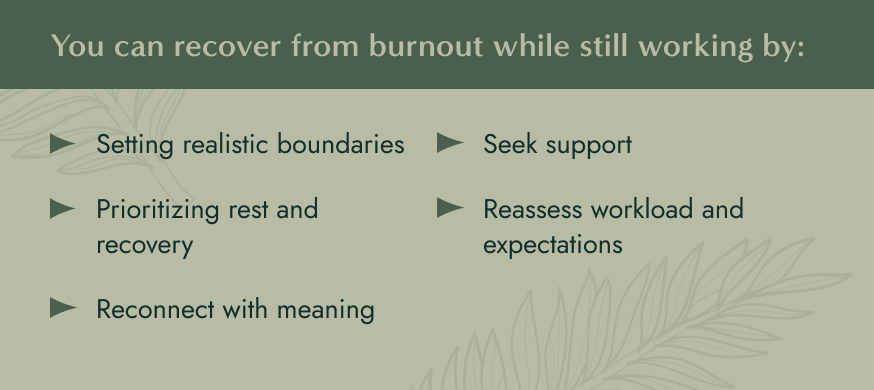
For many people, stepping away from responsibilities entirely isn’t possible. You may still need to work, care for others, or manage daily life. Recovery from burnout doesn’t always require quitting your job or making drastic changes overnight.
Instead, it often begins with small, sustainable shifts.
1. Set realistic boundaries
Burnout often develops when limits are unclear or constantly pushed. Start by identifying where you can set gentle boundaries. That includes saying no to extra tasks, limiting after-hours communication, or protecting time off.
2. Prioritize rest and recovery
Rest isn’t just sleep. It can include quiet time, movement, creative outlets, or moments without demands. Even brief breaks throughout the day can help regulate stress.
3. Reassess workload and expectations
If possible, talk with supervisors or family members about what you can realistically handle. Many people carry unspoken expectations that contribute to burnout. If you can find ways to rearrange your work, you should.
4. Reconnect with meaning
Burnout can make everything feel mechanical. Reconnecting with values, why you do what you do, or what matters to you outside of work, can help restore a sense of purpose.
5. Seek support
Burnout thrives in isolation. Talking with a therapist, support group, or trusted person can provide perspective and practical tools.
Recovery takes time. You don’t have to fix everything at once.
Related Blogs

Why Do I Feel Like Crying for No Reason?
Even if you don’t know why you feel like tearing up, there’s always a reason. Discover the many different reasons for why we might feel like crying.

Anxiety Journaling: Why it Helps You Feel Grounded, and How to Do It
Journaling is an effective strategy for managing anxiety. Discover why tracking anxiety in a journal is helpful and how to journal for anxiety.

Meditations for Anxiety—4 Meditation Techniques for Relieving Stress and Anxiety
Meditation is a powerful tool for managing anxiety. Discover four effective meditation techniques that can help you the next time you’re feeling anxious.
How Do I Treat Severe Burnout?
Severe burnout is the kind of burnout that doesn’t get better. If you’re experiencing intense exhaustion, persistent hopelessness, or difficulty functioning, professional support can make a meaningful difference.
Treatment for severe burnout may include:
- Individual therapy
- Stress management strategies
- Support around boundaries and workload
- Processing underlying anxiety, depression, or trauma
- Lifestyle adjustments that support recovery
In some cases, more significant changes, like extended leave or role adjustments, may be part of recovery. A therapist can help you explore options and create a plan that fits your circumstances.
Can I Go to Therapy for Burnout?
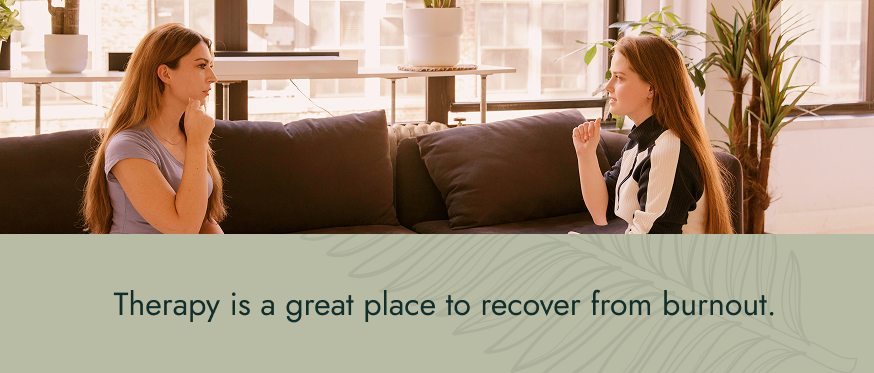
Yes. Therapy can be very helpful for burnout.
Many people assume burnout is something they just have to push through, but therapy offers space to understand what’s happening and build sustainable ways to cope with stress. A therapist can help you:
- Identify stress patterns
- Learn practical coping tools
- Set boundaries
- Process emotional exhaustion
- Reconnect with values and goals
- Develop a recovery plan
It doesn’t matter how major your burnout is. If it is negatively affecting your life, therapy can help.
When to Reach Out for Support
You don’t have to wait until burnout becomes severe to seek help. Consider reaching out if:
- You feel consistently overwhelmed or depleted
- Stress is affecting your sleep, mood, or health
- You’re struggling to keep up with responsibilities
- You feel disconnected from yourself or others
- You’re unsure how to recover on your own
Burnout is common, but that doesn’t mean it should be normalized and ignored. Support can help you move from survival mode back to a more sustainable way of living and working.
Mental Health Treatment in Mesa, Arizona
At Sequoia Behavioral Health, we prioritize creating holistic treatment plans that match the needs of every individual. While we don’t offer services for people experiencing burnout alone, we do offer treatment for those suffering from burnout as a comorbid diagnosis.
If you’re suffering from addiction, a mental health crisis, and burnout, reach out to Sequoia Behavioral Health to learn if we’re a good fit for your needs.
Learn More

Online Therapy
Online therapy is a great option for people who have accessibility needs, prefer to meet online, have scheduling difficulties, and have limited local options.

Psychoeducation
Psychoeducation enables people to understand themselves better and discover practices to improve their behavioral and mental health.

Sound Baths
Sound baths treat a variety of mental health concerns by connecting the mind and body. Specific sounds help slow breathing and heart rate to induce calmness.
Holistic Healing
Sequoia Behavioral Health takes a holistic approach to mental health treatment. We treat the symptoms while searching for the root of the issue.