



Many adults will experience bouts of depression at some point in their life. They’ll experience weeks or months where they’re listless, hopeless, and their thoughts go dark. These bouts of depression are true medical issues that are usually treated by medications and counseling for the duration of the episode.
However, some people experience depression for years. For some, it happens most of their lives. This is called persistent depressive disorder. It’s less common and not talked about as often as other forms of depression.
What is Persistent Depressive Disorder?
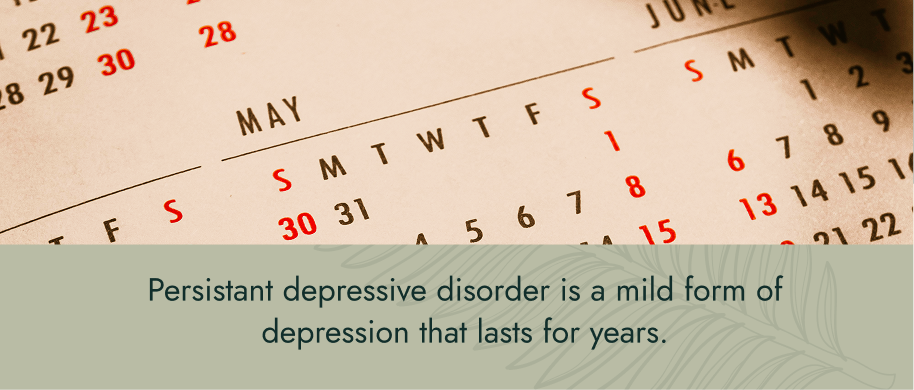
Also called PDD, persistent depressive disorder is a long-term form of depression that lasts for years. Symptoms are typically mild to moderate, though they do ebb and flow into severe or non-existent from time to time.
Depression Relief in Mesa, Arizona
Get in contact with Sequoia Behavioral Health to start your journey toward holistic mental health healing.

Symptoms of PDD
Like other depressive disorders, PDD symptoms are physical, cognitive, and emotional.
Physical symptoms include:
- Decreased or increased appetite
- Weight fluctuations
- Fatigue
- Low energy
- Sleep problems
Cognitive symptoms include:
- Brain-fog
- Lack of focus
- Memory problems
- Loss of interest in hobbies
- Feeling like basic tasks are simply “too much”
Emotional symptoms are what people most often think of as the markers for depression. For PDD, these include:
- Hopelessness
- Loneliness
- Regret or guilt about past events
- Irritability and sudden mood changes
- Low self-esteem
All of the symptoms of PDD are the same as other depressive disorders. What sets it apart is the fact that these symptoms persist for years, and aren’t often as severe.
Major Depressive Disorder vs PDD
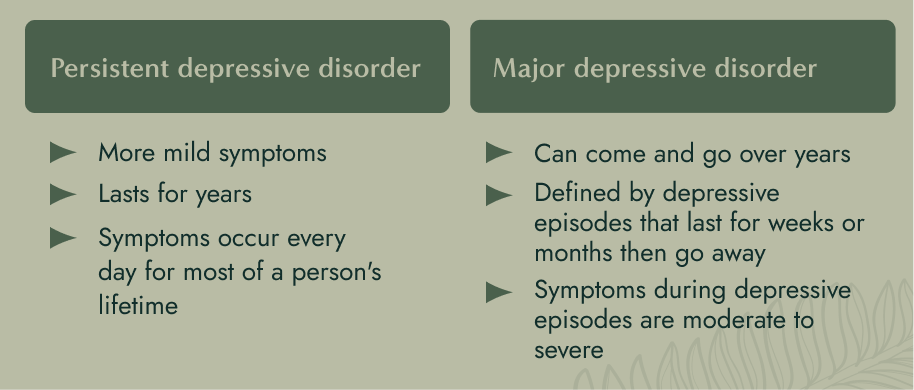
Major depressive disorder, sometimes called MDD and clinical depression, is perhaps the most common form of depression. It shares the same symptoms as PDD, but they can be more severe, and occur in small bursts called depressive episodes. For many, these episodes last a few months to a year. Some people will experience these episodes every few years or months, with the time in-between feeling fairly “normal.”
Where PDD differs from MDD is, as the name suggests, the persistence of it. While symptoms are often mild enough that a person can continue life as mostly normal, they still weigh on that person day in and out. Episodes aren’t as drastic or short-lived with PDD as they are with MDD.
Even though someone with MDD may have recurring depressive episodes over their lifetime, those with PDD feel symptoms of depression nearly every day over their lifetime.
The High-Functioning Trap: Why PDD is Often Overlooked
Because symptoms of PDD usually aren’t severe, many people don’t really see it as a mental health struggle worth fixing. Even doctors can miss it. Those with PDD are considered high functioning, where their symptoms don’t totally interfere with everyday life.
PDD can be overlooked quite easily. Someone who has it might just think they have a more melancholy disposition than other people. They may think that this dull roar of symptoms is something everyone deals with. Their depression may not get to a scary place, so they simply live with it. However, it is a true mental health disorder that can be treated, and you can live life unburdened by PDD.

Related Blogs

Self-Care For Depression: 7 Tips to Get You Through
It’s easy to neglect self-care when you're battling depression. Discover how to care for your physical and mental health with these 7 effective tips.

Food Addiction vs Binge Eating Disorder
Both food addiction and binge eating disorder are marked by compulsive overeating. While the symptoms of each are similar the difference lies in their causes.

Atypical Depression Guide: Risks, Causes, Symptoms & More
While depression often "numbs" people's ability to react to the world around them, positive stimuli can boost the mood of someone with atypical depression.
Treating PDD at Sequoia Behavioral Health
We know that PDD can wear on you. Though symptoms are mild, living with them for years isn’t an easy feat. We’re proud of you for taking the first steps into seeking treatment.
We use a variety of treatments that address your PDD from multiple angles—from understanding how it may have developed, to recognizing your symptoms, to finding the right coping mechanisms for you.
We offer residential and intensive outpatient programs that can help you through your PDD. We’ll utilize CBT, DBT, and other experiential therapies to give you the brighter outlook you’ve been searching for.
Reach out today to set up your initial consultation.
Learn More

Cognitive Behavioral Therapy
Thoughts control behaviors more than you might think. Cognitive Behavioral Therapy connects emotions and behaviors to help manage negative behaviors.

Dialectical Behavioral Therapy
Dialectical Behavioral Therapy is a therapy focused on teaching important skills like mindfulness, acceptance, regulation, and interpersonal effectiveness.

GeneSight Testing
We’ve partnered with GeneSight Psychotropic Testing to quickly determine the most effective medications for clients.
Relief For Depression
We offer residential and outpatient treatment plans for people experiencing comorbid mental health conditions. We provide holistic healing for symptoms while searching for the root cause.