


Panic Disorder


Panic attacks are overwhelming, confusing, and often frightening. When experiencing them, people often wonder if something is wrong with their body or mind. The sudden racing heart, dizziness, and sense of impending doom can make it feel like a medical emergency.
If this sounds familiar, you’re not alone, and you’re not broken.
Panic disorder is a recognized and treatable mental health condition. With the right support, many people learn how to manage panic attacks and regain a sense of stability in their daily lives.
This guide explains what panic disorder is, how it differs from general anxiety, what panic attacks feel like, and what effective panic disorder treatment looks like.
What is Panic Disorder?
Panic disorder is a type of anxiety disorder characterized by recurrent, unexpected panic attacks and an ongoing fear of more attacks in the future.
While many people experience a panic attack at some point in their lives, panic disorder involves:
- Repeated panic attacks that occur unexpectedly
- Persistent worry about having additional attacks
- Changes in behavior to avoid situations that might trigger panic
According to the National Institute of Mental Health, panic disorder affects millions of adults in the United States and often begins in late adolescence or early adulthood.
Over time, people with panic disorder may begin avoiding situations where attacks have happened before. For example, someone might avoid driving, crowded places, or leaving their home. This avoidance pattern can gradually interfere with work, relationships, and daily functioning.

Panic Disorder Treatment in Mesa, Arizona
If panic attacks are significantly affecting your life, it may be helpful to explore professional support and treatment.

Is Panic Disorder Different Than Anxiety?
Yes, panic disorder is different from generalized anxiety, though they are closely related.
Both fall under the broader category of anxiety disorders, but they involve different patterns of symptoms.
Generalized Anxiety
Generalized anxiety usually involves:
- Persistent worry about multiple areas of life
- Difficulty controlling anxious thoughts
- Muscle tension, restlessness, and fatigue
- Trouble concentrating or sleeping
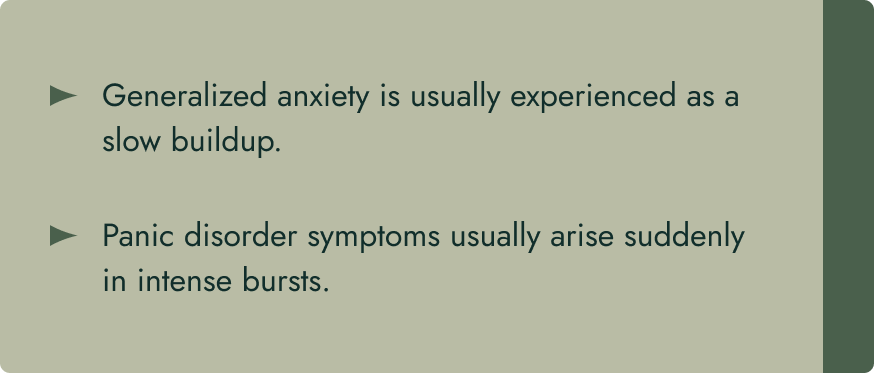
People with generalized anxiety often feel constantly on edge, with worry building gradually.
Panic Disorder
Panic disorder, on the other hand, involves sudden and intense bursts of fear called panic attacks.
These attacks can occur:
- Without warning
- Without an obvious trigger
- Even when a person feels calm beforehand
Instead of steady worry, panic disorder is defined by episodes of extreme physical and emotional distress that rise quickly and often peak within minutes.
Some individuals experience both generalized anxiety and panic disorder at the same time.
What Does a Panic Attack Feel Like?
A panic attack can feel like your body has suddenly switched into emergency mode.
Many people describe the experience as feeling like they’re
- Having a heart attack
- Losing control
- About to faint
- Dying
Panic attacks typically peak within 10 minutes, though the emotional aftereffects can last much longer.
Common Panic Attack Symptoms
Panic attacks can involve a wide range of physical and emotional symptoms, including:
- Rapid or pounding heartbeat
- Shortness of breath
- Chest pain or tightness
- Sweating
- Trembling or shaking
- Dizziness or lightheadedness
- Nausea or stomach discomfort
- Chills or hot flashes
- Tingling or numbness in the hands or face
- Feeling detached from reality (derealization)
- Fear of losing control or dying
These symptoms can be extremely intense, which is why many people initially seek emergency medical care during their first panic attack.

What is the Difference Between a Panic Attack and an Anxiety Attack?
People often use these terms interchangeably, but they are not exactly the same.
Panic Attacks
Panic attacks are defined in clinical psychology and appear in the diagnostic criteria for panic disorder.
They typically involve:
- A sudden surge of intense fear
- Symptoms that peak within minutes
- Severe physical reactions like heart palpitations or dizziness
- Feeling out of control or disconnected from reality
Panic attacks can happen unexpectedly, even when you’re relaxed.
Anxiety Attacks
“Anxiety attack” is not a formal clinical diagnosis. Instead, it usually refers to a period of intense anxiety that builds gradually in response to stress.
An anxiety attack may involve:
- Excessive worry
- Restlessness
- Trouble concentrating
- Fatigue
- Irritability
- Muscle tension
Unlike panic attacks, anxiety symptoms often increase slowly over time rather than appearing suddenly.
Understanding this difference can help people recognize what they’re experiencing and pursue the most effective treatment.
Related Blogs
.jpg)
Anxiety Relief: Techniques and Tools You Can Use Now
Anxiety relief is a short-term and long-term effort. Learn how to start managing your anxiety here.

"But You Seem Fine" — The Invisible Battle of High-Functioning Anxiety
Those with high-functioning anxiety look like hard-workers on the outside, but they're driven by intense feelings of anxiety.

Meditations for Anxiety—4 Meditation Techniques for Relieving Stress and Anxiety
Meditation is a powerful tool for managing anxiety. Discover four effective meditation techniques that can help you the next time you’re feeling anxious.
How Does Panic Disorder Develop?
Panic disorder doesn’t happen because someone is weak or unable to cope with stress. Instead, it usually develops through a combination of biological and psychological factors.
Research suggests several contributors may play a role.
Brain Chemistry
Imbalances in neurotransmitters like serotonin and norepinephrine may affect how the brain regulates fear and stress responses.
Genetics
Panic disorder can run in families, meaning genetics may increase vulnerability.
Stress and Trauma
Major life changes, trauma, or chronic stress can sometimes trigger the first of many panic attacks.
Learned Fear Responses
After a first panic attack, people may become hyperaware of physical sensations like heart rate or breathing changes. This heightened awareness can unintentionally trigger future attacks.
Over time, the fear of having another panic attack can become a cycle that reinforces the disorder.
Panic Disorder Treatment
The good news is that panic disorder is highly treatable. Many people experience significant improvement with the right combination of therapy, lifestyle support, and sometimes medication.
Treatment plans are personalized to each individual.
1. Cognitive Behavioral Therapy (CBT)
Cognitive behavioral therapy is considered one of the most effective treatments for panic disorder.
CBT helps people:
- Understand the connection between thoughts, emotions, and physical sensations
- Challenge catastrophic thinking patterns
- Learn coping strategies for panic symptoms
- Gradually reduce avoidance behaviors
Over time, CBT can help people regain confidence in situations that previously triggered panic.
2. Exposure-Based Therapy
In some cases, therapists use gradual exposure techniques to help people safely face sensations or situations associated with panic attacks.
This process helps retrain the brain to recognize that those sensations are not truly dangerous.
3. Medication Support
For some individuals, medication may be recommended as part of panic disorder treatment.
Common options include:
- Selective serotonin reuptake inhibitors (SSRIs)
- Serotonin-norepinephrine reuptake inhibitors (SNRIs)
- In some cases, short-term anti-anxiety medications
Other medications like benzodiazepines may sometimes be prescribed for short-term symptom relief. When used as directed by a doctor, these medications are safe and effective. However, they should never be mixed with alcohol without oversight from a doctor.
When Panic Attacks Start to Control Your Life
One of the most difficult aspects of panic disorder is how it can quietly reshape your life.
People often begin avoiding:
- Driving
- Public spaces
- Social gatherings
- Travel
- Exercise
- Being alone
These avoidance patterns can make life feel smaller and more restricted.
The good news is that with proper treatment, many people learn how to break this cycle and return to activities they once loved.
You’re Not “Broken”
If you’re experiencing panic attacks, you may think something is wrong with you. Many people worry that they’re losing control and that they’re beyond help.
This isn’t true.
Panic disorder is a well-understood mental health condition, and effective treatment exists.
With the right support, people often learn how to:
- Recognize signs of panic early
- Calm nerves during an attack
- Reduce the fear of future attacks
- Rebuild confidence in daily life
Recovery doesn’t necessarily mean panic attacks will never happen again. Instead, it means learning the tools and strategies that allow panic to lose its power over your life.
If panic attacks are interfering with your daily functioning, reaching out for professional help could be an important first step toward feeling better.
Contact Sequoia Behavioral Health to get the resources you need to get treatment.
Learn More

Cognitive Behavioral Therapy
Thoughts control behaviors more than you might think. Cognitive Behavioral Therapy connects emotions and behaviors to help manage negative behaviors.

Medication Management
We find the proper medication for our clients through pharmacogenomic testing in order to increase treatment success after a client leaves our facility.

Mindfulness-Based Cognitive Therapy
Mindfulness-Based Cognitive Therapy mixes CBT with mindfulness practices to help clients become more aware of their emotions, thoughts, and behaviors.
Help for Panic Disorder
Sequoia Behavioral Health builds holistic treatment programs that match the needs of the individual. If you’re experiencing panic disorder, that will be considered in the building of your treatment plan.