


If you or a loved one is currently experiencing a mental health crisis, call the crisis hotline at 988.
There are moments in life when stress feels overwhelming. A difficult breakup. The loss of a job. An argument that won’t resolve. These experiences can be painful, exhausting, and destabilizing.
But sometimes, what you’re feeling goes beyond stress or a bad day. It may be a mental health crisis.
If you’re asking yourself, “Am I having a mental health crisis?” — you’re not alone. And if you’re worried about someone you love, you deserve clear guidance on what to look for and what to do next.
This guide will walk you through:
- What constitutes a mental health crisis
- What a mental health crisis looks like
- Examples of mental health crisis situations
- The 4 phases of crisis mental health
- Who to call and how crisis intervention works
- What happens after the crisis
What Constitutes a Mental Health Crisis?
A mental health crisis occurs when a person’s emotional or psychological state becomes so overwhelming that they are unable to cope safely using their usual skills or supports.
It is different from everyday stress or a temporary emotional low. A struggle becomes a crisis when:
- There is a risk of harm to self or others
- Suicidal ideation or behaviors are present
- A person loses touch with reality (psychosis)
- Severe panic or anxiety makes functioning impossible
- Substance use escalates dangerously
- A person cannot perform basic daily tasks due to distress
In short, a crisis involves immediate safety concerns or a significant breakdown in functioning.
For example, feeling deeply discouraged after a setback is a struggle. Believing that life is no longer worth living and making a plan to end it is a crisis.
If you’re unsure of what you’re experiencing, the 988 crisis line can help you regardless. Persistent hopelessness can sometimes signal a deeper concern.
Safety After Crisis
At Sequoia Behavioral Health, we provide treatment for people who have experienced a mental health crisis. Get long-term support while building healthy habits.

What Does a Mental Health Crisis Look Like?
There is no single way an acute mental health crisis presents. It can look different depending on the individual, their diagnosis, and the situation.
Common signs of a mental health crisis include:
- Talking about wanting to die or harm oneself
- Expressing hopelessness or feeling trapped
- Severe mood swings
- Intense panic attacks that don’t subside
- Hearing or seeing things that others do not
- Paranoia or extreme confusion
- Sudden withdrawal from loved ones
- Reckless or self-destructive behavior
- Inability to sleep for days
- Escalating substance use
For some people, a crisis develops gradually. For others, it can feel sudden and intense. Even thoughts that feel vague or indirect should be addressed, either with a friend or with a mental health professional.

Examples of Mental Health Crisis Situations
Each of these situations involves either risk, loss of control, or inability to function safely, which distinguishes a crisis from an emotional struggle.
- A college student experiencing a severe depressive episode who begins giving away possessions and writing goodbye messages.
- A person with bipolar disorder in a manic state who hasn’t slept for days and is engaging in risky behavior.
- An individual with schizophrenia who is experiencing command hallucinations telling them to harm themselves.
- A parent overwhelmed by trauma who expresses thoughts of hurting themselves to escape emotional pain.
- Someone experiencing an extreme panic attack that leads to hyperventilation, dissociation, and the inability to function safely.
Am I Having a Mental Health Crisis?
If you’re reading this and asking that question, pause for a moment. Ask yourself:
- Do I feel safe right now?
- Am I thinking about harming myself or someone else?
- Do I feel in control of my actions?
- Can I care for myself today (eat, sleep, function)?
If the answer to safety-related questions is no, seek immediate help. Call 911, go to an emergency room, or contact the mental health crisis hotline at 988 in the United States.
If you are unsure, you can still call 988. You do not need to be diagnosed to call. It’s a free service dedicated to helping everyone.. The line is available 24/7 via call, text, or chat and connects you to trained crisis counselors.
If you are outside the U.S., your country likely has a national crisis line. Local emergency services can direct you.
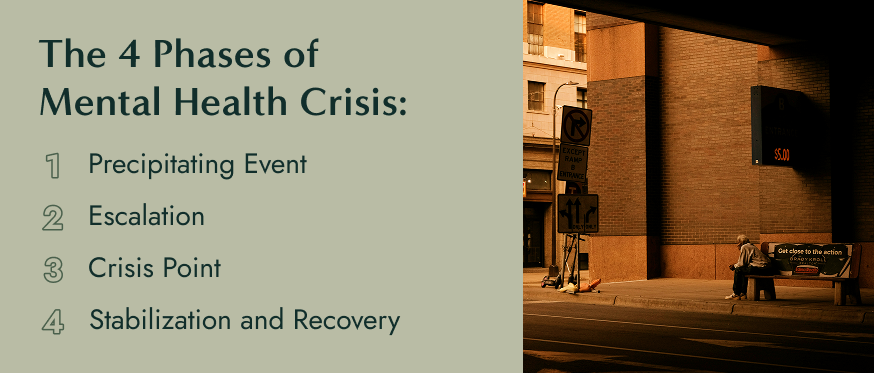
The 4 Phases of Crisis: Mental Health
Understanding these phases can help you recognize warning signs early and intervene before the situation becomes dangerous.
Mental health professionals often describe crisis development in four phases:
1. Precipitating Event
A triggering event occurs, such as loss, trauma, conflict, or health issues.
2. Escalation
Emotional distress increases. Coping skills that normally work begin to fail.
3. Crisis Point
The person feels overwhelmed and unable to manage. Safety may be at risk. This is the acute mental health crisis phase.
4. Stabilization and Recovery
With intervention and support, the person begins to regain equilibrium and access longer-term care.
Who Should I Call If Someone Is Having a Mental Health Crisis?
The 988 crisis hotline is always available for people in need. If you’re unsure who to call, start with 988, they can help direct you to the proper channels.
If the crisis is putting people in immediate danger, emergency assistance should be called at 911. They can assist with medical attention if necessary, and bring the person in need to a safe place.
Crisis counselors can help assess risk, provide de-escalation support, and guide next steps.
Related Blogs

Mental Health Relapses: What Causes Them and How to Prevent Them
Relapses aren’t specific to addiction. Even with comprehensive treatment, it’s possible to re-experience symptoms of mental health disorders. However, you can prevent them and recover.

How to Build a Support System
Support systems are an important part of long-term mental health recovery and addiction recovery. Learn how to build one here.

Guide to Choosing an Inpatient Mental Health Program
Choosing the right inpatient program can be daunting. Learn about what to consider, and why Sequoia may be the right choice.
What Is Mental Health Crisis Intervention?
Mental health crisis intervention refers to immediate, short-term support designed to stabilize a person and reduce risk.
It may include:
- Safety assessment
- De-escalation techniques
- Crisis counseling
- Medication evaluation
- Short-term hospitalization (if needed)
- Referrals to outpatient care
The goal of crisis intervention is not long-term therapy. It is stabilization and safety.
Depending on the situation, crisis intervention may happen through:
- Emergency departments
- Mobile crisis teams
- Crisis stabilization units
- Law enforcement trained in Crisis Intervention Team (CIT) programs
- Crisis hotlines
What To Do If You’re Experiencing a Crisis
If you believe you or a loved one is experiencing a crisis, call the crisis hotline at 988. After that, there are more things you can do.
If you believe you are in an acute mental health crisis:
- Reach out immediately. Call 988, 911, or a trusted person.
- Prioritize safety. Remove access to anything you could use to harm yourself.
- Stay with someone. Isolation can increase risk. Stay on the line with the crisis number or stay with a friend.
- Avoid substances. Alcohol or drugs can intensify impulsivity.
- Seek professional evaluation. Even if the intensity passes, follow up.
You deserve immediate support. Asking for help is responsible. It’s not dramatic or attention-seeking.
What To Do If a Loved One Is in Crisis
Make sure you start by contacting crisis intervention either through the 988 hotline or 911. Watching someone you love experience a mental health crisis can feel terrifying.
Here’s how to respond:
- Stay calm and speak gently.
- Take any mention of self-harm seriously.
- Ask directly about suicidal ideation; this does not “plant the idea.”
- Remove potential means of harm if possible.
- Call 988 or 911 if safety is in question.
- Stay with them until help arrives.
Avoid arguing, minimizing their feelings, or trying to “logic” them out of their distress. Your presence and calm support matter more than perfect words.
What Happens After the Crisis?
The end of the immediate emergency is not the end of care.
After stabilization, most people benefit from ongoing treatment. This may include:
- Outpatient therapy
- Psychiatric evaluation and medication management
- Intensive Outpatient Programs (IOP)
- Partial Hospitalization Programs (PHP)
- Trauma-informed care
- Substance use treatment
A comprehensive evaluation is often the first step. At Sequoia Behavioral Health, our Assessments and Diagnostics process helps clarify what’s happening and what level of care is appropriate.
It’s important to note: Sequoia Behavioral Health does not provide emergency services. However, we can help connect individuals and families to appropriate crisis resources and provide follow-up care once immediate safety has been addressed.
Recovery after a crisis is possible. Many people go on to build stronger coping skills, better support systems, and deeper resilience.

You Are Not Weak for Experiencing a Mental Health Crisis
A mental health crisis is not a personal failure. It is a sign that your current coping capacity has been overwhelmed.
Just as we would seek emergency care for a heart attack or broken bone, mental health emergencies deserve immediate and compassionate response.
If you are unsure whether what you’re experiencing qualifies as a crisis, err on the side of reaching out. Support is available. Help is real. And you are not alone in this.
If you or someone you love needs guidance after a crisis, Sequoia Behavioral Health is here to help you determine the next right step.
Learn More

Assessments and Diagnostics
Mental health assessments provide insights that are necessary for an accurate diagnosis. Discover how assessments and diagnostics play a role in your treatment plan.

Medication Management
We find the proper medication for our clients through pharmacogenomic testing in order to increase treatment success after a client leaves our facility.

Individual Therapy
Private treatment with our team in Arizona: Somatic experiencing, neurofeedback, EMDR, psychoeducation, and more.
Sequoia Behavioral Health provides holistic healing for people experiencing addiction or recovering from a mental health crisis. Reach out to learn if Sequoia Behavioral Health is the right fit for you.