



Recovery is often painted as a destination, but in reality, it’s an ongoing journey filled with peaks and valleys. Just when you feel like you’ve found your footing, a sudden memory, feeling, or situation can threaten to pull you back into old habits.
These moments are known as triggers, and they are a natural, albeit challenging, part of the healing process. In this guide, we’ll explore what relapse triggers are, why they happen, and how you can navigate them in a way that encourages ongoing recovery.
What Are Triggers in Mental Health?
In the context of mental health, a trigger is any stimulus that prompts an intense emotional or behavioral reaction. These stimuli often link back to past trauma or deeply ingrained patterns, and they cause the brain to react as if it’s experiencing those past events in the present moment.
When a trigger occurs, the brain’s defense mechanisms kick into high gear, often bypassing logical thought in favor of survival instincts. This can lead to sudden waves of anxiety, panic, or an overwhelming urge to escape the current situation.
What Are Relapse Triggers?
Relapse triggers are specific cues that create a craving or an impulse to return to addictive behaviors or substance use. While they operate similarly to general mental health triggers, their end goal is often to numb emotional pain or recreate a specific feeling of relief.
Because every person’s story is unique, what triggers one person might not affect another. These triggers are deeply personal and are shaped by your personal history, mental health struggles, and the environment in which your addiction developed.
Addiction Treatment and Recovery in Mesa, AZ
Sequoia’s treatment team has the experience and resources needed to help individuals navigate addiction and recovery. Learn more about what substance use disorder looks like and how we treat it.

What Can Trigger a Relapse?
A relapse can be triggered by a wide range of thoughts, feelings, or situations that remind the brain of the temporary relief it once found in substance use. It’s rarely just one thing, but rather a combination of internal and external factors that build up over time.
Understanding these factors is the first step in disarming them. To better understand how they work, it helps to categorize them into two main groups: internal triggers and external triggers.
Internal Relapse Triggers
Internal triggers are the thoughts, emotions, and physical sensations that arise from within you. They are often the most difficult to spot because they happen silently beneath the surface of your daily interactions.
These triggers are usually tied to uncomfortable states of being that you previously tried to medicate or escape from:
- Emotional triggers: Feelings of stress, anxiety, anger, sadness, or deep loneliness
- Physical triggers: Sensations of extreme fatigue, illness, pain, or hunger
- Cognitive triggers: Experiencing cravings, romanticizing past use, or rationalizing
When these internal states rise, the brain often seeks the quickest path to relief. This is why you may suddenly feel the urge to use again, but learning to sit with these uncomfortable feelings without acting on them is a crucial skill in long-term recovery.
External Relapse Triggers
External triggers are the people, places, things, and situations outside of yourself that are associated with your past behaviors. Unlike internal triggers, these are tangible cues in your environment that can spark an immediate psychological response.
Because our brains are excellent at forming associations, simply being in a familiar setting can bring back powerful memories and urges:
- Environmental: Passing by a specific bar, seeing imagery, or visiting neighborhoods where you used to buy substances
- Situational: Facing high-stress deadlines, attending parties where substances are present, or celebrating holidays
- Social: Interacting with friends who still use, facing peer pressure, or navigating strained family dynamics
These external cues can catch you off guard, especially when you are feeling vulnerable, stressed, or exhausted. Recognizing these high-risk situations allows you to create a plan to either avoid them or navigate them safely.
Related Blogs

How Long Does It Take to Rewire Your Brain From Addiction?
Addiction recovery is a process that aims to "rewire" a person's brain. Learn what this process entails and how long it takes.

Drug Misuse, Abuse and Addiction
When talking about substance use three terms often pop up—misuse, abuse, and addiction. Learn what each one means and why we use them.

Why Do Addicts Relapse When Things Are Good?
Recovery is a long road riddled with potholes. There are a lot of reasons why someone may relapse when things are going well. Learn more about causes of relapses.
Preventing Relapse — How to Safely Navigate Relapse Triggers
Navigating triggers isn't about removing them from your life, but rather learning how to respond to them in a way that supports your well-being. There are both healthy and unhealthy ways to cope, and the path you choose often determines the longevity of your recovery.
By building a toolkit of healthy responses, you can reduce the power these triggers have over you. Here is how you can.
Recognize Personal Triggers
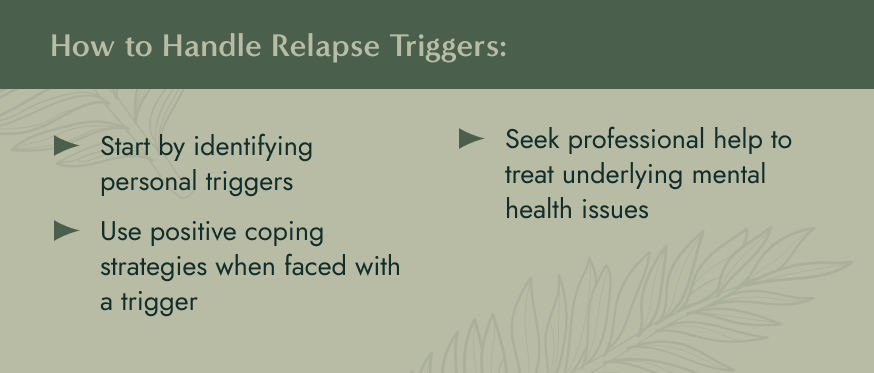
One of the most effective ways to prevent relapse is to identify your specific triggers before they happen. By keeping a journal or working with a therapist, you can start to see patterns in your thoughts and behaviors that typically lead to cravings.
It’s also very important to remember that addiction often stems from underlying mental health struggles like trauma, anxiety, or depression. Identifying the mental health symptoms that precede your urge to use can give you the insight needed to address the root cause rather than just the symptom.
Use Positive Coping Strategies
Coping refers to the thoughts and behaviors used to manage internal and external stressful situations. While negative coping strategies, like isolation or substance use, might offer temporary relief, they ultimately lead to long-term negative outcomes.
Positive coping strategies, on the other hand, help you move through the discomfort while building resilience for the future:
- Mindfulness: Practicing deep breathing or meditation to ground yourself in the present moment
- Physical Activity: Engaging in exercise to release tension and improve your mood naturally
- Creative Expression: Using art, music, or writing to process complex emotions safely
- Social Connection: Reaching out to a friend, family member, or someone you trust when you feel the urge to isolate
These strategies serve as a bridge that carries you over the turbulent waters of a trigger until you reach the safety of the other side. The more you practice them, the more natural and effective they will become.
Seek Professional Help
While self-awareness and coping skills are essential, seeking professional mental health support is often the cornerstone of lasting recovery. A therapist can help you navigate life after addiction and treat the co-occurring mental health issues that may have contributed to the substance use in the first place.
Professional support offers a safety net that keeps you from having to face the weight of your recovery alone. No matter how many times you have stumbled, it is never too late to reach out for the help you need to build a life you are proud of.

Achieve a Lasting Recovery at Sequoia
If you’re struggling to navigate triggers or just need a safe, supportive environment to continue your recovery, we are here to help.
At Sequoia Behavioral Health, we provide evidence-based therapy that treats the underlying causes of addiction and teaches you how to manage relapse triggers in a safe, constructive way.
Reach out today connect with one of our mental health experts and learn more about how we can help you achieve a lasting recovery.
Learn More

Psychoeducation
Psychoeducation enables people to understand themselves better and discover practices to improve their behavioral and mental health.

Outpatient Addiction Treatment
Outpatient addiction treatment in Mesa Arizona for those who are ready for the next level of independence in their sobriety journey.

Individual Therapy
Private treatment with our team in Arizona: Somatic experiencing, neurofeedback, EMDR, psychoeducation, and more.
We understand addiction recovery requires support from your loved ones, treatment team, and peers. At Sequoia, we host peer support groups made up of past, present, and future clients to navigate challenges of addiction and mental health struggles.