


Thinking about the future can bring up a mix of emotions. You might feel excited about what's ahead one day, then find yourself worrying about everything that could go wrong the next.
Uncertainty about what lies ahead is a normal part of life, but it can be concerning when those worries are persistent or begin to affect your daily life. Whether you're concerned about your health, finances, relationships, or the state of the world, anxiety about the future can make it difficult to enjoy the present.
In this article, we'll explore why anxiety about the future happens, what can contribute to it, and how you can begin managing anxious thoughts in healthier ways.
Why Am I Anxious About the Future?
It's natural to feel anxious about the future from time to time. You may be worried about an upcoming event, or you may have a general sense that something bad could happen. In both cases, your brain is trying to prepare you for uncertainty.
Anxiety is your mind and body's way of responding to perceived threats. While fear helps protect you from danger happening right now, anxiety often focuses on what might happen. When the future feels uncertain, your brain may treat that uncertainty as something it needs to solve or prepare for.
Adaptive vs. Maladaptive Anxiety
Not all anxiety is harmful. In fact, anxiety serves an important purpose.
Adaptive anxiety is a normal, proportionate response to uncertainty or change. It can help you prepare for a job interview, study for an exam, or make thoughtful decisions about your future.
Maladaptive anxiety happens when those same protective feelings become excessive or difficult to control. Instead of helping you prepare, anxiety can leave you stuck in cycles of worry, overthinking, or avoidance.

Professional Support for Anxiety
At Sequoia Behavioral Health, we're here to help you navigate anxiety with compassionate care and personalized support. You don't have to face it alone.

What Causes Anxiety About the Future?
There isn't one single cause of anxiety about the future. For many people, it's the result of several internal and external factors that shape how they respond to uncertainty.
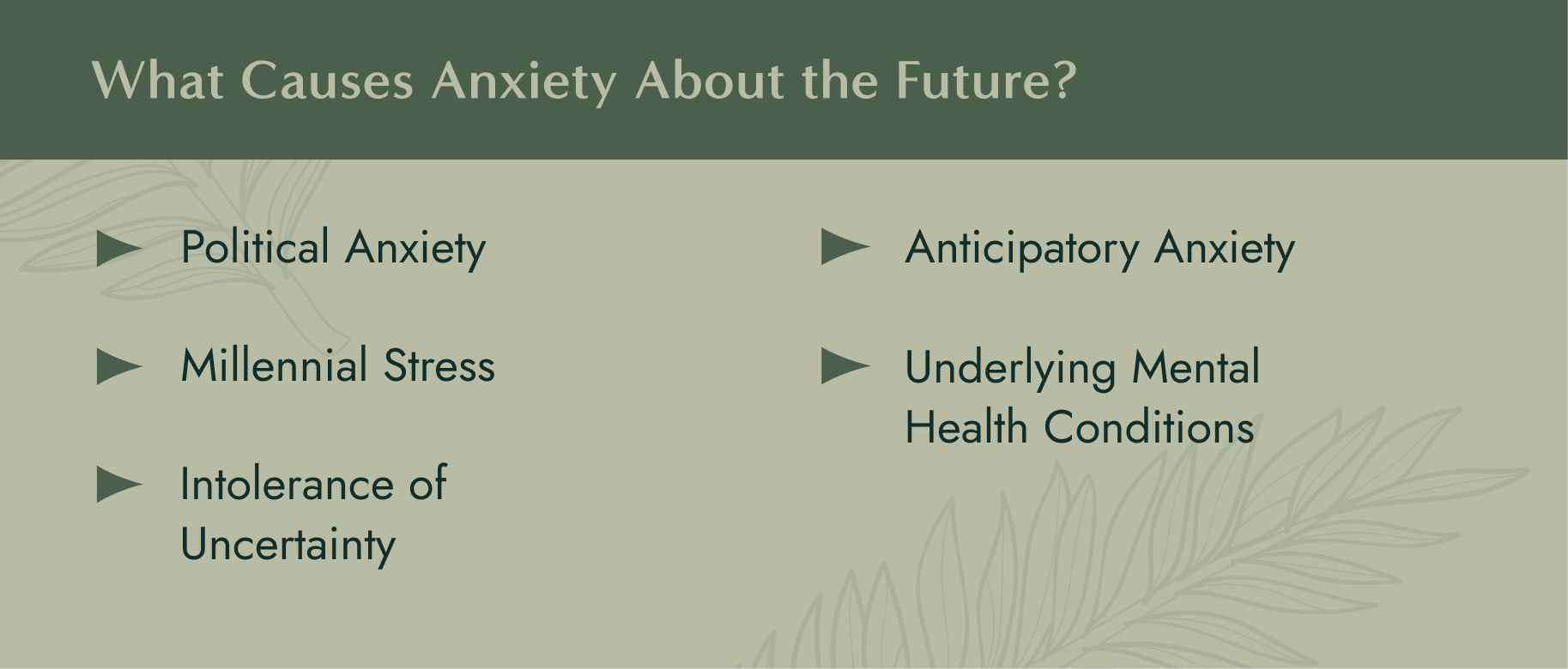
Some of the most common contributors include current events, personality traits, life experiences, and underlying mental health conditions.
Political Anxiety
Political uncertainty has become a growing source of stress for many people. News coverage, social media, and ongoing public debate can create a sense that the future feels unpredictable or out of your control.
According to the American Psychological Association's Stress in America report, the future of the nation, the economy, and U.S. politics were among the most commonly reported sources of significant stress. Many adults also said they worried that political disagreements could lead to violence or threaten the country's future.
While it's important to stay informed, constant exposure to stressful news can make anxiety about the future even more intense.
The "Lost Generation" of Millennials
Many millennials have come of age during periods of economic uncertainty, rising housing costs, student loan debt, and major global events. As a result, some people have described millennials as a "lost generation" because many life milestones have become much more difficult to achieve.
Despite the fact that millennials grew up during a period filled with unique challenges and uncertainty, it doesn't mean an entire generation is destined to struggle. However, it does help explain why so many millennials feel anxious about their futures.
Intolerance of Uncertainty
One of the biggest contributors to anxiety about the future is something psychologists call intolerance of uncertainty.
Intolerance of uncertainty is the inability to accept the possibility that a negative event may occur in the future. Rather than accepting that some uncertainty is part of life, the mind keeps searching for answers that aren't available.
This can lead to patterns such as:
- Constant "what if" thinking
- Expecting the worst-case scenario
- Replaying possible outcomes over and over
- Seeking reassurance that everything will be okay
The goal isn't to eliminate uncertainty. That's impossible. Instead, learning to tolerate uncertainty can reduce the need to predict or control every possible outcome.
Anticipatory Anxiety
Anticipatory anxiety is a specific type of anxiety about the future that happens before an expected event or situation.
You might experience anticipatory anxiety before:
- A job interview
- A medical appointment
- A difficult conversation
- A major life transition
Unlike general anxiety about the future, anticipatory anxiety usually centers on a specific event. Even so, both experiences share a common theme. Your mind tries to prepare for what could happen before it actually does.
Underlying Mental Health Conditions
Persistent anxiety about the future can also be connected to several underlying mental health conditions, such as:
- Generalized anxiety disorder (GAD)
- Panic disorder
- Social anxiety disorder
- Phobias (such as agoraphobia)
- Obsessive-compulsive disorder (OCD)
- Trauma
- Posttraumatic Stress Disorder (PTSD)
- Depression
The only way to truly know if your anxiety about the future is part of a mental health condition is by speaking with a mental health professional. They can help you better understand what you’re experiencing and explore possible causes.
Related Blogs

The Physical Manifestations of Anxiety
Anxiety is well-known to physical symptoms on top of psychological ones. Learn all about the physical symptoms of anxiety and how they affect each person.

Crippling Anxiety: Symptoms, Causes, and Treatments
For some anxiety can be debilitating, keeping them from forming relationships, enjoying life, or even leaving the house.

Why Is My Anxiety Worse at Night?
Most of our thoughts quiet down when it's time for bed. However, many people feel overwhelming, anxious thoughts at night.
How Can I Manage Anxiety About the Future?
You can't eliminate uncertainty from life, but you can change how you respond to it. Small, consistent habits can help reduce anxiety and make racing thoughts feel more manageable.
Some helpful strategies include:
- Focus on what you can control: Put your energy toward the choices you can make today instead of trying to predict every possible outcome.
- Challenge anxious thoughts: Ask yourself whether your worries are based on facts or assumptions. Looking at the evidence can help interrupt catastrophic thinking.
- Practice grounding techniques: Deep breathing, mindfulness, or paying attention to your surroundings can bring your focus back to the present moment.
- Limit doomscrolling: Staying informed is important, but constant exposure to distressing news and social media can increase anxiety.
- Maintain healthy routines: Regular sleep, physical activity, balanced meals, and time with supportive people can improve your ability to cope with stress.
If anxiety about the future continues to interfere with your work, relationships, sleep, or overall well-being, it may be time to seek professional support. You don't need to wait until your symptoms become severe to benefit from talking with a mental health professional.

Professional Support for Managing Anxiety
Working with a mental health professional can help you understand what’s contributing to your anxiety about the future and learn healthier ways to manage anxious thoughts.
Depending on your needs, treatment may include approaches such as:
- Psychoeducation
- Cognitive behavioral therapy (CBT)
- Dialectical Behavioral Therapy (DBT)
- Acceptance and commitment therapy (ACT)
- Trauma-informed therapies
These approaches help people recognize unhelpful thought patterns, build healthier coping skills, and develop a more balanced relationship with uncertainty. In some cases, medication management may also be recommended to alleviate symptoms of anxiety.
Find Your Inner Peace
The future will always include some uncertainty, but uncertainty doesn't have to control your life.
At Sequoia Behavioral Health, we provide compassionate, evidence-based care that helps people understand the root causes of anxiety and develop lasting strategies for healing. We’ll work with you closely to help you better understand your experiences and find inner peace.
If anxiety about the future is making it difficult to find peace in the present, reach out to a mental health professional here at Sequoia.
Learn More

Cognitive Behavioral Therapy
Thoughts control behaviors more than you might think. Cognitive Behavioral Therapy connects emotions and behaviors to help manage negative behaviors.

Dialectical Behavioral Therapy
Dialectical Behavioral Therapy is a therapy focused on teaching important skills like mindfulness, acceptance, regulation, and interpersonal effectiveness.

Acceptance and Commitment Therapy (ACT)
Acceptance and commitment therapy is an action-oriented therapy that allows clients to move past negative emotions and thoughts, rather than fighting them.
Your journey at Sequoia starts with a simple admissions process where we learn more about you, your concerns, and your goals. Learn more about what to expect on your path to mental wellness.