



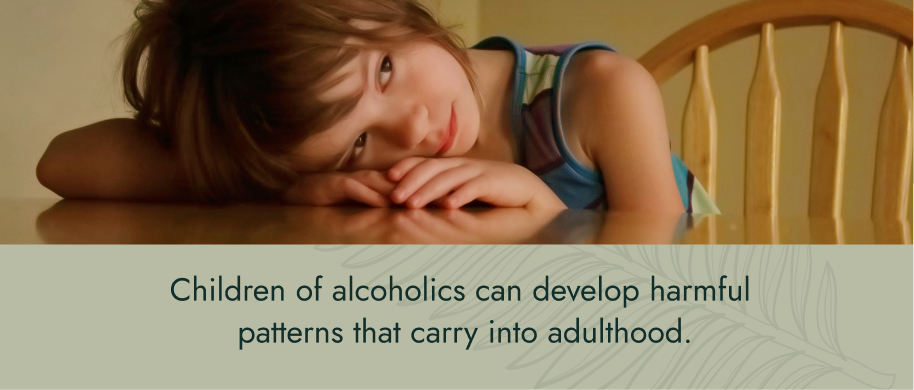
Growing up with a parent who struggles with alcohol can shape how a child understands themselves, their relationships, and the world around them. While every person’s experience is different, many children of alcoholics develop similar coping patterns that help them navigate an unpredictable or emotionally difficult home environment.
These patterns can continue into adulthood, even after leaving home or creating distance from the situation. For many adult children of alcoholics, understanding where these behaviors come from can be an important step toward healing.
Common Challenges Faced by Children of Alcoholics
Children who grow up with a parent struggling with alcohol often experience challenges that affect their emotional development and relationships. When a parent’s substance use impacts the stability of the home, children learn to adapt in ways that help them feel safe.
Some common challenges children of alcoholics may experience include:
- Difficulty trusting others: Unpredictable behavior at home can make it harder to feel secure in relationships.
- Taking on too much responsibility: Some children feel the need to care for others or manage situations that should not have been their responsibility.
- Struggling with emotions: Without consistent emotional support, some children may have difficulty identifying, expressing, or managing their feelings.
- Fear of conflict or rejection: Children may learn to avoid conflict or prioritize others’ needs to maintain peace.
- Low self-worth: Growing up in a challenging environment can affect how someone views themselves and their own needs.
Recognizing these patterns can help adult children of alcoholics understand themselves with more compassion and begin creating healthier ways of responding.
Support for Adult Children of Alcoholics
At Sequoia Behavioral Health, we help people understand how childhood experiences can continue to affect them into adulthood. Reach out today to learn how compassionate support can help you live life on your terms.

What Are the 4 Types of Children of Alcoholics?
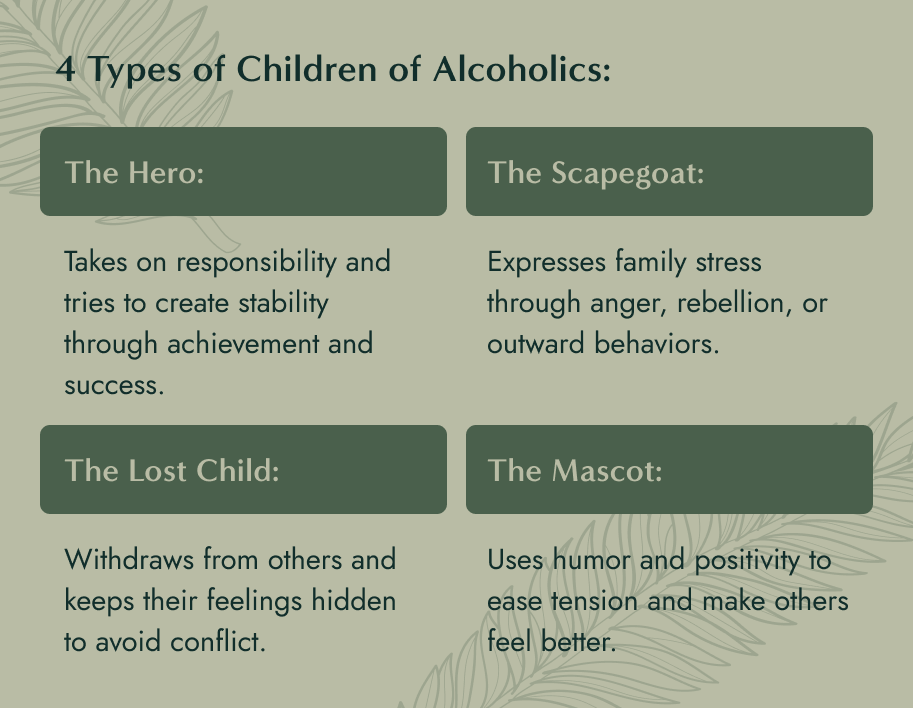
The four types of children of alcoholics describe the different roles children may take on within families affected by addiction. These categories include:
- The Hero: The child who takes on responsibility and tries to create a sense of stability within the family. They may focus on achievement, following rules, or appearing successful to cope with the challenges at home.
- The Scapegoat: The child who expresses the family’s pain or frustration through anger, rebellion, or other outward behaviors. Their actions may become a focus of attention when deeper family struggles go unaddressed.
- The Lost Child: The child who becomes quiet, independent, or withdrawn to avoid adding stress to the family. They may learn to keep their feelings to themselves and rely heavily on their own coping strategies.
- The Mascot: The child who uses humor, positivity, or charm to ease tension and bring relief during difficult moments. They may feel responsible for keeping others happy or helping the family avoid uncomfortable emotions.
These categories are not clinical diagnoses, and not every child of an alcoholic will fit neatly into one type.
Instead, they can serve as a way to recognize common coping patterns that some people develop while growing up in a difficult home environment.
Research-Based Personality Patterns Among Children of Alcoholics
While the four types of children of alcoholics are a commonly discussed framework, researchers have also explored more specific patterns among children who grow up with parental alcohol misuse.
In a study published by the National Institutes of Health, researchers identified five personality subtypes among children of alcoholics:
- Angry/Externalizing: Some children may respond to difficult experiences by expressing anger, frustration, or other outward behaviors. These reactions can sometimes become a way of communicating distress.
- Awkward/Inhibited: Some children may become more withdrawn or hesitant in social situations. They may struggle with confidence, connection, or feeling comfortable expressing themselves.
- Hyperconscientious/High-functioning: Some children respond by becoming highly responsible and focused on achievement. While these qualities can be strengths, they may also come with pressure to be perfect or meet unrealistic expectations.
- Emotionally Dysregulated: Some children may have difficulty managing intense emotions due to growing up in an environment where emotional support was inconsistent or unavailable.
- Self-defeating: Some children may develop unhealthy beliefs about themselves or relationships, particularly if they experienced trauma, neglect, or other forms of harm.
Each person’s experiences, relationships, and healing journey are unique to them. While these categories help researchers better understand how childhood experiences can affect development, they do not define every child of an alcoholic.
The Long-Term Impact on Adult Children of Alcoholics
The effects of growing up with an alcoholic parent don’t always disappear once someone becomes an adult. Many people continue to navigate the same patterns that developed as a way to cope during childhood.
For some, these experiences can actively affect how they handle emotions, build relationships, or view themselves. Others might not even recognize the connection between their current struggles and what they experienced growing up.
Understanding these connections can help people make sense of patterns they’ve carried for years. It can also create an opportunity to develop healthier coping skills and build relationships that feel more secure.
How Being a Child of an Alcoholic Can Show Up in Adulthood
Many adult children of alcoholics notice patterns such as:
- Difficulty trusting others or feeling safe in relationships.
- Feeling responsible for other people’s emotions or problems.
- Struggling with setting boundaries.
- Avoiding conflict or becoming uncomfortable with disagreement.
- Experiencing anxiety, shame, or difficulty managing strong emotions.
- Feeling pressure to be perfect or meet high expectations.
- Having trouble identifying personal needs or asking for support.
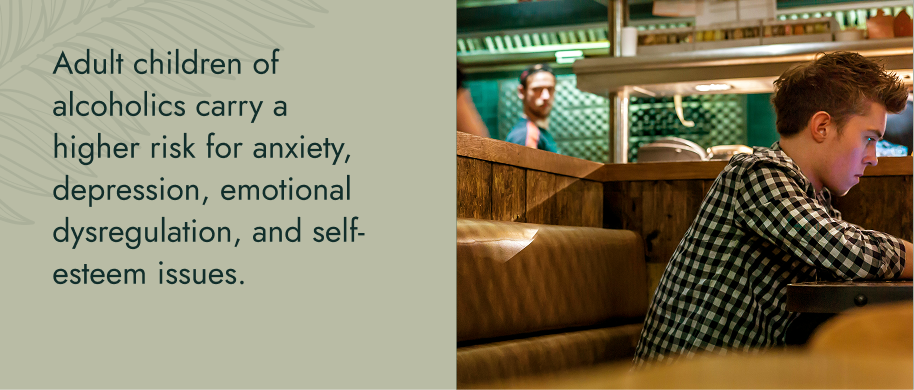
Growing up with an alcoholic parent also increases the risk of mental health struggles, including anxiety, depression, difficulty managing emotions, or self-esteem issues.
Trauma is another risk for adult children of alcoholics, which can make it even harder to navigate stress, emotions, and relationships later in life.
Research-Based Patterns Seen in Adult Children of Alcoholics
Research has also explored how childhood patterns may continue into adulthood.
In the same study, researchers identified four personality subtypes among adult children of alcoholics:
- High-functioning: These adults often appear successful and capable but may experience internal pressure, perfectionism, or difficulty slowing down.
- Externalizing: These adults may express distress through anger, impulsive behaviors, or difficulty managing frustration.
- Emotionally Dysregulated: These adults may struggle with intense emotions, mood changes, or feeling overwhelmed by stress.
- Reactive/Somatizing: These adults may experience distress through physical symptoms or heightened reactions to stress.
While these categories are based on clinical research, they are not meant to place people into fixed groups. Many adult children of alcoholics relate to different patterns at different points in their lives.
What matters most is understanding your own experiences and recognizing how they may still be affecting your thoughts, emotions, and relationships today.
Related Blogs

Signs of Unresolved Childhood Trauma
Unresolved childhood trauma manifests in many different ways. Discover the physical, behavioral, and psychological signs of unresolved trauma.

Attachment Trauma in Adults
Attachment trauma is formed in childhood, but left untreated, it can impact your relationships as an adult.

What Are Healthy Coping Mechanisms?
Encountering triggers can feel bad enough on its own, but how we choose to cope with them can make all the difference.
Finding Support and Healing as an Adult Child of an Alcoholic
Growing up with an alcoholic parent can leave lasting emotional wounds, but those experiences don’t have to define your future. Many adult children of alcoholics find that therapy and professional support help them better understand their past and develop healthier ways of coping.
At Sequoia Behavioral Health, care focuses on understanding the experiences that shape each person’s mental health. Through evidence-based therapy and personalized treatment, clients can work through unresolved challenges and build a stronger foundation for healing.
Reach out to our team at Sequoia Behavioral Health to learn how compassionate, individualized care can help you move forward.
Learn More

Attachment Style Therapy
Attachment styles are patterns in relationships that develop in childhood and impact how we approach relationships throughout our lives.

Family Therapy
Family therapy can greatly improve a person's success in treatment. During these sessions, the family works together to resolve conflicts and build support.

Online Therapy
Online therapy is a great option for people who have accessibility needs, prefer to meet online, have scheduling difficulties, and have limited local options.
At Sequoia Behavioral Health, we use evidence-based therapies that support healing from the inside out. Our approach addresses both your mental health symptoms and their underlying causes.