


As a first responder, it can seem like long hours, high-stress situations, and traumatic experiences are all just part of the job. The problem is, these issues gradually wear down your mental health. Eventually, you may start to feel like you don’t have anything left to give.
While it’s true that any job can eventually lead to burnout, it’s especially common among first responders, who often experience it much quicker and more intensely. In this guide, we’ll take a look at what burnout is, why it happens, and how first responders can prevent it.
What Is Burnout?
Burnout is often described as a state of intense physical, mental, and emotional exhaustion. It’s usually used in a work-related context where the demands of a job gradually drain someone’s energy levels until they’re unable to function like they used to.
Common Symptoms of Burnout
While burnout affects people in unique ways, here are some common symptoms to look for:
- Emotional numbness
- Loss of motivation or enthusiasm
- Chronic fatigue or low energy
- Changes in sleep and appetite
- Decreased productivity
- Avoidance of responsibilities or social activities
At first, burnout can make someone feel more tired, overwhelmed, or emotionally low than they normally do. Eventually, these seemingly minor symptoms can intensify until it feels impossible to keep up with professional or personal responsibilities. It’s at this point where someone may feel completely helpless or even cynical about their job and personal life.
Signs of Burnout in First Responders
Due to the distinct nature of the job, burnout has a unique way of showing up in the lives of first responders.
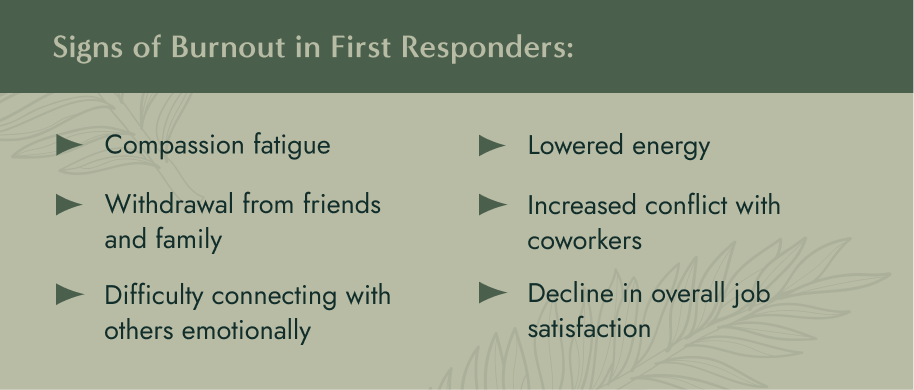
For example, the emotional exhaustion that comes with burnout can make it hard to feel empathy towards others, even if they’re in extreme pain or distress. This phenomenon is known as compassion fatigue, and it’s a common sign of burnout in people in caregiving roles like doctors, nurses, and first responders.
Burnout can also cause first responders to feel detached from others. In their personal lives, this may lead to physical and emotional withdrawal from friends and family due to low energy or difficulty connecting with others emotionally. In a professional setting, it can lead to increased conflict with coworkers and a decline in overall job satisfaction.
Why Do First Responders Experience Burnout?
Burnout usually comes from stressful lifestyles that put people under extreme pressure. Some of the common stressors that first responders experience include:
- Repeated exposure to traumatic events
- High-pressure situations that require split-second decisions
- Irregular schedules, overnight shifts, and extended hours
- Overworking due to high call volumes or staffing shortages
- Strained relationships and neglected personal life
All of these stressors gradually wear down someone’s physical, mental, and emotional energy. Without taking the necessary steps to recover and recharge, burnout can quickly set in and leave first responders completely exhausted on all fronts.
How Can First Responders Recover from Burnout?
To recover from burnout, first responders should use self-care strategies that actually support rest and recovery, rather than work against it.
While it may seem like powering through the day, turning to substances, or mentally checking out are the quickest and most effective ways to deal with burnout, these strategies only provide temporary solutions to a long-term problem. Not only do they fail to resolve the root of burnout, but they actually contribute to it by worsening someone’s overall health.
Truly recovering from burnout means rebuilding your physical, emotional, and mental energy over time. This usually involves prioritizing your own needs and seeking support for your mental health.

Mental Health Care for Mesa First Responders
At Sequoia Behavioral Health, we understand the unique experiences and needs of first responders. We’re a part of the Mesa community, and our goal is to deliver the highest level of trauma care for those on the front line right here in Mesa.

Preventing Burnout—Why Self-Care Is Important
Self-care is easy to ignore when you’re a first responder. So much of your time is spent putting others’ needs ahead of your own, and eventually, that mindset can start to feel normal and automatic.
However, to continue showing up fully when others need you most, you need to look after yourself.
Practicing self-care is such an important and effective way to make sure your needs are actually getting met. It not only helps prevent burnout by giving your body and mind time to recover, but it also supports your overall health so you’re better equipped to handle the demands of the job.
How to Practice Self-Care
To practice self-care and prevent burnout symptoms, make sure you:
- Get adequate sleep
- Eat a nutritious diet
- Dedicate time for rest and recovery
- Make time for fun, enjoyable activities
- Set healthy boundaries
- Avoid self-medicating with unhealthy habits and substances
In addition to self-care, one of the most effective ways to prevent burnout is to ask for help as soon as possible. Help can come in many forms, whether it’s someone that can offer advice or simply check in on you and your wellbeing. Meeting with a therapist or counselor is a great way to get the help you need to prevent burnout.
Mental Health Support for First Responders
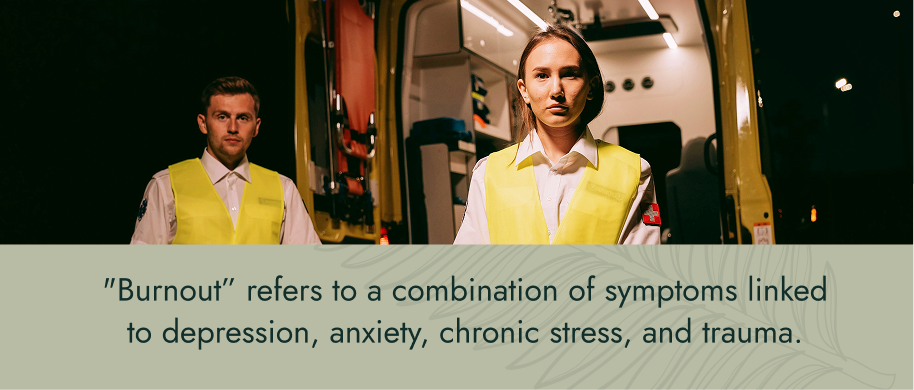
Many people don’t realize that burnout isn’t considered a separate mental health condition. Instead, the term “burnout” refers to a combination of symptoms associated with conditions like depression, anxiety, chronic stress, and trauma.
For first responders, seeking mental health support is not only important for managing the symptoms of burnout, but also to prevent them from escalating into more serious or long-term conditions.
Therapies like EMDR, somatic-based therapy, and neurofeedback can be particularly helpful for first responders, as they target the unresolved trauma that’s often at the root of many mental health issues.
How Do I Ask for Time Off When I Go to Inpatient Treatment?
You don’t have to disclose every detail about your situation to your employer. In many cases, you can simply request medical leave and provide documentation from a healthcare provider if needed.
Depending on your workplace and eligibility, options like medical leave policies or protected leave (such as FMLA) may allow you to take time off while maintaining job security. If you feel comfortable, speaking with a supervisor, HR representative, or union representative can help you better understand your options and protections.
Does My Boss Need to Know That I Am Going to Mental Health Treatment?
In most cases, you’re only required to say that you’re taking leave for a medical reason. Employers can ask for documentation before granting leave, but it doesn’t typically need to include a diagnosis or a detailed explanation of your condition.
Related Blogs
.jpg)
Anxiety Relief: Techniques and Tools You Can Use Now
Anxiety relief is a short-term and long-term effort. Learn how to start managing your anxiety here.

Nervous Breakdowns
Nervous breakdowns aren’t a formal diagnosis, but they describe a very real experience. Find out what they are, what causes them, and how to prevent them.

Mental Health Crisis: What They Look Like and What to Do
Learn what you need to know about a mental health crisis before experiencing one.
Specialized Support for Burnout, Compassion Fatigue, and Trauma
PTSD, second-hand trauma, compassion fatigue, and burnout can affect your ability to do your job as well as live the life you want off-duty. At Sequoia Behavioral Health, we’re here to help you recover and learn how to manage mental health challenges in the future.
Reach out today to connect with a mental health specialist here at Sequoia.
Learn More

Sound Baths
Sound baths treat a variety of mental health concerns by connecting the mind and body. Specific sounds help slow breathing and heart rate to induce calmness.

Support Groups
There are support groups across the country that meet to talk, process, and live out their mental health recovery journey, as well as other issues.

Trauma Therapy
Trauma-informed therapy recognizes that trauma is an underlying part of many other conditions, helping us provide compassionate and effective treatment.
Your journey at Sequoia starts with a simple admissions process where we learn more about you, your concerns, and your goals. Learn more about what to expect on your path to mental wellness.