



Leaving residential treatment can bring up a complicated mix of emotions. You may feel proud of the progress you've made while also wondering what will happen when you return to the places, responsibilities, and situations that were part of your life before treatment.
That uncertainty is understandable. Residential treatment gives you time and space to focus on recovery, but returning to daily life means learning how to protect that progress in a less structured environment.
In this article, we’ll go over how to design an aftercare plan that helps you stay on track after leaving residential treatment.
What Is an Aftercare Plan?
An aftercare plan is a personalized plan for the support and resources you'll need after leaving residential treatment. It helps you carry what you learned in treatment into your everyday life.
Creating an aftercare plan is important because the recovery process doesn't end when treatment does. Your transition home is simply a new stage of the process, and your needs will likely change as you adjust to more independence.
What to Include in an Aftercare Plan
An effective aftercare plan prepares you for the small details of everyday life that can put your recovery in jeopardy. This can include:
- Continued therapy or counseling
- Outpatient treatment or a step-down program
- Recovery or peer support meetings
- Medication management, if needed
- Support from trusted friends or family members
- Strategies for managing triggers and cravings
- A plan for responding to a lapse or other challenges
The right plan will depend on your history, your home environment, your relationships, and the challenges you expect to face after treatment.
When to Start Creating an Aftercare Plan
You don’t have to wait until your last day in treatment to think about what comes next. In fact, the best time to start building an aftercare plan is while you’re still in treatment and have support from your treatment team.
Your therapists and other care providers can help you think through situations that may be difficult after you leave. Together, you can identify the support you may need and make arrangements before the transition happens.
Achieve a Lasting Recovery at Sequoia
At Sequoia Behavioral Health, we help you achieve a lasting recovery both in and out of treatment. Clients begin working with their treatment team to create a personalized aftercare plan as part of the residential treatment process.

How to Design an Aftercare Plan After Addiction Treatment
Before you start designing your aftercare plan, it can be helpful to ask yourself the following questions:
- Where will I be living?
- Who will I spend most of my time with?
- Will I be returning to work, school, or other responsibilities?
- What situations could put my recovery under pressure?
- When am I most likely to feel lonely, overwhelmed, or tempted to use?
Be honest with yourself about the situations you’ll likely encounter when returning to daily life. This can include certain environments, relationships, emotions, or harmful patterns that contributed to your substance use in the past.
Once you have an idea about what life will look like after treatment, you can plan accordingly and be prepared to handle your past struggles in a way that doesn’t compromise your recovery.
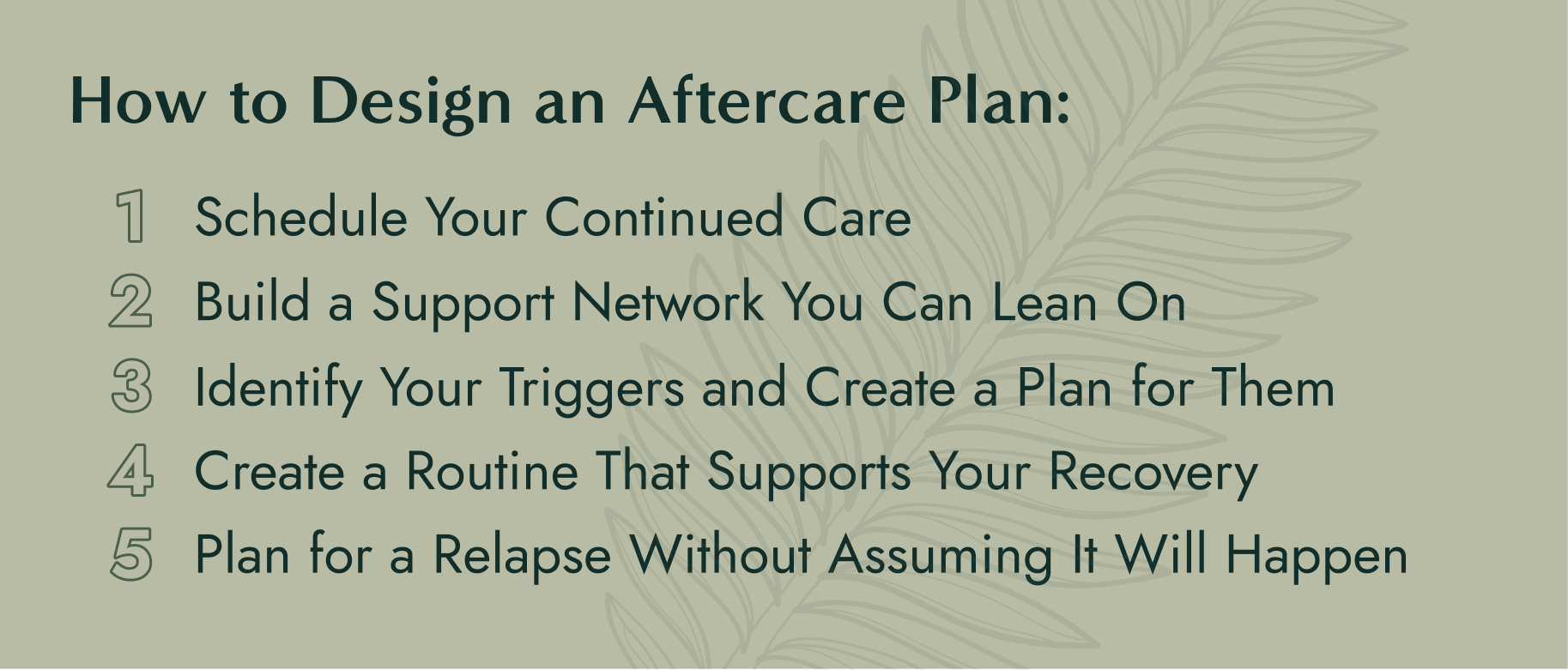
Step 1: Schedule Your Continued Care
One of the most important parts of an aftercare plan is deciding what professional support will look like after residential treatment.
For some people, this could simply be continued individual therapy. Others may benefit from a structured step-down program, such as an intensive outpatient program or a partial hospitalization program. These programs provide a higher level of support and help ease the transition to life outside of residential care.
Whenever possible, schedule your appointments before leaving residential treatment. Knowing when and where you'll receive continued care can make the transition feel less uncertain.
Step 2: Build a Support Network You Can Lean On
Think about who in your life can offer healthy, reliable support. These may be family members, friends, people you meet through recovery groups, or professionals involved in your care.
Consider creating a short list of people you can contact for different reasons:
- Someone you can call when you're struggling with cravings
- Someone you trust when you need to talk
- A person who can help you get to a meeting or appointment
- A professional or program you can contact when you need additional support
You may also need to establish boundaries with people who do not support your sobriety. Protecting your recovery can require difficult changes, especially when certain relationships have been closely connected to substance use.
Step 3: Identify Your Triggers and Create a Plan for Them
You can’t always prevent triggers from appearing, but you can decide how you will respond to them.
During treatment, you may gain a better understanding of the situations, emotions, or experiences that increase your risk of returning to substance use. Your aftercare plan should turn that knowledge into specific actions.
For each major trigger, ask:
- How will I recognize that this situation is affecting me?
- What can I do in the moment instead of using?
- Who can I contact for support?
- What situation do I need to leave or avoid?
- What should I do if my usual coping strategy is not enough?
Try to make your answers as specific as possible. "I'll manage my stress" is difficult to follow when you are already overwhelmed. "I'll leave the situation, call my support person, and go to a recovery meeting" gives you a clearer path to follow.

Step 4: Create a Routine That Supports Your Recovery
When creating a healthy routine, you don’t need to account for every hour of the day. Instead, focus on a few commitments that support your well-being and give your recovery a regular place in your life.
This can include:
- Routine therapy or outpatient treatment
- Recovery meetings or peer support
- Regular meals and sleep
- Exercise or other physical activity
- Time for hobbies and enjoyable activities
- Time with people who support your sobriety
The goal is to create a consistent routine that helps support your recovery when you return to your old responsibilities, relationships, and daily stressors.
Step 5: Plan for a Relapse Without Assuming It Will Happen
An aftercare plan should include clear steps for what to do if you return to substance use. This is not the same as expecting or accepting a relapse.
This simply means deciding in advance how you will respond to a setback so that one difficult moment does not turn into a complete abandonment of your recovery.
Your plan might answer questions like:
- Who will I contact immediately?
- What treatment provider or program can help me?
- Do I need a higher level of care?
- What changes do I need to make to protect my recovery?
- How can I respond without shame preventing me from asking for help?
A relapse can be serious, but it doesn’t erase the progress you made in treatment. Reaching out quickly can help you understand what happened and determine how to move forward.
Related Blogs

Overcoming Reintegration Shame: Re-entering the World After Treatment
Learn why reintegration can feel challenging, how to navigate the transition home, and why continued mental health care plays an important role after residential treatment.

Understanding the Models of Addiction
The models of addiction help contextualize the "hows" and "whys" of addiction. At Sequoia, our addiction treatment echos several different models.

Building a Relapse Prevention Plan
Learn what every relapse prevention plan should include and how to build one for yourself.
Professional Addiction Treatment in Mesa, AZ
At Sequoia Behavioral Health, our mental health-focused program is designed to meet you where you are, uncover the sources of the substance abuse, and help you rediscover your life’s purpose.
While in treatment, our clients work with their treatment team to develop personalized plans for therapy and aftercare. We also offer continued levels of care and can help clients identify the support they need as they move forward in recovery.
If you're ready to start treatment or want to learn more about your options, connect with our team here at Sequoia.
Learn More

Outpatient Addiction Treatment
Outpatient addiction treatment in Mesa Arizona for those who are ready for the next level of independence in their sobriety journey.

Support Groups
There are support groups across the country that meet to talk, process, and live out their mental health recovery journey, as well as other issues.

Medication Management
We find the proper medication for our clients through pharmacogenomic testing in order to increase treatment success after a client leaves our facility.
Sequoia Behavioral Health provides holistic addiction treatment and aftercare. Contact us to receive the treatment you or a loved one needs.