



Relapses are a normal part of recovery, and they don’t mean you’ve failed. For many, a relapse is a stepping stone on the road toward breaking free of addiction. That being said, preventing a relapse is more ideal than experiencing one.
In this article, we’ll give you the tools you need to build a relapse prevention plan you can use while on your recovery journey.
What is a Relapse Prevention Plan?
When you leave addiction treatment, you’ll be returning to your everyday life, including the environment you were in when you were addicted. Reintegrating after treatment can be a difficult time. There may be a lot to work through and change.
A relapse prevention plan gives you actionable insight into what could trigger a relapse, what to do if you feel cravings, and a reminder of the consequences of using.
Residential Addiction treatment in Mesa, AZ
If you’re ready to start your recovery journey, Sequoia Behavioral Health is here to help. We’ll walk you through everything including insurance and getting checked in.

How to Create A Relapse Prevention Plan
A prevention plan looks like a list of warning signs, important reminders, and people you can call if cravings arise.
We’ll walk you through what to include in your relapse prevention plan. You can write this down, put it in a pocket notebook you have all the time, type and print it, or make a note in your phone. Either way, this plan should be easily accessible.
Why Did You Decide to Stop Using?
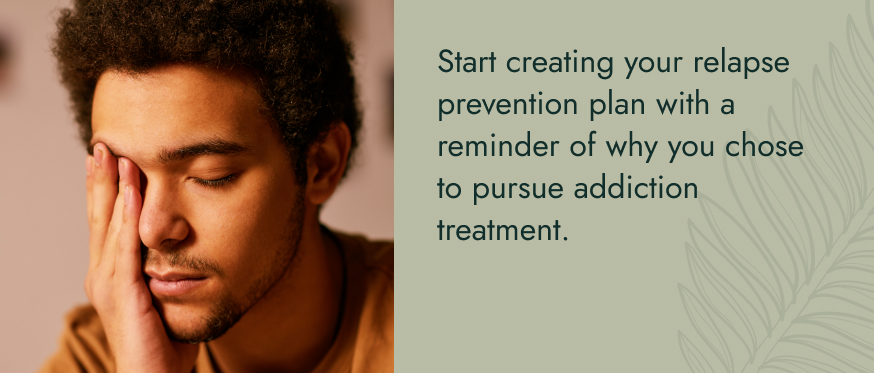
The first thing you should do is write down why you chose to pursue addiction recovery. This is your guiding principle and should be revisited often.
What Are Some Feelings That Might Lead to Relapse?
Relapses are usually triggered by feelings, thoughts, memories, and emotions. For this part of the relapse prevention plan, you’ll take stock of all the feelings that could lead to a relapse. This could include:
- Boredom
- Anger
- Excitement
- Frustration
Taking note of what feelings you need to watch out for is important for understanding early warning signs of a relapse.
Coping Skills to Combat Those Feelings
It’s one thing to know what feelings cause relapse, but knowing how to cope with those feelings will be your safeguard against relapse.
For each emotion you listed, write down healthy ways to cope with those feelings:
- Boredom: Practice a hobby, go for a walk, call a friend
- Anger: Practice breathing exercises, take a walk, meditate
- Excitement: Calm yourself with breathing exercises, take a slow meditative walk
- Frustration: Journal your thoughts, go for a walk, practice deep breathing
How you cope with your emotions should be personal and actionable. Feel free to use the above examples, but also include what you’ve learned from treatment and therapy.
What Are Some Thoughts That Might Lead to Relapse?
Similar to feelings, thoughts can start the process of a relapse. These thoughts could relate to thinking you’re cured, remembering the “good times”, or thinking you deserve a cheat day.
You don’t need to have experience with a relapse to understand what these thoughts are. Consider what you used to think before having cravings, and use these as a starting point.
What Behaviors Might Lead to A Relapse?
Habits and behaviors are important for your recovery journey. Without new and healthy habits, you’ll end up reverting to old, harmful ones.
Take an inventory of any behaviors that could lead to a relapse. This could include:
- Binge-watching
- Missing support meetings
- Spending time with certain people
- Self-isolating
Like the other questions in this plan, knowing what behaviors could lead to relapse will help you see the warning signs early.
What People and Places Could Lead to a Relapse?
So far, we’ve focused on internal triggers, but triggers can be external as well. Running into old friends or going to certain places can trigger cravings. That’s because people, places, and situations can become associated with past substance use.
Write a list of people and places that could lead you toward relapsing. Consider people who will not support or respect your recovery and people who could trigger negative emotions.
As for places, think of environments you associate with using. This could be certain neighborhoods, shopping complexes, or people’s houses.
Awareness is very important for your recovery. You may not be able to avoid these people or places completely, but knowing they could be triggers can help you prepare and avoid a trigger.
Related Blogs

5 Benefits of Residential Treatment
Residential treatment isn’t a last ditch effort for mental health and addiction treatment. It’s an opportunity to focus on yourself while receiving the mental health care you need.

How to Build a Support System
Support systems are an important part of long-term mental health recovery and addiction recovery. Learn how to build one here.

Life After Addiction: How to Navigate Life After Rehab
Reintegrating into daily life after rehab is challenging. Discover how to continue the healing journey and maintain recovery after rehab.
How Can You Cope With Cravings?
Cravings will pass. However, that doesn’t make them easy. In this part of the plan, you’ll list out any coping skills you can use to decrease cravings.
These coping skills can be things that will help distract you, like:
- Going for a walk
- Watching a feel-good movie
- Calling a friend
- Listening to a certain kind of music
- Working out
- Cleaning
- Engaging with a hobby
- Doing a puzzle
Think of your list of coping skills as a list of tools you can pull out at a moment's notice to combat cravings.
Who Can You Call During a Craving?
When experiencing a craving, having someone you can call can make a world of difference. Write a list of all the people you can call when times get tough.
This list can include:
- Friends
- Siblings
- Pastors
- Mentors
- Sponsors
The most important thing about this part of your plan is to communicate with the people on your list. They should be aware that you might be calling when you’re feeling cravings. They don’t need to be on call 24/7, but they should be aware that you’re relying on them.
What Are the Consequences?
This part of your plan will ask as a way to remember the consequences of using. Sometimes cravings can cloud judgement. This list is meant to remind you of the reality of using.
Consequences can include:
- Missing work
- Failing a drug test
- Skipping an appointment
- Feeling bad
Be honest about this list and keep it close by, especially when a craving starts.
What Can You Only Achieve Through Sobriety?
There’s a good reason you chose to end addiction, and there many smaller reasons. For this part of the plan, write down short term and long term goals you can only achieve through sobriety.
These goals could include:
- Re-establish family connections
- Financial stability
- Career development
- Improve your physical and mental health
- Create a life you’re proud of
Keeping these goals front and center will give you even more reasons to work through cravings and avoid relapse.
Making Your Relapse Prevention Plan Concise
It’s now time for you to take all the things you’ve written so far and make a concise relapse prevention plan. This will end up looking like a list of resources and short reminders.
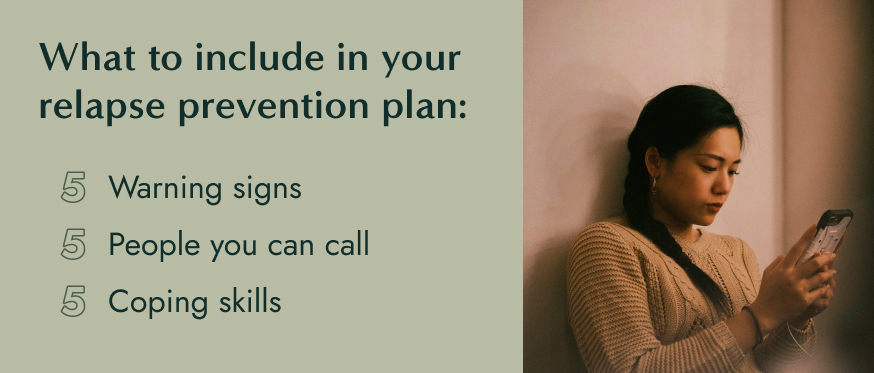
Your relapse prevention plan should include:
- Five warning signs of a relapse
- Five people you can call to help you get through a craving
- Five things you can do to get your mind off cravings
Keep this in your phone, put it on your fridge, keep it in your pocket, and keep it in a prominent place.
Long-Term Recovery Support From Sequoia Behavioral Health
Sequoia Behavioral Health is a holistic mental health and addiction treatment center dedicated to providing individualized treatment plans that treat the symptoms while addressing the root issues.
People who receive treatment at Sequoia Behavioral Health receive a personalized therapy program to ensure your treatment is successful, even after your time with us. Through community support groups, we’re dedicated to providing the support our clients need.
Start your recovery journey with Sequoia Behavioral Health and get all the support you need to live free from addiction. Contact us today.
Learn More

Support Groups
There are support groups across the country that meet to talk, process, and live out their mental health recovery journey, as well as other issues.

Medication Management
We find the proper medication for our clients through pharmacogenomic testing in order to increase treatment success after a client leaves our facility.

Outpatient Addiction Treatment
Outpatient addiction treatment in Mesa Arizona for those who are ready for the next level of independence in their sobriety journey.
Addiction Treatment in Mesa, Arizona
Sequoia Behavioral Health provides holistic treatment options for those suffering from addiction. Our treatment plans are built for individuals and include evidence-based treatment modalities that treat symptoms and address the root cause.