
Schedule a Call
Thanks — we will be in touch.
That did not send. Please try again.
47% of people with depression will have an anxiety disorder at some point in their life and 51% of people with anxiety will have a depressive disorder at some point in their life. Based on the statistics and anecdotal evidence, it seems like anxiety and depression go hand in hand.
The two often feel like opposite sides of a spectrum, but in reality, they share many similarities. In this article, we’ll cover everything there is to know about the connection between anxiety and depression, including:
- How they’re similar
- Their causes
- How they’re triggered
- How they’re treated
How are Depression and Anxiety Similar?
Depression and anxiety are very different experiences often thought of as different sides of a spectrum.
On one side, depression feels like a low-energy sadness that’s wrapped up in feelings of hopelessness and worthlessness. On the other side, anxiety is a heightened sense of worry with racing heartbeats, trembling, and increased awareness that’s hard to turn off.
It might not be easy to tell, but anxiety and depression share many symptoms.
Worry and Despair
Both anxiety and depression are linked to thoughts of worry and despair. While these two feelings are different flavors, they share a lot of connections.
Worry feels like a general unease about the future or current situations. Outside of anxiety, it goes away over time and does not persistently impact your daily life. However, as a symptom of anxiety, it becomes a constant fear that something bad is going to happen.
Despair is very similar, but it may be more existential. If you’re depressed, you may feel like life has little to no meaning.
These two feelings are slightly different, but they overlap. While anxious you may feel despair and while depressed you may feel worried. As you feel anxious or depressed you might use these terms to talk about how you’re feeling. You can use either word to explain your feelings.
Get Help With Anxiety and Depression Today
Start your healing journey at Sequoia Behavioral Health. Our team of clinicians use a holistic approach, healing the mind and body for mental wellness.
Difficulty Sleeping
Sleep hygiene is very important for mental health, but mental health is also important for sleep hygiene. The two are interconnected and when one gets worse, the other likely will.
Depression and anxiety can cause issues with sleeping which include:
- Difficulty falling asleep
- Frequent wake ups
- Low-quality sleep
- Lower than recommended deep sleep
Depression makes it hard to turn off stressful and troubling thoughts and is known to keep people up at night. Anxiety activates the fight or flight response and keeps it on.
Sleep disorders are common comorbidities and should be treated alongside depression, and anxiety in a holistic treatment program. When sleep is addressed alongside mental health issues, the whole body and brain can heal.
Related Article: Sleep Disorders
Foggy Memory and Impaired Concentration
Many people who struggle with depression or anxiety note issues with forgetfulness, confusion, and concentration.
While struggling with either anxiety or depression, it’s common for the brain to feel fatigued and foggy. Anxiety and depression are both taxing. Your brain is dealing with big fluctuations of hormones or even being flooded with neurotransmitters.
What Causes Anxiety and Depression?
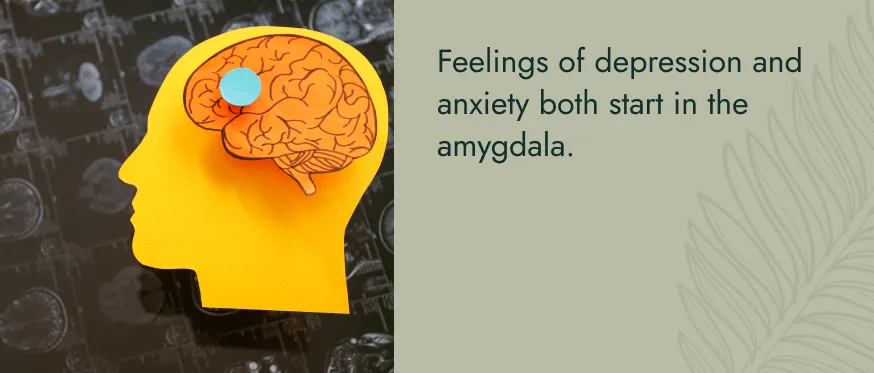
Brain function plays the main role in anxiety and depression. The amygdala region of the brain is responsible for mood and emotional regulation, as well as processing danger.
When you sense danger, the amygdala becomes overactive and produces certain neurotransmitters to push the body into fight or flight mode. If there is danger, the amygdala is important for getting out of dangerous situations.
However, when you have anxiety or depression, it’s because the amygdala is overreacting to current situations.
There is a biological link between depression and anxiety. The brian chemicals that control emotions and reactions are called neurotransmitters Though anxiety and depression are caused by two different neurotransmitters, corticotropin and serotonin respectfully, the receptors of these neurotransmitters are tightly linked.
Despite how much we do know, scientists have yet to fully understand what causes depression or anxiety disorder in some people but not others. However, it’s thought to be a combination of:
- Genetic factors
- Environmental factors
- Biological factors
Depression and anxiety share similar brain functions and genetic causation.
How are Anxiety and Depression Triggered?
The brain is responsible for the chemistry fluctuations that cause anxiety, but there are also events that can trigger these responses.
- Trauma and stress: Living through traumatic and stressful events like abuse, financial troubles, a car accident, or watching a loved one suffer
- Big life changes: Life changes (even good ones) can create feelings of instability. From there it’s easy for anxiety and depression to sneak in
- Substance use: Some people experience a negative emotional reaction when using certain substances
- Chronic Pain and Other Conditions: It’s common for people with chronic illness to also experience anxiety or depression
Does Anxiety Cause Depression?
Anxiety does not cause depression, but it can lead to it. Anxiety is a significant risk factor for depression.
People who experience a general anxiety disorder are at a higher risk for experiencing depression than those who don’t.
Related Articles: Atypical Depression
Can Depression Cause Anxiety?
Likewise, depression is not a cause of anxiety, but it is a risk factor. Thoughts associated with depression can easily lead someone into a heightened state of anxiety.
Social isolation is typical for someone experiencing depression and when that becomes the norm, it’s easy for anxiety to bubble up due to that isolation.
Related Articles: Crippling Anxiety
How are Depression and Anxiety Treated?
Both depression and anxiety can be treated similarly. The overlying causes and symptoms make it possible for these conditions to be treated similarly.
The most effective treatments for anxiety and depression are medication and talk therapy.
Medication
Because of the connection of the neurotransmitters that cause anxiety and depression, the medications used to treat these conditions use similar mechanisms.
There are a lot of medications used to treat depression and anxiety. You may or may not be a good fit for these treatments. If you’re interested in medical treatment for these conditions, talk with your general care professional to get more information.
Related Article: Antidepressants
Talk Therapy
Many forms of talk therapy are designed to improve symptoms of anxiety and depression. The treatments used include:
- Cognitive behavioral therapy (CBT)
- Psychodynamic therapy
- Solution-focused brief therapy
- Group therapy
When choosing an approach to talk therapy it’s hard to go wrong. Therapists can help you find the right approach and can even adapt their approach as sessions progress.
Holistic Depression and Anxiety Treatment In Arizona
Anxiety and depression are best treated with a holistic approach. That means treating the immediate symptoms as well as the underlying causes.
Sequoia Behavioral Health is a holistic treatment center that treats addiction and other mental health conditions. While in our program, you’ll engage in group therapy, as well as individual therapy.
Therapy options include traditional talk therapy as well as medical management and recreational therapy options like yoga, painting, and hiking.