
People experience “ups and downs” in their day-to-day life all the time. “Ups and downs” for those with bipolar disorder, however, happen in extremes called “mania” and “depression”.
Bipolar disorder is a mental illness known for causing dramatic shifts in a person’s mental clarity, mood, emotion, and energy. Without treatment, bipolar disorder tends to grow in intensity over time.
Many people who struggle with bipolar disorder successfully manage their condition with a personalized treatment plan that includes healthy lifestyle habits, medication, and psychotherapy. Sequoia Behavioral Health strives to break down the barriers that prevent people with mental illness from getting the help they need.
Without treatment, bipolar disorder tends to grow in intensity over time.
What Causes Bipolar Disorder?
Bipolar disorder affects men and women equally. The average age of onset for bipolar disorder is 25, but the condition can occur at any stage of life—including childhood.
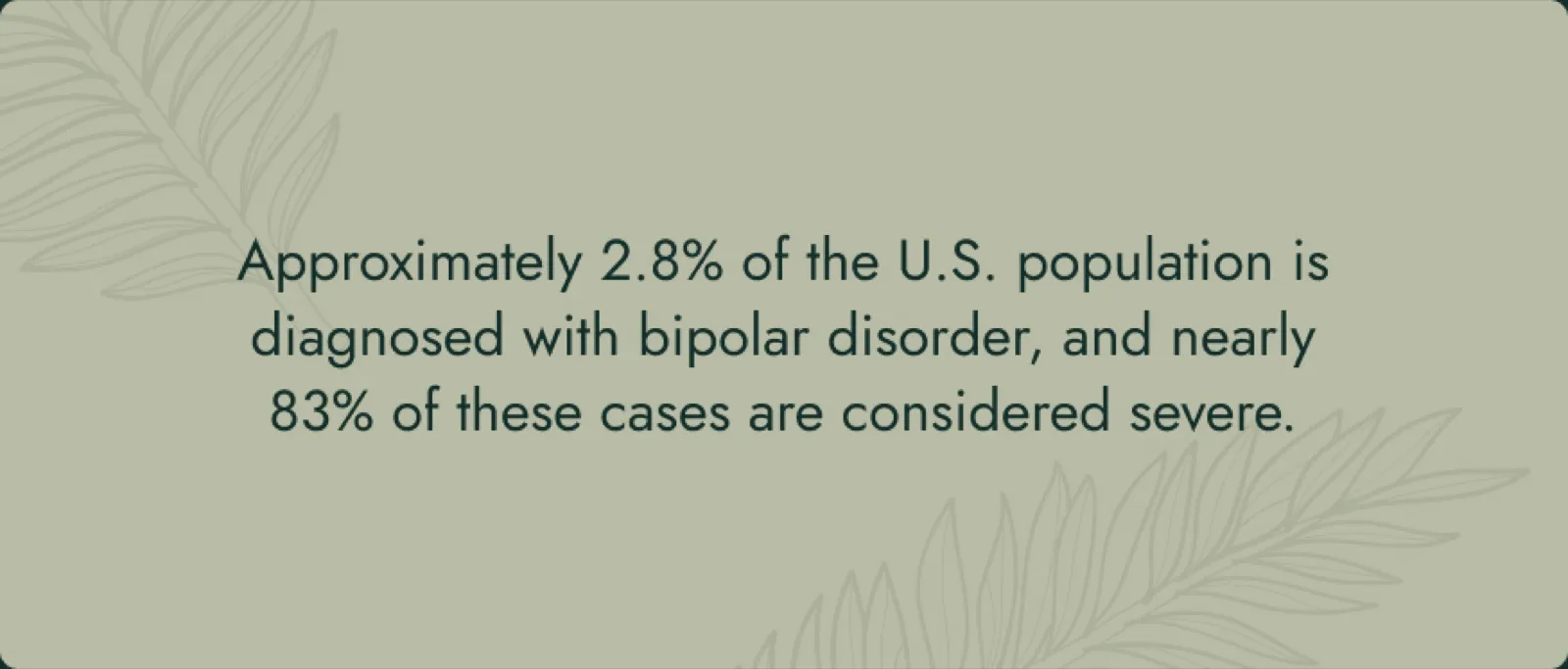
Approximately 2.8% of the U.S. population is diagnosed with bipolar disorder, and nearly 83% of these cases are considered severe. Scientists have yet to discover any singular cause of bipolar disorder, as several factors may contribute, including:
- Brain structure: While brain scans cannot diagnose the condition, researchers have identified subtle differences in the average size and activation of some brain structures in those with bipolar disorder.
- Genetics: The chances of developing bipolar disorder increase if one’s parents or siblings struggle with the condition. However, genetics do not guarantee that a person will experience bipolar disorder. For example, in studies of identical twins, only one twin may develop the disorder while the other does not.
- Stress. Stressful events such as a divorce, illness, family death, or financial problems can trigger bipolar symptoms. It’s believed that a person’s stress management may also play a role in the development of the disorder.
What Are The Symptoms Of Bipolar Disorder?
Symptoms of bipolar disorder and the severity of each can vary. Those with bipolar disorder often have distinct manic or depressed states, but they may also have extended periods—sometimes even years long—without symptoms.
People may experience both manic and depressive extremes simultaneously, or in a rapid sequence. Psychotic symptoms, such as delusions and hallucinations, may be present in severe episodes. The nature of these usually mirror the person’s extreme mood.
Those with bipolar disorder experience at least one manic or hypomanic state, and may, additionally, experience a depressed state.
Manic State
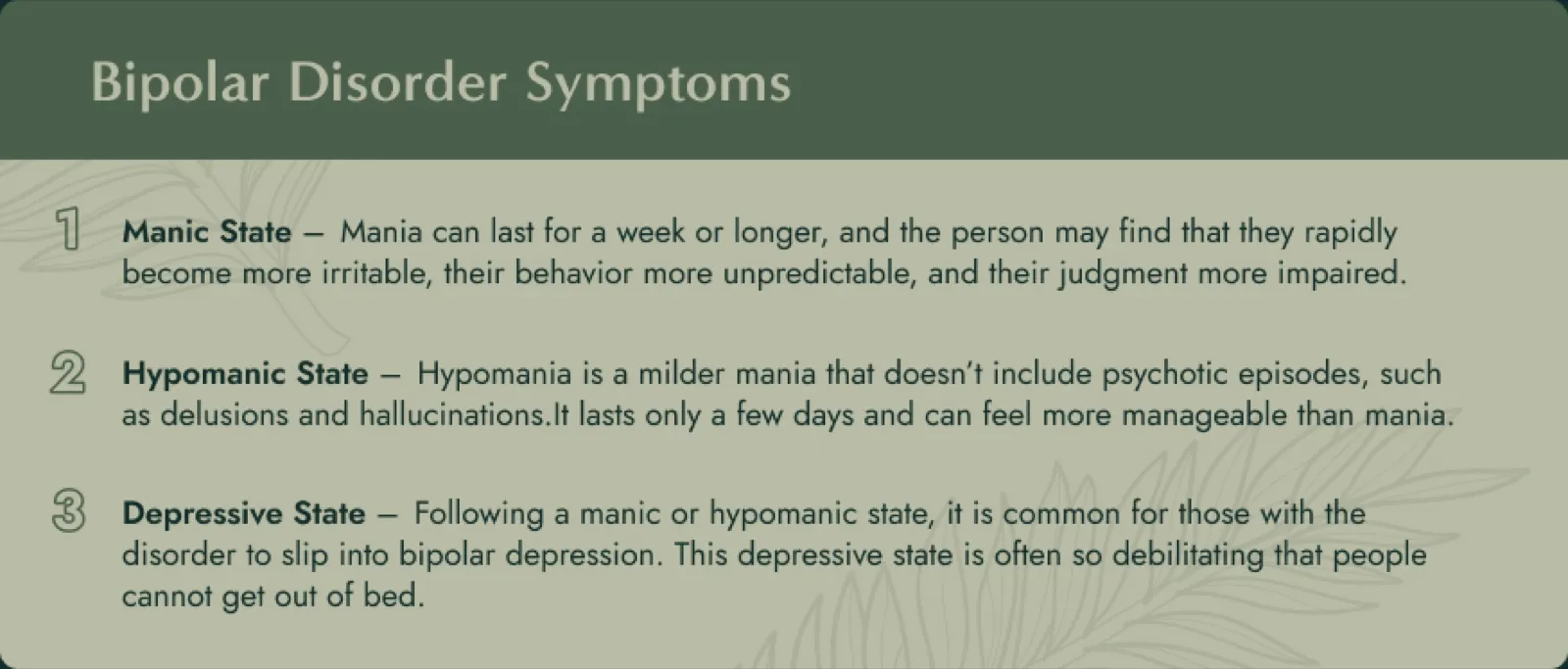
A person dealing with bipolar disorder may find the elevated mood of mania appealing, especially after a depressive period, but the mood pendulum does not stop at a comfortable or controllable level. Mania can last for a week or longer, and the person may find that they rapidly become more irritable, their behavior more unpredictable, and their judgment more impaired.
During manic states, people behave impulsively, make reckless decisions, and take unusual risks. Most of the time, people experiencing mania are unaware of the negative consequences of their actions.
Unfortunately, it is common for people to become suicidal in manic states. It’s helpful to identify what kinds of behavior signal “red flags” in a manic episode to help manage the symptoms of the disease and unintended consequences.
During manic states, people behave impulsively, make reckless decisions, and take unusual risks
Hypomanic State
Hypomania is a milder mania that doesn’t include psychotic episodes, such as delusions and hallucinations. It lasts only a few days and can feel more manageable than mania.
Loved ones may notice a change in the affected person’s mood and behavior, but the individual can generally continue daily activities. People with hypomania are often still able to function at work and in everyday social interactions.
Some people with bipolar disorder will have frequently occurring manic or hypomanic episodes, while others may experience them only rarely.
Depressive State
Following a manic or hypomanic state, it is common for those with the disorder to slip into bipolar depression. This depressive state is often so debilitating that people cannot get out of bed.
People who experience a depressive episode typically have difficulty falling and staying asleep. Others will sleep far more than usual. Even minor decisions, such as what to eat or wear that day, can feel overwhelming.
Those experiencing a depressive state may obsess over feelings of guilt, helplessness, loss, personal failure, or thoughts of suicide.
How Is Bipolar Disorder Diagnosed?
To be diagnosed with bipolar disorder, depression symptoms must be present nearly every day for at least two weeks. A doctor usually conducts an interview, performs a physical examination, and orders lab tests. While bipolar disorder is not visible in a blood test or body scan, these tests rule out other illnesses that resemble the condition.
If no other illnesses or medications are causing the bipolar-like symptoms, the doctor may recommend a mental health physician. Mental health care professionals use the DSM-5 to assess the pattern of symptoms and level of impairment during a person’s most severe episodes.
Four Types Of Bipolar Disorder
According to the American Psychiatric Association, there are four major categories of bipolar disorder. Psychiatrists identify each category by the pattern of mania and depressive episodes. The best treatment for you may differ depending on the type of diagnosis you receive.
Bipolar I Disorder
Although depression is not necessary for a diagnosis, most people with bipolar I will have both manic and depressive episodes. Those with bipolar I have manic episodes that last at least seven days, or are so severe that they require hospitalization.
Bipolar II Disorder
For a Bipolar II Disorder diagnosis, people must experience depressive episodes between hypomanic episodes without ever experiencing a full manic episode.
Cyclothymic Disorder / Cyclothymia
Cyclothymia is a chronically unstable mood state where hypomania and mild depression are present for a minimum of two years. Those affected may have a brief period of normalcy, but these periods last less than eight weeks.
Other Specified / Unspecified
An unspecified bipolar disorder occurs when a person experiences clinically abnormal periods of mood elevation, but does not meet the criteria for bipolar I, II, or cyclothymia.
Is Bipolar Disorder Treatable?
Treatment for bipolar disorder occurs in several ways:
- Psychotherapy (cognitive behavioral therapy (CBT) and neurofeedback)
- Medications (mood stabilizers and antipsychotic medications)
- Recreational Therapy (therapeutic exercise and psychoeducation)
Remember that other health approaches, such as aerobic exercise, yoga, meditation, or faith practices, can support—but not replace—treatment.

Are Other Disorders Associated with Bipolar Disorder?
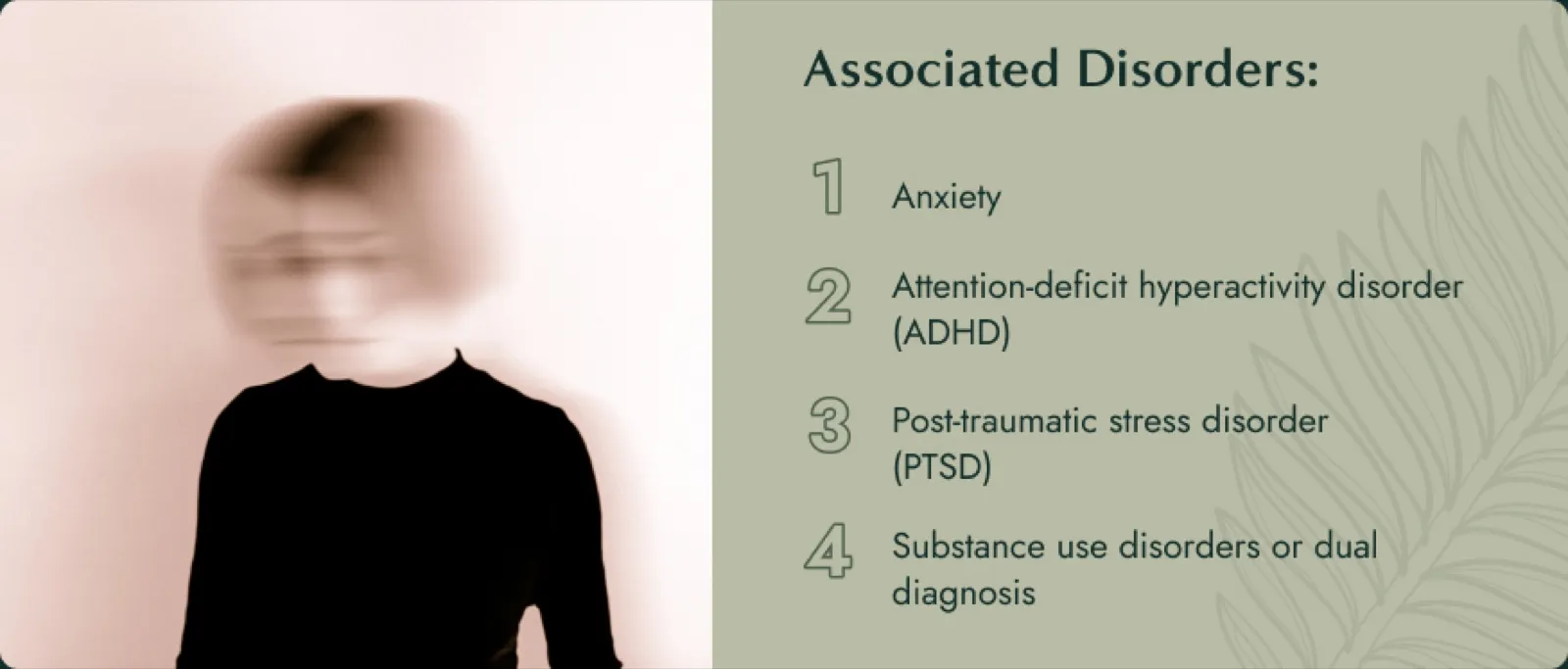
Those with bipolar disorder also commonly experience the following:
- Anxiety
- Attention-deficit hyperactivity disorder (ADHD)
- Posttraumatic stress disorder (PTSD)
- Substance use disorders or dual diagnosis
Dangers Of Misdiagnosis
People with bipolar disorder who demonstrate psychotic symptoms have been wrongly diagnosed with schizophrenia. Misdiagnosis of borderline personality disorder (BPD) is also, unfortunately, common.
Misdiagnosis can make it hard to treat bipolar disorder and, in some cases, may even worsen it. For example, antidepressant medications commonly used to treat obsessive-compulsive disorder (OCD) will worsen symptoms of bipolar disorder. Likewise, the stimulants used to treat ADHD can trigger a manic episode.
If you believe you may have more than one condition (co-occurring disorder), seek help from a reputable team that can tailor treatment to your individualized needs.
Clinically-Based Treatment At Sequoia Behavioral Health
We mean it when we say we focus on individualized treatment at Sequoia Behavioral Health. Our clinically-trained therapists administer evidence-based practices and interventions specific to bipolar disorder and dual diagnosis.
With a focus on holistic, personalized care, we can help improve the symptoms of mental and behavioral conditions. Our treatments cater to our client’s unique needs. Reach out today to discover what healing looks like in your life.