
As children, we not only learn skills like walking and talking, but we also develop personality traits and attachment styles. These develop based on a child’s relationship with their caregiver(s), and play a major role in how people relate as adults.
In this resource, we’ll cover everything there is to know about the disorganized attachment style, including:
- What it is
- How it develops
- Its effects
- Ways it can be treated
What Are Insecure Attachment Styles?
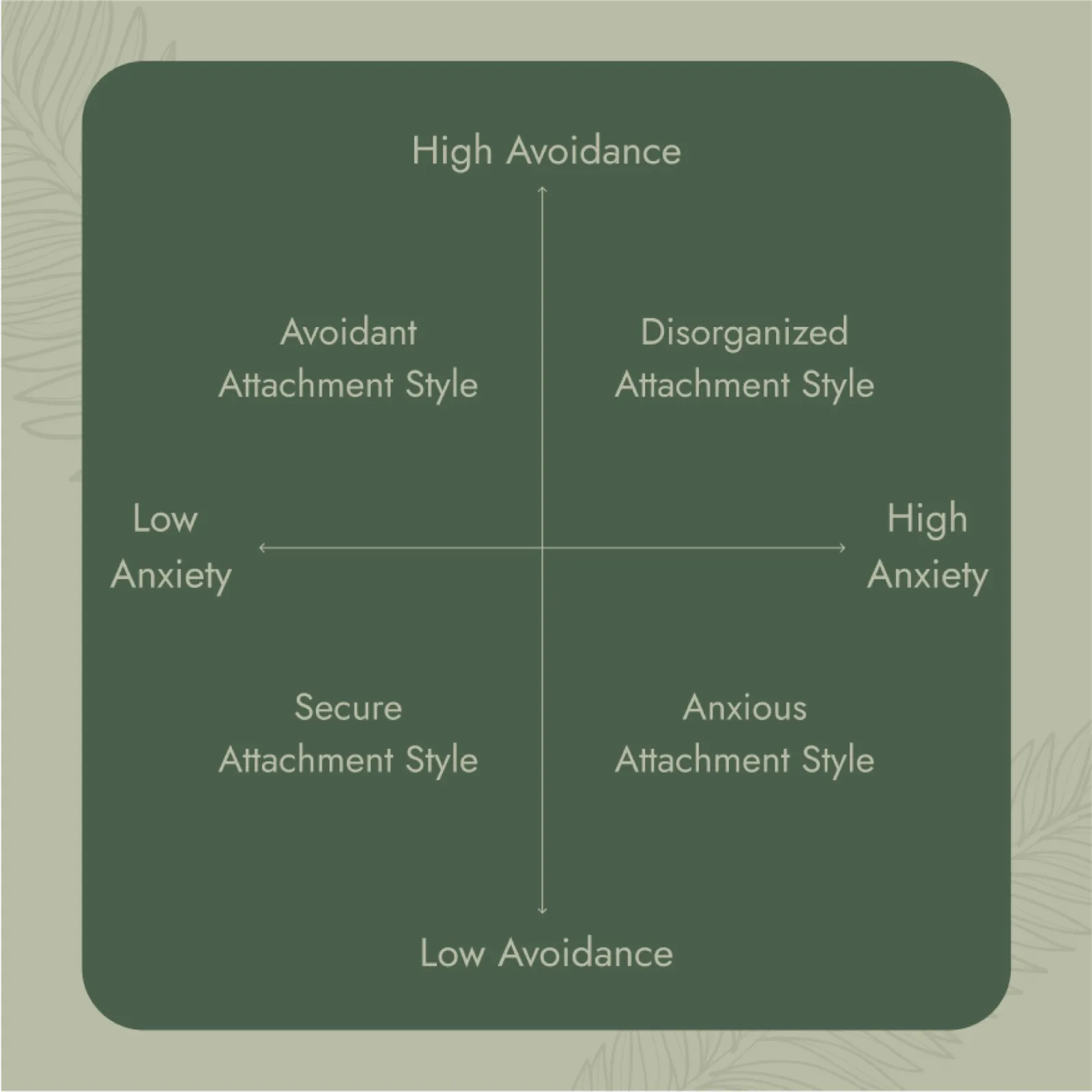
Attachment styles fall into two categories: Secure and insecure. People with insecure attachments can experience high anxiety and avoidant behaviors. Insecure attachment styles are split into three styles:
- Anxious: High anxiety, low avoidance
- Avoidant: High avoidance, low anxiety
- Disorganized: High anxiety, high avoidance
Insecure attachment styles affect relationships, mental health, and behavioral patterns.
Learn more about anxious and avoidant attachment styles by reading our articles, Anxious Preoccupied Attachment Style** and **Types of Avoidant Attachment Styles: Fearful and Dismissive
What is Disorganized Attachment?
Attachment theory originally only included anxious and avoidant styles. However, American psychologist Mary Main observed some children exhibiting both anxious and avoidant behaviors.
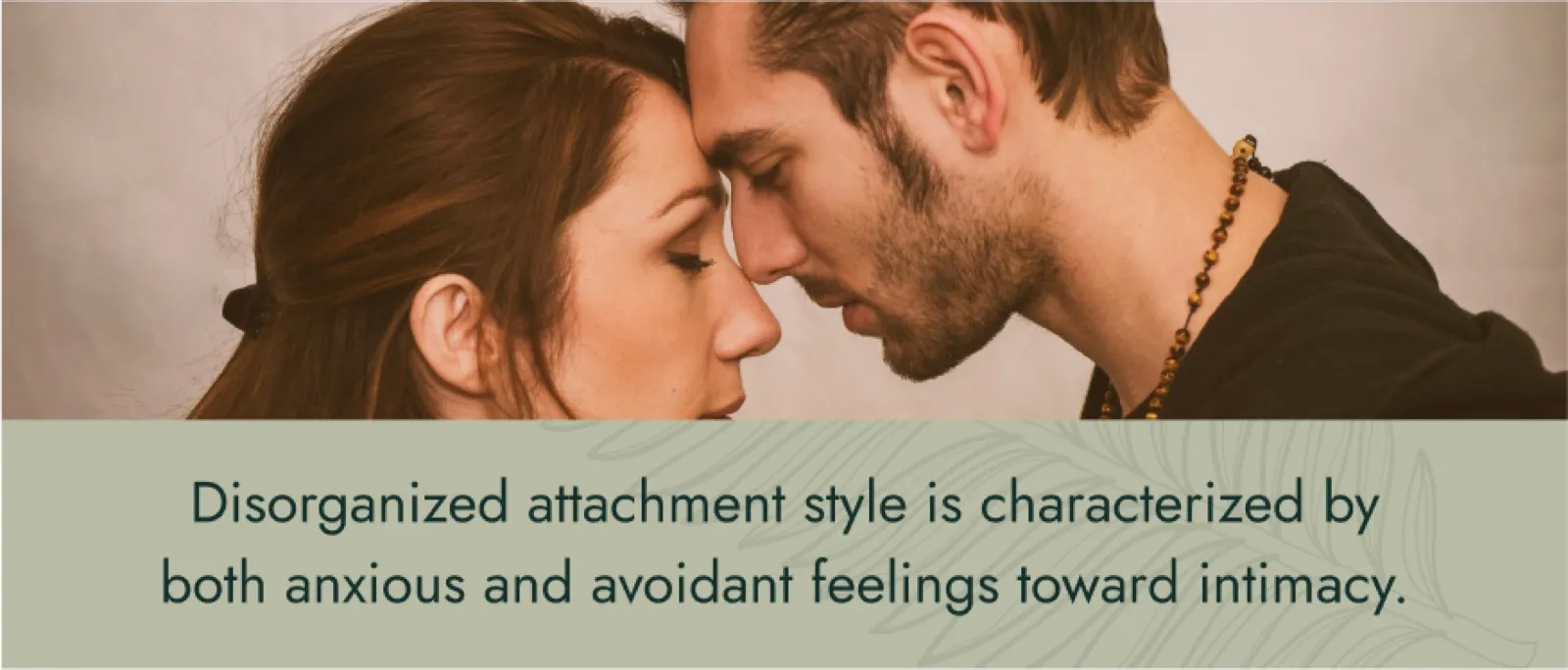
Disorganized attachment is a combination of anxious and avoidant styles. Someone with this attachment style will exhibit both anxiety and avoidant behaviors. They fear their partner leaving, and they hold people at arm’s length. It can be seen in all types of relationships, though it’s most common in romantic relationships.
Disorganized is used here to describe the inconsistent and hard-to-predict behavior. People with disorganized attachment don’t behave in the same way as those with other insecure attachments.
Learn more about attachment trauma in adults, and read about other signs of unresolved childhood trauma.
How Does Disorganized Attachment Style Develop?
All attachment styles usually develop during childhood. Insecure styles occur when a child’s caregiver is inconsistent, negligent, or abusive. If a child doesn’t feel their care is consistent and secure, their attachment style will likely be insecure.
Disorganized attachment style is developed when a child’s caregiver, their source of safety, becomes a source of fear. This attachment style is usually developed in households that experience frequent abuse.
Characteristics of Disorganized Attachment Style
Children who develop disorganized attachment styles exhibit similar characteristics.
- Lack of emotional regulation
- Requiring either extreme closeness or distance at a moment’s notice
- Feeling anxious about other people’s intentions
- Fear of being abandoned
- Low self-esteem
- Inconsistent behavior in relationships
These characteristics are common in all people with a disorganized attachment style. However, the behaviors they exhibit are often sporadic or disorganized.
Effects of Disorganized Attachment Style
People with a disorganized attachment style will experience difficulty in relationships and their mental health. This is mainly manifest in intimate relationships, but can become a problem across many relationships.
Relationships
Attachment styles are developed based on the relationship between a child and a parent. Relationships are central to attachment styles and are most affected by them.
Disorganized attachment styles will affect relationships in different ways:
- Intimacy: People with disorganized attachment will likely struggle to maintain healthy intimate relationships. They will often swing between desiring intense emotional closeness and a fear of being betrayed or abandoned.
- Communication: A disorganized attachment style can make communicating feelings difficult and create mixed signals.
- Negative Dynamics: People who developed a disorganized attachment style may be drawn to relationships that are similar to the unhealthy relationship with their parent.
- Self-Sabotaging: People with disorganized attachment styles may feel they’re relationships are in shambles and unconsciously find reasons to end the relationship.
Intimate and romantic relationships are affected by disorganized attachment, but platonic friendships can be as well. In friendships, people with a disorganized attachment style may come off as overly clingy and distant depending on the day.
Disorganized Attachment’s Effect on Mental Health
Disorganized attachment in adulthood is a risk factor for anxiety, depression, borderline personality disorder, substance use disorder, and PTSD. However, it’s not guaranteed.
Someone with a disorganized attachment style likely grew up in a difficult home and could be the source of complex trauma. These mental health struggles should be treated with treatment and therapy.
Disorganized Attachment Treatment
A disorganized attachment style is not considered a mental health condition. It’s a developmental issue. People who have this attachment style have a difficult time self-regulating their emotions and behaviors. That’s because it was never modeled to them.
The goal of treating a disorganized attachment style is to improve the individual’s self-regulation skills. During treatment, they’ll learn how to communicate better, handle conflict, enforce boundaries, and develop interdependence.
There are several ways to do this, but one of the easiest is to attend therapy and get help from a mental health professional.
Attending Treatment
Therapy and mental health treatment should be tailored to the individual’s needs. If someone is experiencing anxiety due to trauma, they don’t just receive anxiety treatment, but they receive trauma treatment as well.
This is considered a holistic approach, and it’s what Sequoia Behavioral Health specializes in. We develop individualized plans that treat the symptoms and the root cause of mental health struggles.
Someone with a disorganized attachment style and a substance use disorder should be treated for addiction and their attachment style. This approach to dual diagnosis is crucial for receiving a holistic treatment.
Trauma therapy is a good option for those with a disorganized attachment style. Their attachment style was created due to trauma, and treating that will help. Cognitive behavioral therapy (CBT) is another great option for this attachment style. It helps people find the connections between their emotions, behaviors, and thoughts.
Attachment Style Therapy
Attachment style therapy is designed to help people with insecure attachment find security in relationships. This treatment modality addresses issues related to attachment styles, including:
- Addiction
- Anxiety
- Depression
- And more
While addressing these issues, close attention is kept to the trauma of the individual. During this treatment, you’ll find increased self-awareness to help battle the effects of your insecure attachment style. You can then use these new skills to improve relationships, reduce anxiety and stress, and improve your communication.
Learn about attachment style therapy at Sequoia Behavioral Health.
Practicing Mindfulness and Self-Regulation
Mindfulness improves someone’s emotional resilience and their ability to self-regulate. While in treatment, you’ll be practicing ways to improve mindfulness and acknowledge your attachment style and how that affects your behaviors.
Read more about the causes and symptoms of emotional dysregulation.
As a person with a disorganized attachment style, you may feel conflicted about how you feel and what you need. As you practice mindfulness, your feelings and thoughts may become clearer to you. However, while attending therapy, you’ll learn skills to improve your communication.
Learning how to self-regulate is a difficult thing to do as an adult. However, with the help of a mental health professional, you can learn to cope with a disorganized attachment style.
Attachment Trauma Treatment At Sequoia Behavioral Health
Sequoia Behavioral Health provides a holistic approach to mental and behavioral health treatment programs. Our intensive treatment programs treat symptoms while finding the root cause.
If you or a loved one is struggling with mental or behavioral health, contact us to have any questions answered and start the intake process.