
The concept of addiction isn’t always easy to define because the usage of the term has been controversial. However, dependence on a substance or activity is central to its accepted definition.
It wasn’t until recently that the DSM-5 (Diagnostic and Statistical Manual of Mental Disorders) and the ICD-11 (International Classification of Disease) listed non substance-related behavioral addictions. The change challenged the belief that addiction depended solely on drugs and chemical substances.
Experts now understand that addictions can and do exist even without abusing substances. Those who struggle with addiction depend on a particular set of experiences—chemical substances are only one example.
Any source that of stimulates a person can become addictive if it marks a change of behaviors from habits to obligation.
How Do Behavioral Addictions Begin?
Behavioral addictions begin similarly to how drug and alcohol addictions do—neurotransmitters flood the brain with pleasant feelings whenever an addiction-prone person engages in certain activities. Over time, the person seeks more and more to experience the same feelings.
Most people can participate in these activities without becoming addicted. However, vulnerable people find themselves craving them and partaking in them at unhealthy levels. While behavioral addictions don’t cause physical dependencies like drug and alcohol addictions, people with them will still experience adverse consequences.
How Many Behavioral Addictions Are There?
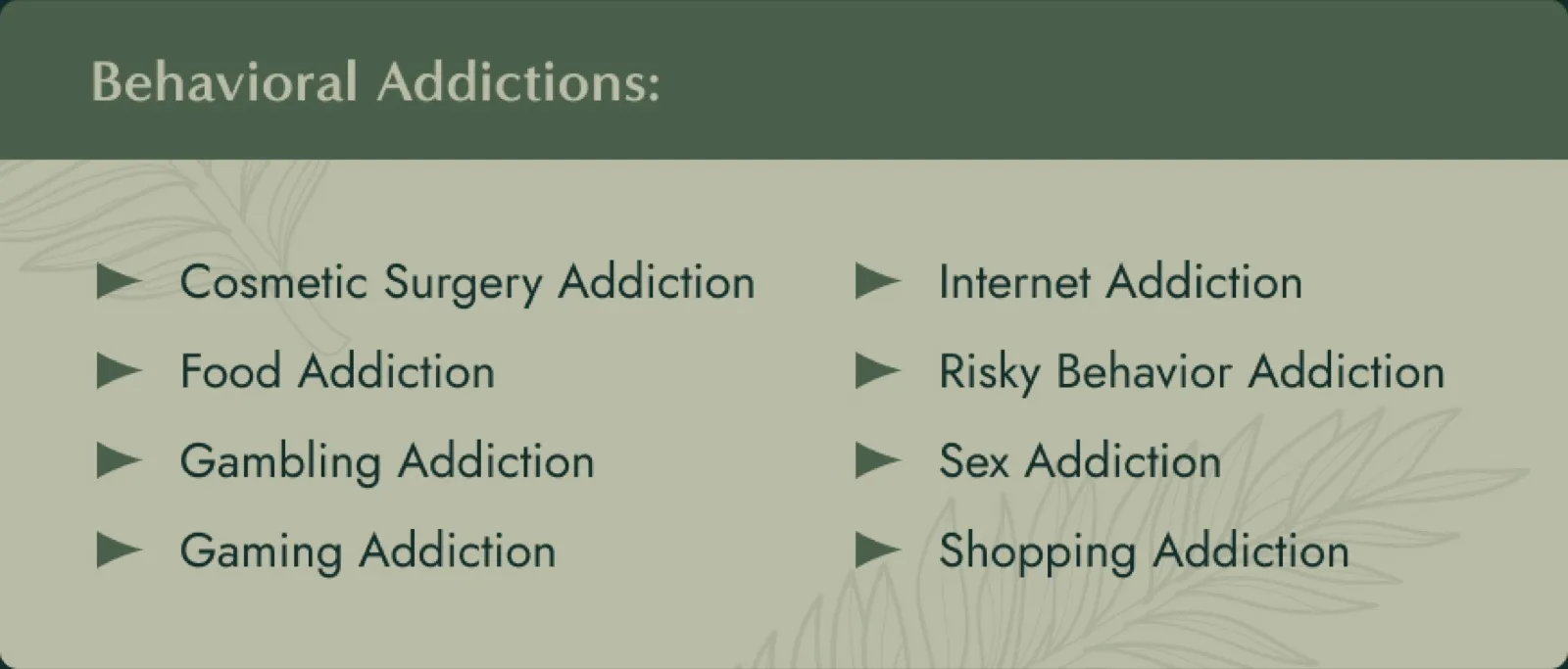
This question is a little hard to answer because the evidence for behavioral addictions is still developing. Experts disagree on what counts as a “true addiction.” However, most addiction specialists and healthcare professionals agree that there are eight habits people can quickly become hooked on. These include:
- Cosmetic Surgery Addiction (body dysmorphic disorder)
- Food Addiction (binge eating disorder)
- Gambling Addiction (gambling disorder)
- Gaming Addiction (gaming disorder)
- Internet Addiction (compulsive internet use)
- Risky Behavior Addiction (kleptomania, pyromania, and others)
- Sex Addiction (hypersexual behavior disorder)
- Shopping Addiction (compulsive shopping)
Whether it’s sex, internet browsing, or skydiving, the urge to experience a “high” becomes so overbearing that the person loses control and seeks the activity despite all negative consequences. They might not all be mental health disorders, but they’re still detrimental to your health and well-being.
Any source that of stimulates a person can become addictive if it marks a change of behaviors from habits to obligation.
Cosmetic Surgery Addiction
To alter their appearance, some people pursue plastic surgery repeatedly and compulsively. However, these people are more likely to have body dysmorphic disorder (BDD) than an addiction.
BDD is a mental health disorder. Those with it may be so worried about how their body looks that it interferes with their ability to function normally. They may take extreme measures to correct perceived flaws. According to the International OCD Foundation, 1-2% of the population has BDD, which is more prevalent among plastic surgery patients.
Food Addiction
Binge eating disorder affects about 3% of adults in the United States. These people may desire food high in fat, sugar, or salt and have difficulty controlling their intake.
In addition to putting strain on relationships and self-esteem, this disorder can lead to heart disease, diabetes, and other complications. The cause of eating disorders is unknown but is likely linked to depression more than addiction.

Gambling Addiction
Gambling disorder occurs when someone engages in compulsive betting and gambling despite adverse consequences. People used to go to casinos to indulge in gambling addiction. Today, with the rise of smartphone technology, someone has 24/7 access to gambling apps and can quickly spiral out of control.
Studies show that gambling addictions impact the same brain areas as drug addictions. The condition affects roughly 10 million U.S. adults. Males between 14 and 30 who suffer from comorbid alcohol abuse are likely to develop a gambling addiction.
Gaming Addiction
Can’t keep your hands away from that game console? Technology plays a significant role in the rise and prevalence of gaming addiction, with 41% of players gaming to escape from reality. Male adolescents and young adults appear to be at higher risk of gaming addiction development than their older peers.
Younger males with authoritarian parents, who believe they are more competent at role-playing games than personal relationships, are more likely to develop gaming disorder. People with high anxiety, aggression, and neuroticism also tend to develop this behavioral addiction.
Internet Addiction
Our world has evolved to require Internet access for daily tasks, but it’s possible to be too plugged in. Most psychologists and mental health professionals don’t consider Internet addiction a true addiction. However, it can be problematic for some people when it involves losing control or negative consequences at work/home.
Neuroimaging research seems to support the validity of Internet addiction by showing significant brain changes in those affected. Other studies suggest that compulsive Internet use affects 6 - 14% of Internet users. Adolescents, women, and senior citizens are the most likely to develop internet use addiction disorder.
Risky Behavior Addiction
Thrill seekers and “adrenaline junkies” get a rush from risky behavior. After a while, they seek out more danger to feel the same level of excitement. These thrills overindulge the brain with the chemicals released by addictive drugs, like serotonin.
These behaviors could include intentionally driving under the influence or having unprotected sex. Risky behavior addiction can consist of compulsive skydiving or mental health conditions like kleptomania (the impulse to steal for the rush it brings).
Sex Addiction
Sex “addicts” don’t claim to enjoy sex more than other people. The difference is that they compulsively engage in sexual activity, regardless of the unpleasant outcome or experience. Substance abuse plays a role in behavioral disorders, too. More than 83% of people with sex addiction depend on drugs, alcohol, or compulsive gambling.
Compulsive behavior surrounding sex affects between 3% to 6% of adults in the U.S. All genders can develop the disorder, but men on the autism spectrum show it in higher cases. People with untreated mental health conditions, such as borderline personality disorder and bipolar disorder, have higher risk of hypersexual behavior disorder.
Shopping Addiction
Compulsive shopping is more of an impulse control disorder than an addiction. Do you purchase items to avoid feeling sad or have a closet full of clothing with price tags on them? You might have a shopping addiction.
Studies show that compulsive shopping affects more women than men. It can lead to heavy financial, social, and emotional damage and feelings of guilt and shame. Shopping addictions are often associated with hoarding. Treatment for this compulsive behavior usually involves counseling and behavioral therapy.
Defining Behavioral Addictions
To better understand behavioral addictions, we must consider their evolving definitions in the ICD-11 and the DSM-5.
Remember that the goal of the ICD-11 is not the same as that of the DSM-5. The DSM aims to provide research and clinical diagnostic language. The ICD focuses on clinical utility within a broader range of settings and applicability.
Addictive Disorders in the DSM-5
The DSM-4 originally only listed “Substance-Related Disorders.” However, the updated DSM-5 changed this chapter to “Substance-Related and Addictive Disorders” to reflect the developing understanding regarding addictions.
Psychologists ultimately rejected adding addictive sexual behavior to the DSM-5 as a “hypersexual behavior disorder.” However, they did include gambling disorder in the addiction realm and kleptomania in the chapter on “Disruptive, Impulse-control, and Conduct Disorders.”
Psychologists did not add addiction behaviors surrounding sex, internet use, stealing, gaming, overeating, compulsive buying, and others because research on these behaviors was still insufficient for diagnosis criteria.
Impulse Control Disorders in the ICD-11
ICD-11 proposed that the category of impulse control disorders should retain and broadly define them as _“repeated failure to resist an impulse, drive, or urge to perform an act that is rewarding to a person, despite longer-term harm to the individual or others.” _
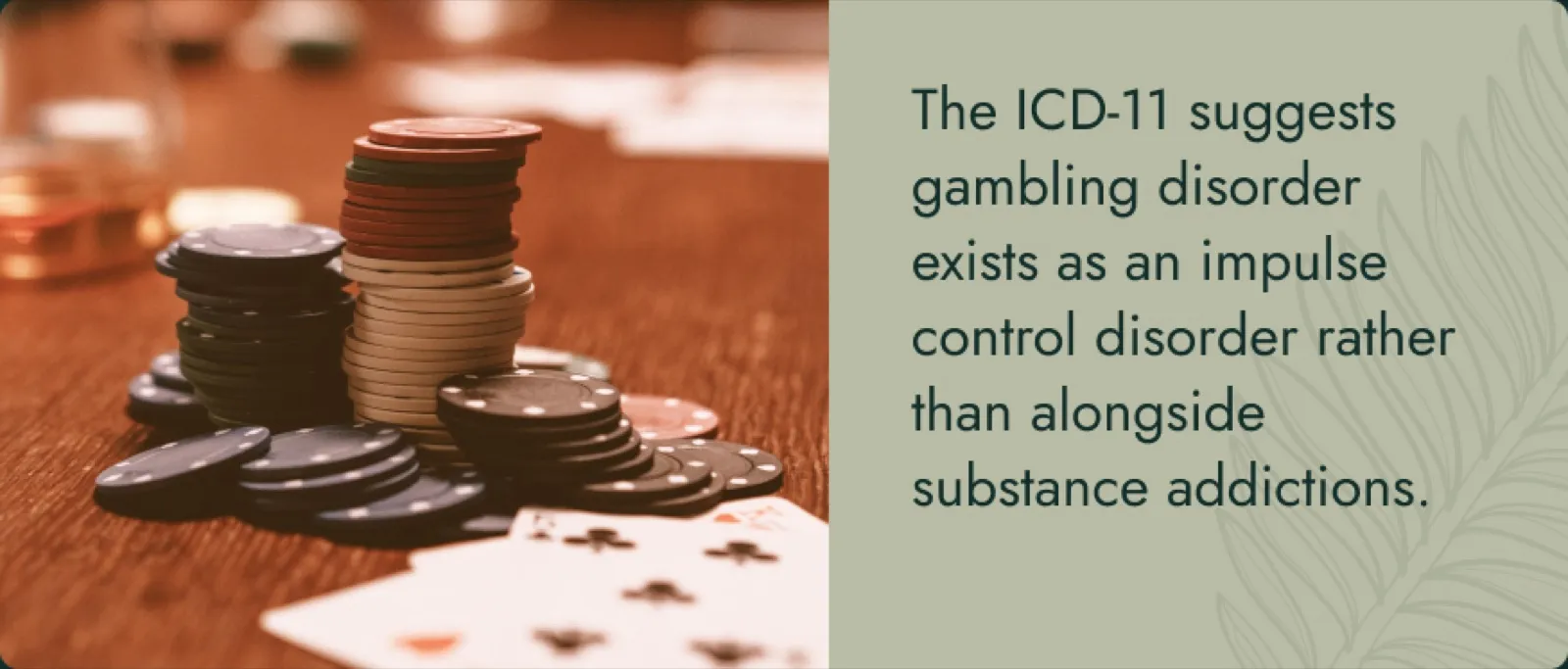
The ICD-11 suggests compulsive sexual disorder, intermittent explosive disorder, kleptomania, pathological gambling, and pyromania exist as impulse control disorders rather than alongside substance addictions.
Other possible impulse control disorders were examined, such as problematic internet use and compulsive buying. However, they wren’t included as independent mental health conditions. One argument is that we cannot yet address whether excessive Internet use is a conduit for other types of repetitive behavior (like compulsive sex or gambling) or constitutes a distinct entity.
What are the Symptoms of Behavioral Addiction?
The withdrawal symptoms for behavioral addictions aren’t the same as those prominent in drug and alcohol abuse. However, the mental and emotional symptoms are similar. These include:
- Anxiety
- Codependency
- Cravings
- Denial
- Depression
- Fighting with friends/family members
- Guilt and shame
- Inability to resist impulses
- Irritability
- Lack of self-care
- Lying
- Missing work, school, or significant events
- Sleep disorders and disturbances
Each addiction can also come with physical consequences and effects. Those with sex addiction may suffer from sexually transmitted infections (STIs). People with internet or gaming addictions may develop headaches, carpal tunnel, or neck and back pain.
How Are Behavioral Addictions Diagnosed?
Growing evidence implies that behavioral addictions are closely related to substance abuse and addiction. They also respond to the same treatment methods and are diagnosed with similar criteria.
Mental health professionals can diagnose a behavior addiction if a person compulsively participates in behavior but can’t stop, despite experiencing negative consequences. From there, a trained therapist can formulate a treatment plan tailored to the individual.
Growing evidence implies that behavioral addictions are closely related to substance abuse and addiction.
How Are Behavioral Addictions Treated?
Group and individual therapies like cognitive behavioral therapy (CBT) and talk therapy are effective in behavioral addiction treatments. Those with behavioral addictions often have comorbid mental health disorders (dual diagnosis) or substance abuse. Mental health professionals can help develop a treatment plan for healthier ways of dealing with compulsions.
Indeed, people with behavioral addictions may not suffer the same physical health risks as those with drug and alcohol addictions. Still, allowing a behavioral disorder to go untreated only prolongs the suffering for the addicted person and their loved ones. If you believe you or someone you care about has a behavioral disorder, contact a professional for help.
What Causes Behavioral Addictions?
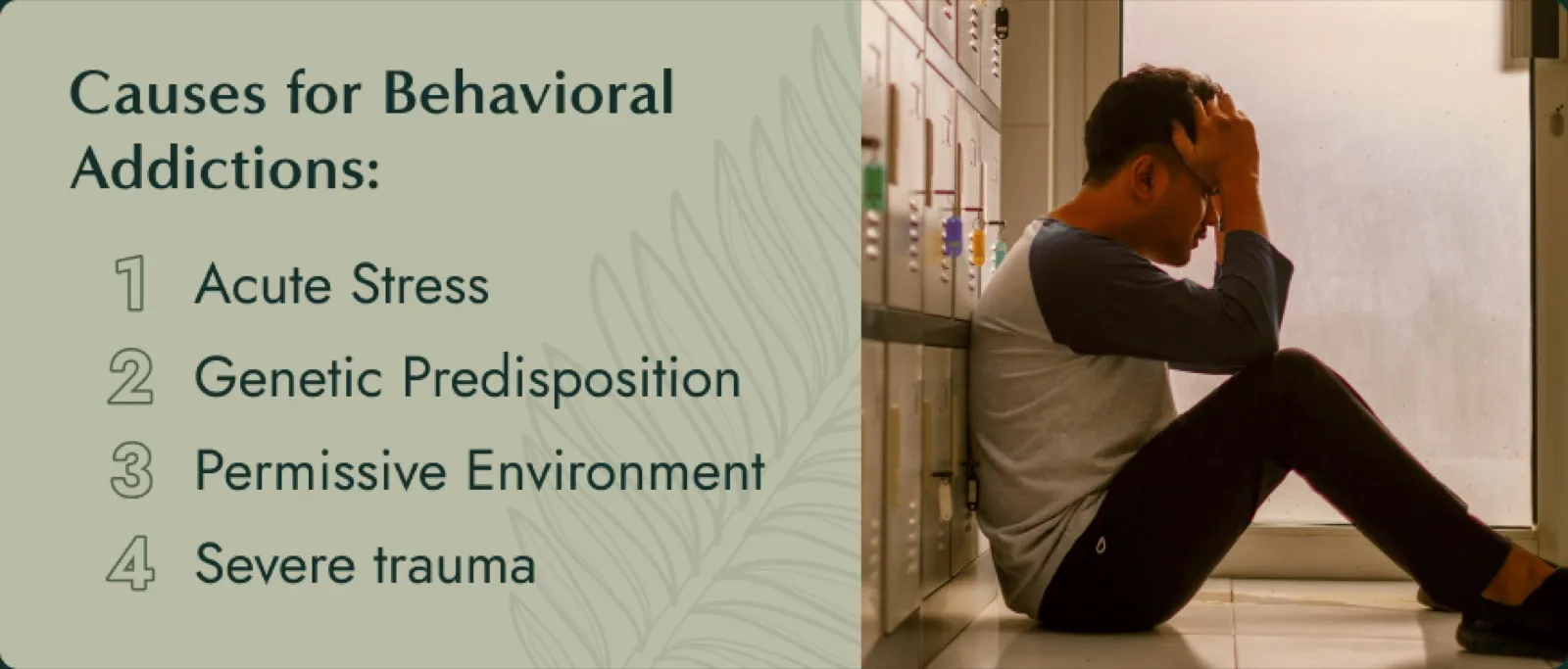
Unfortunately, there’s rarely one single cause responsible for behavioral addiction. Often, it’s born from a combination of elements that include:
- Acute Stress
- Genetic Predisposition
- Permissive Environment
- Severe trauma
As with substance abuse, treatment may require a highly structured environment to interrupt the person from acting on urges.
How Can I Tell if I Have a Behavioral Addiction?
Most of the time, behavior isn’t classified as an addiction until it meets the following criteria:
- Mental health or physical health issues are consequences of your behavior and/or an inability to stop it
- The behavior is so time-consuming that you develop issues with significant relationships (at home, work, hobbies, etc.)
- You experience adverse effects by continued, elevated, or chronic behavioral engagement
- You’re unable to quit, despite how negatively the behavior impacts your life
The bottom line is that not all behaviors meet the classic definition of physical addiction. However, they share many psychological and social hallmarks and respond well to traditional types of addiction treatment.
Ready to Feel Better?
Mental health problems and addiction are closely linked. Many people have turned to compulsive behaviors, alcohol, or other drugs for relief and self-medication at some point. However, the reality is that these things worsen mental health problems.
The journey out of addiction can pave the way toward better mental health. Here at Sequoia, we treat co-occurring disorders with empathy and understanding. With the proper treatment and counseling, we believe you can conquer anything.
We design our mental health-focused program to meet you where you are, uncover the sources of your unwanted behaviors, and help you rediscover your life’s purpose. Contact us today for a consultation.