
The realization that someone you care about might be struggling with addiction can bring about a lot of mixed emotions. You may experience fear, confusion, despair and a desperation for them to be free of their addiction.
Knowing how to help someone with an addiction might seem overwhelming. Luckily, there are practical ways to encourage them to sobriety before, during, and after rehab treatment.
How to Help Someone With Addiction Prior to Treatment
Before you attempt to intervene, it is important that you are able to approach the situation from as healthy and grounded a position as possible. Seeking out wise counsel for yourself from people outside of the situation can benefit your efforts in a number of ways:
- They can help you gain clarity about what effect the addiction is having on you.
- They may be able to help validate any behavior patterns you observe in your loved one that points to an addiction.
- They can help you recognize any tendencies toward codependency or enabling patterns between you and the struggling individual.
Those caught in the throes of addiction aren’t the only ones who need support. As a (likely primary) source of support for a struggling individual, it’s a good idea for you to establish a network of medical professionals, knowledgeable individuals, and compassionate mutual friends to prepare yourself for the long journey of recovery ahead.

How to Help a Drug Addict Who Doesn’t Want Help
One of the most unpredictable, difficult, and worrisome aspects of choosing to help someone with addiction is the question of whether they will even accept help. If you’re going to attempt to help someone who doesn’t want help, first be sure to educate yourself on the nature of addiction and possible reactions to expect.
Before you attempt to intervene, it is important that you are able to approach the situation from as healthy and grounded a position as possible.
It’s not uncommon for a person in the middle of an addiction to better receive a “wake-up call” from someone outside their circle of friends and family than someone close to them. Suggest a regular checkup with a doctor as a way to allow a medical professional to recognize issues and see past excuses.
Be sure you are not contributing in any way that serves as a source of support or funding for their habit. However, stay away from using threatening language to communicate any changes. Instead, encourage them to take proactive steps to recovery and offer support for their efforts.
How to Get Someone Into Rehab
If none of these efforts produce change, it might be time for an intervention. While this can seem like a drastic form of “tough love,” it is often a pivotal point in a person’s journey to recovery. Reach out to us to learn more about how to structure a well-executed intervention.
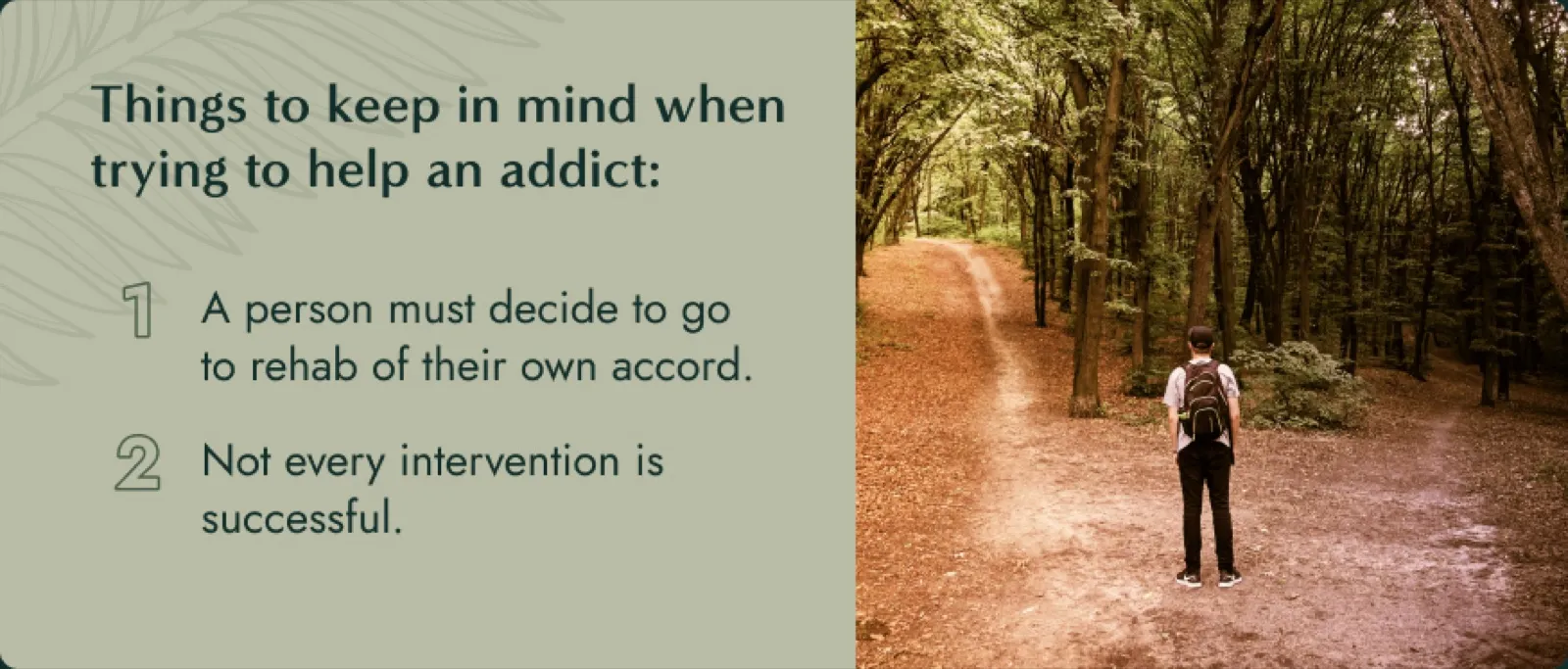
When trying to help someone in addiction, keep in mind two things:
- A person must decide to go to rehab of their own accord.
- Not every intervention is successful.
Your loved one may still reject the proposed treatment option despite your best attempts to convince them to go. In some cases, you can petition for interventionist court-ordered rehab, but you will need to look into the requirements for this in your state.
For an individual to qualify for involuntary commitment in Arizona, the law requires you to show proof both of their addiction, and one of the following:
- A danger to themselves
- A danger to others
- Unwilling or unable to accept voluntary treatment
- Persistently or acutely disabled
- Gravely disabled
While involuntary commitment might seem extreme, it may very well be a necessary option to save your loved one’s life and help them get on the road to recovery.
How to Support Someone in Rehab
Once your loved one has agreed to submit to treatment (or been committed), it’s important to understand the difference between supporting efforts and saving efforts.
People who are most successful at maintaining sobriety are those with plenty of support.
Don’t try to rescue; let them be independent and take responsibility for their recovery journey and life. This does not mean you have to be completely “hands-off” or distant—quite the opposite. People who are most successful at maintaining sobriety are those with plenty of support.
Here are some practical ways to be proactively involved in supporting sobriety without trying to save:
1. Educate yourself on addiction and recovery
Remember that addiction is a disease that changes how people speak, think, and act. Being affected by a brain-altering substance does not mean they are a “monster.”
Do some research around the short and long-term effects of whatever substance they are addicted to and try to remember who they were (are) without the influence of drugs or alcohol.
2. Check In With Them and Really Listen
Ask how they are doing and affirm the emotions they are experiencing. Even if you don’t agree, it’s important that they feel heard.
3. Reduce Triggers
During recovery, avoid conversation topics that center around past experiences with drugs or alcohol. Once your loved one has graduated from recovery, help them avoid situations where they may be tempted to relapse.
This might include staying out of the company of certain people or triggering situations. Also be sure to keep alcohol, prescription medications, and any other triggering items out of sight or out of the house entirely.
4. Avoid Judgmental or Shaming Language
Don’t weaponize love, affection, or comfort in an effort to get them to “try.” Saying things like, “if you really loved me, you would…” only adds guilt to an already emotionally-charged process.
Far from being motivating, this kind of shame language often proves counterproductive to helping a person keep a healthy perspective through the recovery process.
5. Affirm Their Efforts and Encourage Them to Keep Going
Let them know regularly that you are proud of them and that you recognize their hard work in getting as far as they have through the program. A few simple words of encouragement can go a long way.
Encourage them also to attend—or continue attending—help groups, therapy, or any other outlets where they will receive continued support.
6. Avoid Friction & Unnecessary Arguments
Relational stressors are one of the most common contributing factors to underlying mental health issues like anxiety or depression. Try to stay away from irrelevant topics that spark controversy. Instead, offer constructive support by spending meaningful, positive time together with open communication and healthy dialogue.
7. Be Patient
Recovery is a journey. It took some time for the addiction to develop, and it is going to take (much more) time for it to become a thing of the past. Even if setbacks or relapses happen, show grace to yourself and your loved one and keep pressing forward with patient hope.
8. Set an Example of Healthy Habits
Healthy living is more than just what you don’t do (i.e. drugs or alcohol); it is also the measures you take to be physically, spiritually, and emotionally well. Encourage your loved one to seek not just sobriety, but whole-being wellness by setting the example in your own habits and healthy choices.
9. Set Healthy Boundaries
Enabling and codependency are some common unhealthy dynamics that can develop between someone caught in addiction and the friends or family around them.
Take “inventory” of your relationship to this person and set up any necessary guidelines for interaction (or a lack thereof) that encourage health for both of you. See professional guidance if you are unsure how to go about this.
10. Seek Healing & Wellbeing for Yourself
Friends and family of someone in addiction often experience various types of “trauma-by-proximity” due to the individual’s choices. You may not even be able to recognize all the ways another person’s addiction has affected you, but it is important for you to prioritize your own healing as well.
Healthy living is more than just what you don’t do (i.e. drugs or alcohol); it is also the measures you take to be physically, spiritually, and emotionally well.
Do some research on some of the local support groups for loved ones of addicts in your area. If this is not available, there is likely an in-person or virtual counselor you can speak to who specializes in helping people in your situation.
Recovery Stages of Change
In 1983, researchers Prochaska, DiClemente and Norcross studied various mental health and substance use disorder (SUD) treatment plans and noted several patterns patients seemed to follow as they progressed into shifting their behavior.
Updated in 1992 for clinical use, these became known as the Five (5) Stages of Change. They include:
Precontemplation
This is when a person is not ready to change. This may be because they do not recognize their need to, are in denial of it, feel overwhelmed by the idea of how much work it would take, or they know they “should,” but do not have the conviction to actually move toward it.
Contemplation
In this stage, a person is aware of the problem and recognizes that there are consequences depending on what they choose to do. They may become more open to the possibility of change or even set an intention to take action in the future.
Preparation
This is when a person makes a plan. While they become even more acutely aware of the “cost” of making this change, they start to set goals and consider further details of what execution of the plan will look like.

Action
Now they do what they said they were going to do. In this stage, the resistance to change (in the form of anxiety, second-guessing, doubts, etc.) may actually increase, but it’s important to press through. The more specific the plan, the easier it is to follow, so a person may need to make some adjustments to make things easier on them.
Maintenance
This is when someone going through the change process has experienced some established success (usually between about six months to five years) in being consistent with the change.
The good news is that they have clearly shown they are capable of change. The bad news is that this is where they can be tempted to believe that the change is permanent, and they don’t have to “work” at it anymore–which can open doors to relapse. It’s important that they not take these changes for granted and continue making conscious, intentional efforts to reinforce and solidify the transformation.
“Is Relapse Part Of Recovery?” and What to Say to Someone Who Relapsed
Remember that recovery is a lifelong journey and that a persons’ chances of relapse lessen over time.
About 2 of out 3 recovering addicts will likely relapse within their first year. This means relapse should neither be treated as an inevitability nor be ignored as a possibility. Be prepared to support your loved one wherever they are and keep the lifelong nature of recovery in mind as you walk through it with them.
If you suspect someone might be headed toward relapse, have your words and tone communicate that you are first and foremost concerned about their wellbeing. Avoid accusatory language like, “Have you been using again?” Instead, express what it is about their demeanor or actions that has you concerned and give them a chance to offer an explanation.
An example of this might sound like: “I’ve noticed you missed a couple of meetings these past couple weeks/haven’t asked for a ride to an appointment recently/seem a little unlike yourself these days—has anything changed?”
Relapse should neither be treated as an inevitability nor be ignored as a possibility.
How to Support Someone in Recovery After Treatment
Going to and completing a recovery program is a feat on its own—but the battle’s not over yet. Once your loved one leaves treatment, they’ll be faced with plenty of opportunity for old habits to creep in.
As part of a support system for your friend or family member, you can help them avoid temptation by removing triggers or avoiding situations that might cause potential pitfalls.
Resources for Addiction Recovery in Mesa, AZ
If you believe that a friend, family member, or intimate partner needs treatment, we’re here to help you as you help your loved one.
In addition to residential treatment, we provide referrals for interventions, medical detox, family counseling, and long-term outpatient therapy. We also offer educational resources to help you better understand behavioral health. Reach out today to find out more.