Outpatient Addiction Treatment at Sequoia
Explore our Outpatient Addiction Treatment program and learn how personalized care can support your mental health and healing.
Addiction treatment, or rehab, is typically a 30-day residential program where people go through a medical detox and different kinds of therapies to help them recover from the symptoms and the root cause of their addiction.
While residential treatment is incredibly helpful for those who attend, it’s not the only option. Before deciding what kind of treatment program is best for you or a loved one, it’s important to know the different options.
In this article we’ll talk about the following:
- What an outpatient treatment program is
- Outpatient vs. residential treatment
- Outpatient treatment at Sequoia Behavioral Health
What is an Outpatient Addiction Treatment Program?
Outpatient addiction treatment programs are in-person treatment options that allow people to receive treatment without checking into a residential home. The treatment they receive is typically the same as residential. However, they don’t receive the 24-hour care of residential treatment.
While in outpatient addiction treatment, patients are able to live at home, but they will be asked to attend intensive therapy throughout the day.
Related Articles: Common Mental Health Therapy Modalities
Benefits of Outpatient Addiction Treatment
There are a handful of barriers that make checking into treatment more difficult for those who need it. Outpatient treatment makes it easier to receive
- Cost: Outpatient treatment is much cheaper than residential treatment. Instead of paying for 24-hour care, housing, and food, patients only need to pay for the treatment.
- Non-disruptive: Residential treatment requires people to uproot their lives for up to a month. This can be a barrier of entry for many people. Outpatient treatment isn’t as disruptive as residential treatment because patients can live at home while attending treatment.
The benefit of outpatient treatment is that it mitigates these barriers. Instead of having a major disruption of daily life, people can live in their homes and attend treatment during the day. The cost of outpatient treatment is also much cheaper than residential treatment.
It’s totally possible for someone to attend outpatient treatment while maintaining their work and home responsibilities.
Who is a Good Candidate for Outpatient Addiction Treatment?
Just like most things, outpatient treatment is not for everyone. A good candidate for outpatient treatment will:
- Be reasonably stable
- Be living in a stable home
- Not require a medical detox
- Not experience cravings within their current environment
People who require close, 24/7 surveillance, are not good candidates for outpatient treatment. While outpatient treatment is intensive, the client will return home at the end of the day.
Related Articles: Understanding the Cycle of Addiction

Is Outpatient Addiction Treatment as Effective as Residential Drug Treatment?
The effectiveness of outpatient treatment is dependent on the client and their situation. If the patient needs medical detox and close attention, outpatient treatment won’t be very effective.
Studies have found that 50%-70% of outpatient care patients experience continued sobriety. There was no difference between residential and outpatient care. When the patient is a good candidate for this kind of treatment, it’s just as effective as residential addiction treatment.
Related Articles: How Long Does it Take to Rewire Your Brain From Addiction?
Types of Outpatient Addiction Treatment
Within the realm of outpatient care, there are three different kinds of treatment. Each of these programs is slightly different and will be used in different situations.
Partial Hospitalization Programs (PHP)
Partial hospitalization programs (PHP) are often the second step after residential treatment, though many people start their treatment journey here.
Every treatment center will approach PHP slightly differently. At Sequoia Behavioral Health, our PHP is six hours a day five days a week. While attending the program, people will engage in individual counseling, group counseling, somatic experiencing, EMDR, neurofeedback, as well as medication management.
While attending our programs, you might start in PHP or transition to it after a residential program.
Learn more about our PHP treatment for mental health and addiction treatment.
Intensive Outpatient Programs
Intensive outpatient programs are a lot like PHPs, but patients will spend less time in sessions. Everyone who attends this program will attend the same therapy as residential therapy.
At Sequoia Behavioral Health we have two levels of IOP care:
- IOP 3: Three-hour counseling sessions three days a week
- IOP 5: Three-hour counseling sessions 5 days a week
Every treatment facility will do IOPs differently, but they are mostly used after PHP or residential programs.
Learn about our IOP treatment for mental health and addiction treatment.
Continued Care
Addiction treatment is not a one-time activity. It takes a lot of time to fully recover, and it will likely take multiple treatment attempts. Continued care is important for life after treatment.
There are so many ways to do continued care.
- Regular check-ups: Checking in with a therapist or counselor promotes accountability. During these checkups, you can talk about anything that’s affecting your life. These can help catch relapses, and help you recover after a relapse.
- 12-step programs: any kind of community program designed to help people in the recovery process are often helpful post-treatment.
- Alternate support groups: Support groups create space for people to connect with peers who are in similar situations.
Whatever your choice of continued support, dedicate yourself to it.
Residential Treatment vs. Outpatient Treatment
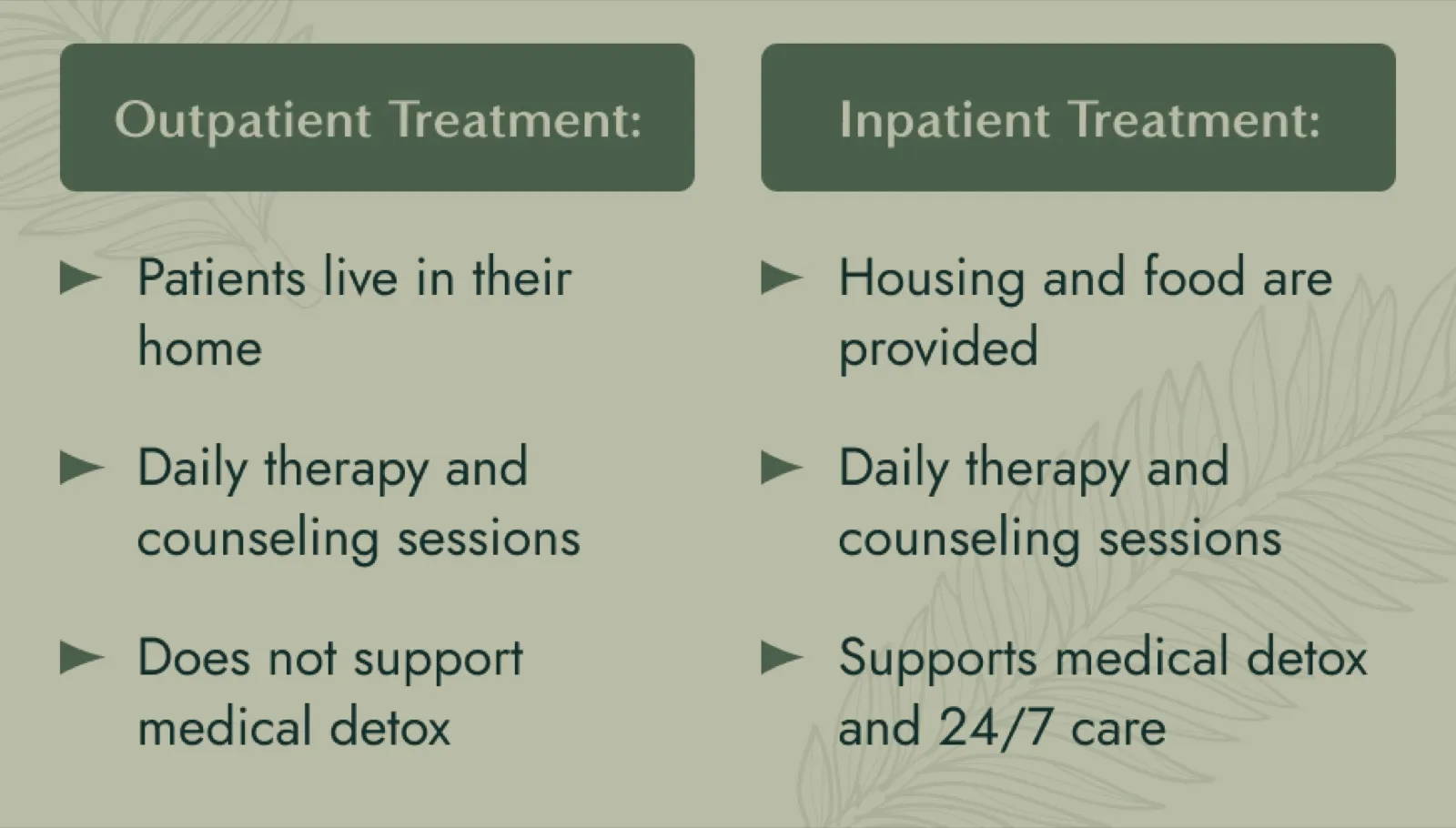
The biggest difference between residential and outpatient treatment is obviously the living situation. Residential patients live in the treatment facility while outpatient patients live in their homes.
Read about the residential treatment program at Sequoia Behavioral Health.
While in outpatient treatment, patients may not spend as much time in therapy and counseling as residential patients. Another thing to consider is that outpatient programs don’t support medical detox. Due to the symptoms felt while detoxing, 24/7 medical attention is preferred.
Outpatient Addiction Treatment at Sequoia Behavioral Health
Sequoia Behavioral Health is a holistic mental health treatment program. Our outpatient and residential addiction treatment programming is the same. While attending our outpatient program, people receive intensive care.
Our clients receive personalized treatment, tailored to their needs. Contact Sequoia Behavioral Health to start the process of starting addiction treatment.
Learn more about our admissions process.
Schedule a Call
Thanks — we will be in touch.
That did not send. Please try again.