



Work is a huge source of stress for most people. 80% of employees report experiencing “productivity anxiety”. With recent changes in the workplace like AI initiatives and a growing fear of being laid off, it’s no wonder that so many are experiencing high levels of workplace anxiety.
In this article, we’ll talk about chronic workplace anxiety, where it comes from, common symptoms, and how it’s treated.
What Is Workplace Anxiety?
For many, work is a source of anxiety. Unlike generalized anxiety, workplace anxiety is specifically centered on work-related triggers.
Workplace anxiety is caused by:
- Job security
- Negative work culture
- Impending deadlines
- High-stakes presentations
- Workplace relationships
- Larger industry fears
This kind of anxiety can be short-term. However, if these pressures are constant, the issue can become chronic.
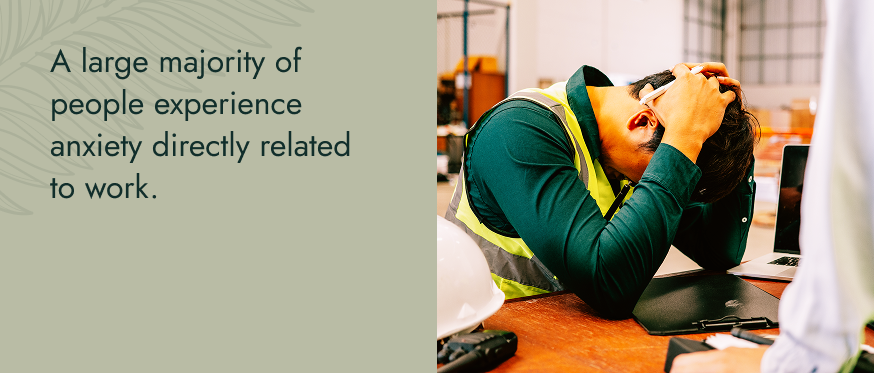
When Work Anxiety Becomes Chronic
Hustle culture has become normalized in America. It’s common for people to stretch themselves for the sake of their work. However, just because it’s normal doesn’t mean it’s healthy.
People spend a substantial amount of time at work. If their workplace is a source of anxiety, they’ll be spending the majority of their time anxious.
Get Help At Sequoia Behavioral Health
Sequoia Behavioral Health offers holistic residential and outpatient treatment for those suffering from addiction and other mental health issues. If your workplace anxiety has caused worsening mental well-being or a substance use problem, call now.

Symptoms of Workplace Anxiety
The most common symptoms of workplace anxiety affect work performance. The common signs include:
- Difficulty concentrating on tasks
- Decreased productivity
- Feeling dread about work tasks
- Decreased motivation
- Isolating from coworkers
- Stagnation
- Missing deadlines
- Fear of making mistakes
- Constant dread of working
- Avoiding tasks or responsibilities at work
The symptoms of workplace anxiety will naturally pour out into every area of life. Other symptoms of workplace anxiety include:
- GI issues and stomach pains
- Headaches
- Muscle tension
- Increased heart rate
- Low energy
- Lowered confidence
- Decreased overall well-being
These symptoms are very distressing to experience, especially because work is tied to healthcare, being able to afford food, and general well-being.
Related Blogs

5 Steps for Challenging Anxious Thoughts
Anxious thoughts can make your fears feel like facts. Learn why they happen and how to challenge anxious thoughts with a simple five-step process.
.jpg)
Anxiety Relief: Techniques and Tools You Can Use Now
Anxiety relief is a short-term and long-term effort. Learn how to start managing your anxiety here.

Anxiety About the Future
Learn why anxiety about the future happens, what can contribute to it, and how you can begin managing anxious thoughts in healthier ways.
Managing Workplace Anxiety
The effects of workplace anxiety will often continue to get worse over time unless managed. If you’re struggling with anxiety caused by work, remember that your feelings are valid.
Acknowledge Your Anxiety
The first step in learning to manage anxiety is to acknowledge what you’re feeling. People often struggle with admitting they have a problem and need help.
Workplace anxiety is often tamped down and ignored due to American workplace culture. In fact, 40% of all workers believe that burnout is inevitable for success.
That being said, it’s not normal and should not be ignored.
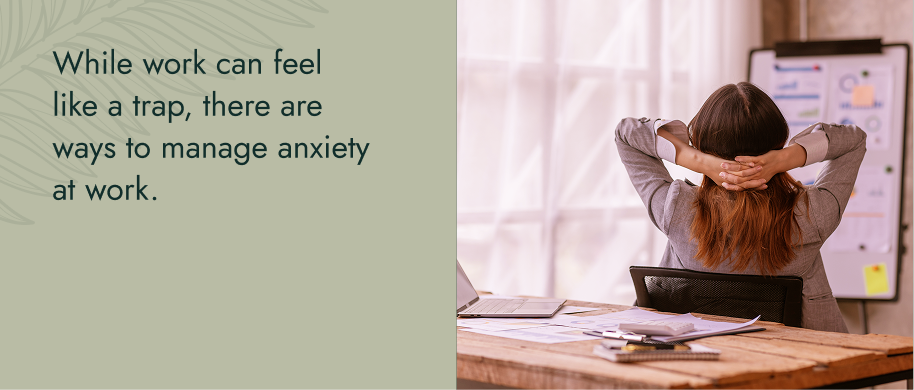
Manage Your Time Well
Work can sometimes feel overwhelming. There is often a lot to keep up with. However, through time management, that drowning feeling can be managed.
There are endless ways to practice time management. Simply writing down your priority tasks can go a long way. However, techniques like:
- Time blocking: Dedicate a specified time on your calendar to complete a task or group of tasks.
- Task Grouping: Complete similar tasks together and complete them in a group so you don’t have to flip between tasks.
- Eat the frog: Tackle big tasks in the morning.
- Pomodoro: Chunk your work out with short intentional breaks in between chunks.
It might feel counterintuitive to take time out of your schedule to organize tasks and schedule out your day, but by doing this, you’ll gain control over your busy schedule.
Talk With Someone
If you feel comfortable doing so, talk with your boss about your feelings surrounding work. In some situations, accommodations can be made. However, in some cases, you may not want to talk with your employer.
If your anxiety is directly tied to workload, try talking with your manager about the amount of work you’ve been taking on. Frame the conversation about finding a solution and be specific about projects or tasks that are too much for you to take on.
If you’re worried about talking with someone at your place of work, a therapist can be just as, if not more, helpful.
When you talk with a therapist about workplace anxiety, they can give you practical advice and coping strategies for dealing with workplace anxiety.
Check For Resources at Work
Your company might have mental health resources available for you. Benefits like burnout leave, access to online therapy, and gym memberships can be beneficial for your mental health.
Check with your HR department or ask your boss about what options are available to you.
Practice Mindfulness
Mindfulness is an important tool for those experiencing workplace anxiety. Or any kind of anxiety.
Mindfulness is focused on grounding you into reality. Spiraling thoughts, increasing blood pressure, and difficulty focusing can be combated with common mindfulness practices.
- Breathing exercises: Slow, deep breaths can slow down heart rate and reduce tension.
- Daily Walks: Walk outside for 10 minutes and focus on the sights, sounds, and feelings of walking.
- Mindfulness Movement: Slowly move through stretches while practicing deep breathing.
These exercises won’t solve your work anxiety, but they are a valuable way you can take intentional breaks and recharge throughout the day.
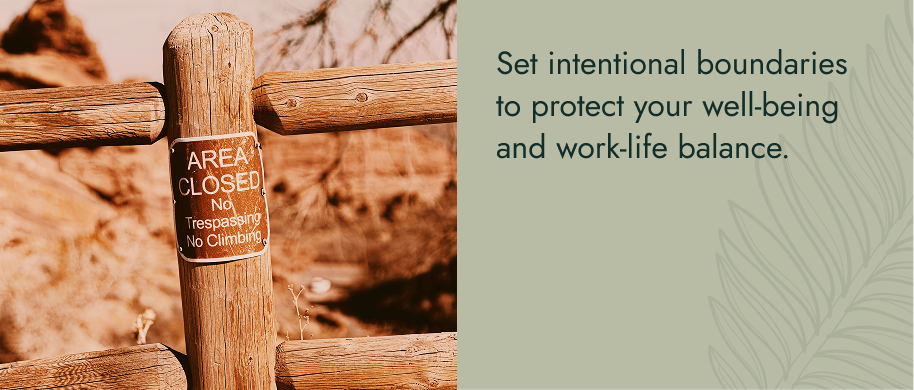
Set Boundaries
Work has a way of leeching into personal life. Some workplaces expect people to work after hours, longer shifts, and be on call at odd hours.
Practice hard boundaries with work and communicate them with your employer. Here are some boundaries to consider:
- How much of your personal money you’ll use for work
- How much of your personal life are you willing to share at work
- How many extra hours are you willing to work (if any)
- What time are you willing to work
- What work are you willing to do
Defining your role, what hours you’re willing to work, and how much time you can work will help your work-life balance.
Seek Professional Help
Professional help is the best way to deal with anxiety from work. Meeting with a mental health professional can help you:
- Better understand what you’re feeling
- Learn new coping skills
- Learn how to advocate for yourself
- Increase your productivity at work
Therapy is always a good idea, but it’s important to know when it’s time to seek help for your workplace anxiety. You’ll know it’s time to ask for help when you’re experiencing the following:
- Your anxiety is affecting life outside of work
- You are experiencing physical symptoms
- You’re unable to perform daily tasks
- Weekends, breaks, or holidays are not refreshing
- Coping skills that have worked in the past no longer work
When your ability to work and your personal life are being affected by workplace anxiety, it’s time to ask for help.
Mental Health Treatment for Working Professionals
Sequoia Behavioral Health is dedicated to providing holistic treatment options that are accessible to working professionals.
If you’ve been experiencing chronic workplace anxiety, contact Sequoia Behavioral Health to learn if you’d be a good fit for our treatment program.
Learn More

Emotional Freedom Techniques
EFT is a holistic therapy that combines acupressure with cognitive and exposure therapy to alleviate emotional distress and promote overall well-being.

Psychoeducation
Psychoeducation enables people to understand themselves better and discover practices to improve their behavioral and mental health.

Assessments and Diagnostics
Mental health assessments provide insights that are necessary for an accurate diagnosis. Discover how assessments and diagnostics play a role in your treatment plan.
Your journey at Sequoia Behavioral Health begins with a simple phone call. We learn where you’re at and tailor your treatment accordingly.